

A coffee blend is defined as a deliberate combination of roasted beans from two or more origins, crafted to produce a flavor profile and consistency that no single origin can achieve alone. The practice sits at the heart of specialty coffee culture, from the breakfast cups served at neighborhood cafés to the espresso pulls at high-end roasteries. Brands like Maisoncantin have built their entire identity around this craft, selecting specialty-grade Arabica beans and assembling them with precision. Understanding what a coffee blend is, and why it matters, transforms the way you experience every cup.
What is a coffee blend and why does it exist?
A coffee blend is the roaster’s answer to a fundamental challenge: single-origin beans, however exceptional, are seasonal, variable, and often one-dimensional in the cup. Blending creates a coffee cup that is more balanced, consistent, and versatile than any single origin alone. That balance is the point. A bright, acidic Ethiopian Yirgacheffe paired with a smooth, full-bodied Brazilian Cerrado produces something neither bean delivers on its own.
The concept is not new. Commercial roasters have blended for over a century, primarily to control cost and maintain a recognizable flavor year after year. Specialty roasters, however, blend for a different reason: to build complexity. Blending can involve mixing different origins, species, and processing methods before or after roasting to reach specific flavor and performance goals. The result is a cup designed with intention, not assembled by accident.
Why do roasters blend coffee beans?
Roasters blend for four distinct reasons, and each one shapes the final cup in a meaningful way.
- Flavor complexity. No single origin carries every desirable attribute at once. A Colombian bean might offer sweetness and mild acidity, while a Guatemalan adds chocolate depth. Together, they create a profile richer than either alone.
- Seasonal consistency. Harvests change. A Kenyan lot that tasted of blackcurrant last year may taste more citrus-forward this season. House blends maintain consistent flavor year-round by adjusting component ratios as sourcing availability shifts.
- Brewing versatility. Espresso blends are engineered to perform under pressure, producing good crema and a sweet finish. Filter blends are built for clarity and brightness. A single origin rarely excels at both.
- Body and balance. Robusta adds body and crema to espresso blends. A small percentage of a naturally processed Ethiopian can add fruitiness without overwhelming the cup.
The Specialty Coffee Association uses standardized cupping protocols to evaluate sensory consistency across tasters, and professional roasters apply the same discipline when designing blends. Every component earns its place.
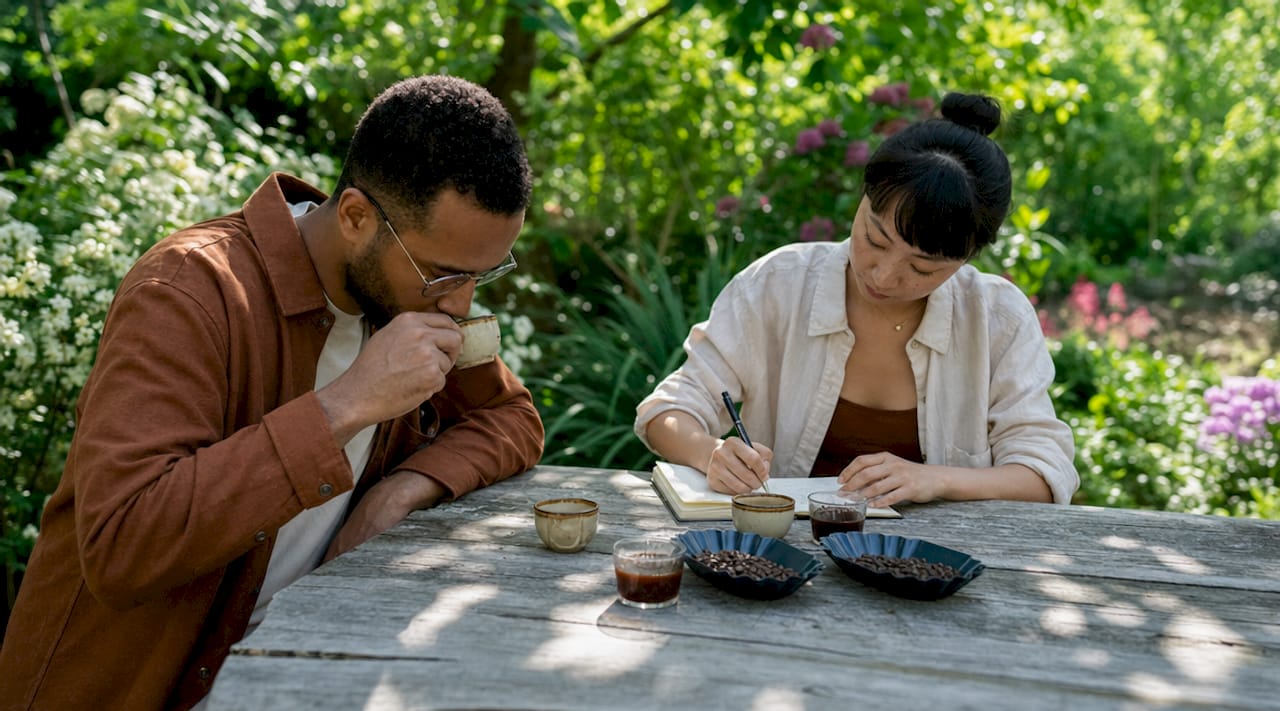
Pro Tip: When testing a new blend, brew each component separately first. Tasting them in isolation reveals exactly what each bean contributes, making it far easier to predict how they will interact.
How are coffee blends made?
Pre-roast vs. post-roast blending
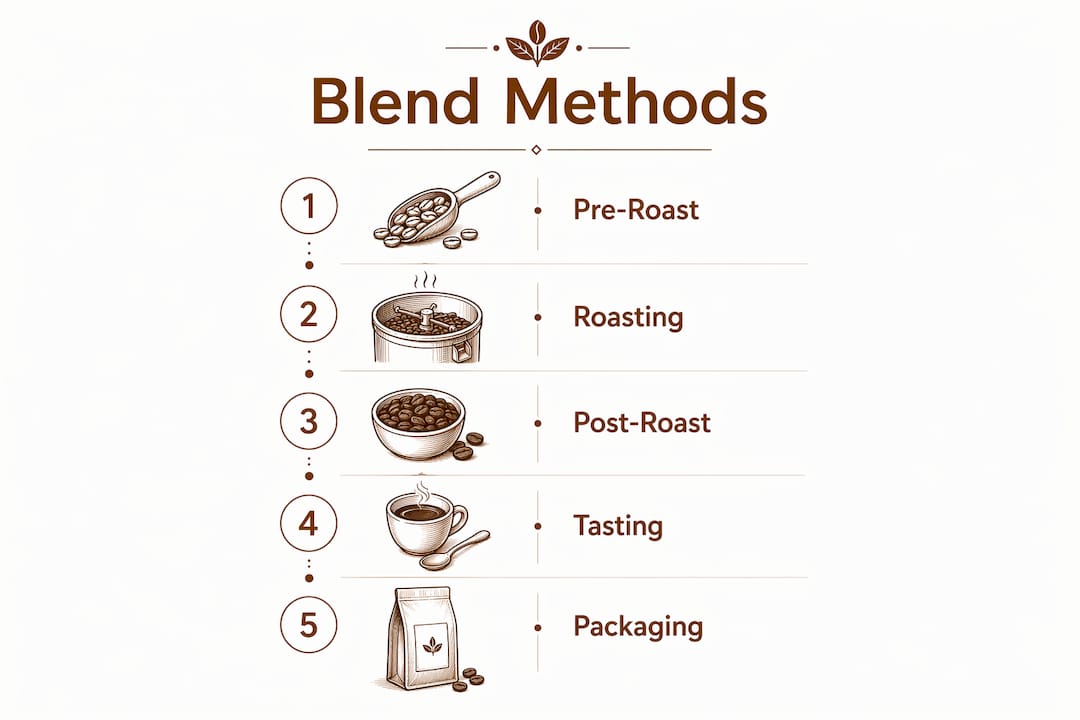
The two primary methods for making a coffee blend are pre-roast blending and post-roast blending, and the choice between them is driven by chemistry and control rather than tradition.
Pre-roast blending means combining green (unroasted) beans before they go into the roaster together. This method is faster and more cost-effective for high-volume production. The drawback is that different beans have different densities, moisture levels, and ideal roast temperatures. Roasting them together means one component may be slightly under-developed while another is slightly over-roasted.
Post-roast blending allows roasters to optimize each component’s flavor by roasting each bean separately to its ideal profile, then combining them afterward. Specialty roasters favor this method because it delivers greater control and complexity. Maisoncantin’s small-batch approach lends itself naturally to this method, where each origin receives the precise roast profile it deserves before the final blend is assembled.
Component roles and ratios
Every well-designed blend assigns each component a specific role. A typical blend component serves a distinct purpose: one bean provides the base flavor and body, another contributes sweetness, and a third adds brightness or acidity. Keeping each component above 15% of the total blend weight ensures it contributes meaningfully to the cup rather than disappearing into the background.
The table below illustrates how component roles translate into a practical blend structure:
| Component | Role | Typical percentage |
|---|---|---|
| Base bean (e.g., Brazilian) | Body, low acidity, nutty or chocolate notes | 50–70% |
| Sweetness bean (e.g., Colombian) | Caramel, mild fruit, balance | 20–30% |
| Accent bean (e.g., Ethiopian) | Brightness, floral or fruit complexity | 10–20% |
Starting blend ratios commonly use a dominant base around 60–70% with additional components making up the balance. A classic home experimentation formula is 50% Brazilian, 30% Colombian, and 20% Ethiopian. That structure gives you a stable, approachable cup with enough complexity to reward attention.
Pro Tip: Consistency challenges increase significantly when blending more than three or four components, especially for espresso. Keep your first blends simple. Master a three-bean formula before adding a fourth.
Understanding roast profiles is equally important here, since the roast level of each component shapes how its flavors express in the final blend.
What are the common types of coffee blends?
Different blend types exist because different moments call for different cups. The common categories include breakfast, espresso, house, dark roast, and specialty blends, each with a distinct flavor profile and intended use.
| Blend type | Roast level | Flavor profile | Best brewing method |
|---|---|---|---|
| Breakfast blend | Light to medium | Bright, clean, mild acidity | Pour-over, drip |
| Espresso blend | Medium to dark | Rich, sweet, good crema | Espresso machine |
| House blend | Medium | Balanced, approachable, crowd-pleasing | Any method |
| Dark roast blend | Dark | Bold, smoky, low acidity | French press, moka pot |
| Specialty blend | Varies | Complex, origin-forward, curated | Depends on design |
Here is what distinguishes each type in practice:
- Breakfast blends are light-medium roasts designed for clarity and easy drinkability. They pair well with milk but shine brightest black, letting the bean’s natural brightness come through.
- Espresso blends are engineered for pressure extraction. They typically include a Robusta component for crema and body, or use darker-roasted Arabica for sweetness and low bitterness. Maisoncantin’s Amber Six Espresso is a strong example of how a well-calibrated espresso blend performs across both straight shots and milk-based drinks.
- House blends are the workhorse of any café menu. They are designed to appeal broadly, hold up with milk, and remain consistent regardless of seasonal crop changes.
- Dark roast blends prioritize boldness over origin character. The roast itself becomes the dominant flavor, which suits drinkers who prefer intensity over nuance.
- Specialty blends are the most intentional category. Roasters select specific origins for specific reasons, often highlighting a processing method or a rare varietal within a balanced framework.
How can you start experimenting with coffee blends at home?
Home blending is more accessible than most people realize. You do not need a roaster or professional equipment. You need good beans, a scale, and a systematic approach.
- Choose complementary beans. Select two or three beans with different but compatible profiles. A low-acid, nutty Brazilian pairs naturally with a brighter Colombian or a fruity Ethiopian. Avoid combining two high-acid, high-intensity beans, since they will compete rather than complement.
- Start with a proven ratio. Begin at 60% base bean, 30% sweetness bean, and 10% accent bean. This gives the base bean enough presence to anchor the cup while the other components add dimension.
- Brew each bean separately first. Before blending, taste each component on its own under identical brewing conditions. This step reveals each bean’s character and helps you predict the outcome of combining them.
- Run side-by-side tests. Home blenders benefit from testing multiple batch variants side by side under consistent brewing conditions, ideally blind, to avoid bias. Brew your blend alongside each individual component and compare sweetness, acidity, and body.
- Record every variable. Write down the bean origins, ratios, grind size, water temperature, and brew time for every test. Without records, a successful blend becomes impossible to reproduce.
Understanding coffee bean density also matters when blending at home, since denser beans extract differently and may require grind adjustments to keep the blend balanced.
Pro Tip: Adjust one variable at a time. If you change both the ratio and the grind size between tests, you will not know which change produced the result. Isolate each variable to learn what it actually does.
Key takeaways
A well-designed coffee blend delivers flavor complexity, seasonal consistency, and brewing versatility that single-origin coffees cannot match on their own.
| Point | Details |
|---|---|
| Definition of a blend | A coffee blend combines beans from two or more origins to achieve balance and consistency. |
| Blending method matters | Post-roast blending gives roasters greater control over each component’s flavor than pre-roast blending. |
| Component roles | Each bean in a blend serves a purpose: base, sweetness, or brightness, ideally above 15% each. |
| Common blend types | Breakfast, espresso, house, dark roast, and specialty blends each suit different moments and methods. |
| Home blending approach | Start with a 60/30/10 ratio, taste components separately, and record every variable for reproducibility. |
Why blending is where coffee becomes personal
I have spent years tasting single origins and blends side by side, and the honest truth is this: single origins are more exciting, but blends are more livable. A stunning Kenyan AA with its wine-like acidity is a revelation on a slow Sunday morning. But most people do not drink coffee on slow Sunday mornings. They drink it at 6:45 AM before a meeting, or at their desk between calls. For those moments, a well-built blend is not a compromise. It is the right tool.
What I find most underappreciated about blending is the discipline it demands. Anyone can source a great single origin. Building a blend that tastes the same in January as it does in August, across different brewing setups, requires a level of craft that rarely gets acknowledged. The Specialty Coffee Association’s standardized sensory evaluation frameworks exist precisely because consistency at that level is genuinely difficult to achieve.
My suggestion for home enthusiasts: stop treating blending as something only professionals do. Start with two beans you already love. Combine them at a 70/30 ratio. Taste the result honestly. You will learn more about flavor in that one experiment than from reading a dozen tasting notes. The cup you build yourself, however imperfect, will teach you something no pre-packaged blend ever can.
— Lily
Discover Maisoncantin’s expertly crafted blends
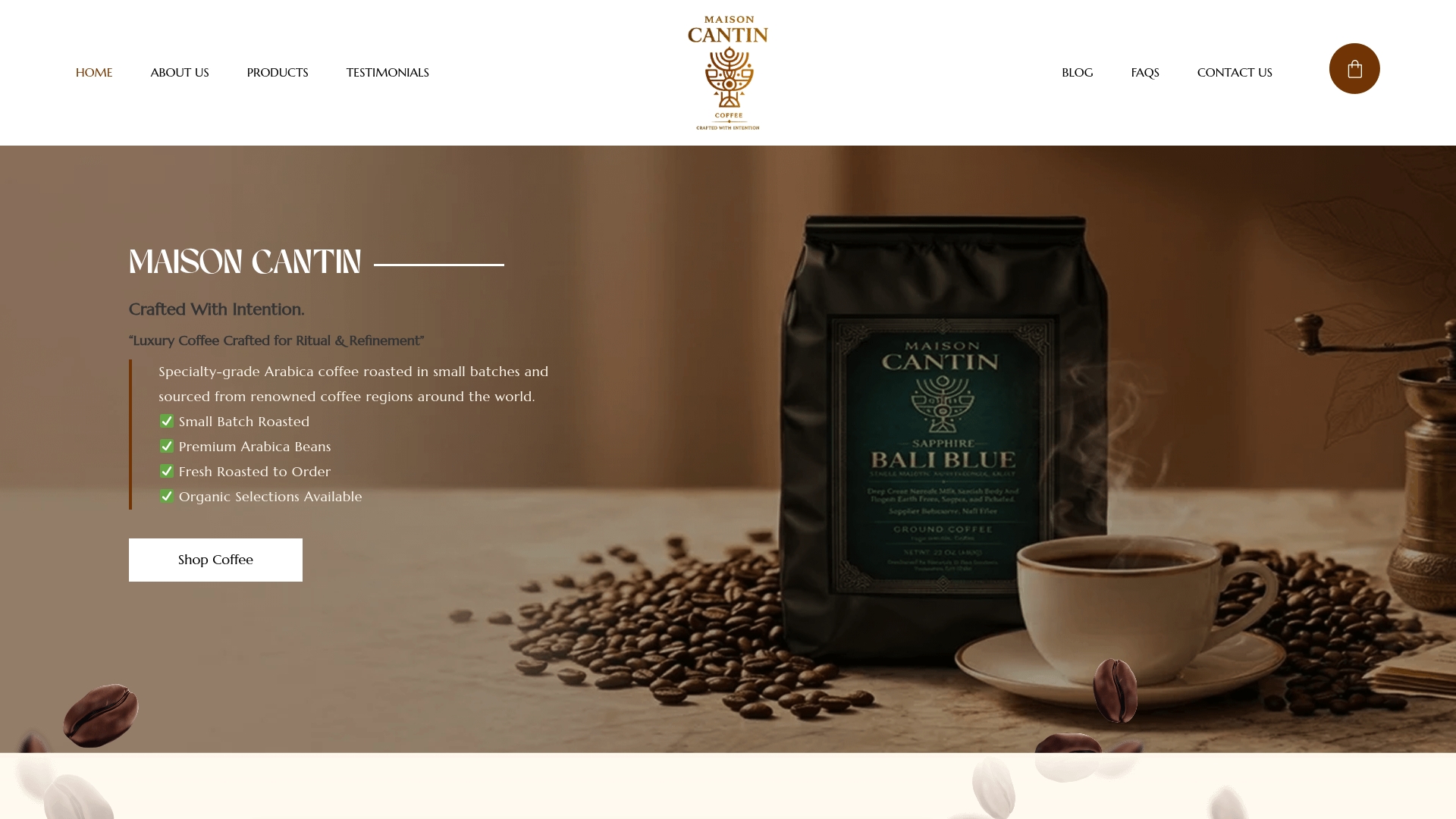
Maisoncantin approaches blending as a ceremony, not a formula. Each blend in the Sapphire Collection is assembled from specialty-grade Arabica beans sourced from complementary origins, then fresh-roasted to order in small batches. That means the blend you receive has never sat in a warehouse. It arrives at peak flavor, ready to become part of your daily ritual. Whether you prefer the clarity of a breakfast-style cup or the depth of a refined espresso blend, Maisoncantin’s full range of coffees offers a starting point for every palate and every moment of the day.
FAQ
What is the difference between a blend and a single origin?
A single-origin coffee comes from one specific farm, region, or country, while a blend combines beans from two or more sources. Blends prioritize consistency and balance; single origins highlight the unique character of a specific place.
Is a coffee blend lower quality than single origin?
Not at all. Specialty roasters like Maisoncantin use premium, specialty-grade beans in their blends. The quality of a blend depends entirely on the quality of its components and the skill of the roaster assembling them.
How many beans are typically in a coffee blend?
Most professional blends use two to four components. Consistency challenges increase significantly with more than three or four components, so most roasters keep their formulas focused.
What makes a good coffee blend?
A good blend assigns each component a clear role, keeps every ingredient above 15% for meaningful contribution, and delivers a consistent flavor profile across different brewing methods and seasonal crop changes.
Can you blend coffee at home without a roaster?
Yes. Home blending works with any pre-roasted beans. Purchase two or three complementary roasted coffees, combine them by weight at a 60/30/10 starting ratio, and refine through side-by-side tasting until the cup reflects exactly what you want.