
Specialty coffee is defined by a measurable quality standard: beans that score 80 or above on the Specialty Coffee Association’s 100-point scale, sourced from specific farms, processed with precision, and roasted to preserve distinct sensory qualities. That standard is why specialty coffee costs more than commodity coffee, and the price gap is grounded in real, traceable factors across the entire supply chain. The median specialty bag price in 2026 sits at $19.78, with some lots reaching $198, a range that reflects the depth of quality and scarcity tiers within this category. Understanding that range is the first step toward spending wisely and drinking better.
Why specialty coffee costs more: the farm-to-cup breakdown
The price of a specialty coffee bag is not inflated arbitrarily. Every dollar reflects a specific decision made somewhere between the farm and your cup.
Green coffee represents 20 to 30% of retail price, which means a $20 bag contains roughly $4 to $6 worth of raw beans. The remaining $14 to $16 covers importing, roasting, packaging, overhead, marketing, and margin. That downstream cost structure is why specialty coffee pricing does not move in lockstep with commodity markets.
Several farm-level factors push green coffee costs above commodity levels:
- Altitude. Specialty Arabica is typically grown at 1,000 to 2,000 meters, where cooler temperatures slow bean development and concentrate sugars. Farms at that elevation are harder to access, more labor-intensive to harvest, and more expensive to operate.
- Processing method. Washed, natural, honey, and anaerobic processing each require different infrastructure, time, and skill. Anaerobic fermentation, for example, demands controlled environments and extended monitoring. These methods are explored in depth in Maisoncantin’s guide to coffee processing techniques.
- Certifications. Fair Trade, Rainforest Alliance, and Organic certifications add compliance costs to producers but support fair wages and environmental practices. Those costs pass through the chain.
- Roasting. Expert roasting tailored to each lot contributes 10 to 18% of the retail price. Specialty roasters develop individual profiles for each origin rather than applying a single commercial curve.
- Packaging and logistics. Nitrogen-flushed, valve-sealed bags protect volatile aromatics. Import costs, freight, and customs add another $1.50 to $2.50 per bag.
Pro Tip: When comparing two bags at similar prices, check whether the roaster publishes the farm name, altitude, and processing method. That transparency signals genuine specialty-grade sourcing, not just premium branding.
How specialty pricing differs from commodity coffee pricing
Commodity coffee trades on futures markets, primarily the ICE C contract, where price reflects supply and demand for undifferentiated Arabica. A bag of commodity coffee carries no farm name, no processing detail, and no sensory score. Price is set by the market, not by quality.
Specialty coffee uses a different mechanism entirely. Buyers and roasters apply quality and traceability differentials on top of the commodity baseline. Those differentials reflect sensory scoring, origin reputation, processing complexity, and lot size. A small-lot Gesha from Panama commands a differential far above a large-lot washed Guatemalan, even if both score above 80 points.
| Factor | Commodity coffee | Specialty coffee |
|---|---|---|
| Price mechanism | Futures market (ICE C contract) | Commodity baseline plus quality differential |
| Quality tracking | None at lot level | Farm, altitude, process, and sensory score |
| Price sensitivity to market | High | Low to moderate |
| Traceability | Minimal | Full supply chain transparency |
| Typical retail range | $8 to $14 per bag | $15 to $198 per bag |
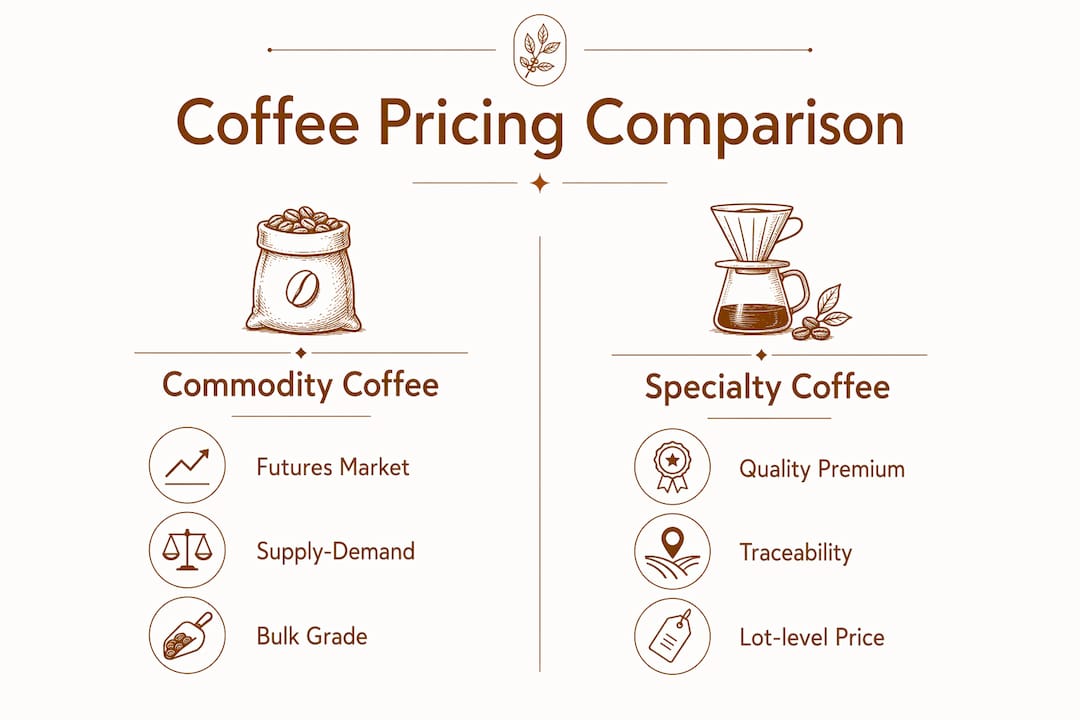
The decoupling between commodity and specialty prices is not theoretical. Retail specialty prices rose 3.9% in Q1 2026 even as commodity green coffee prices fell 7.2%. Specialty roasters manage forward contracts and direct-trade relationships that insulate pricing from short-term market swings. That stability is a feature, not a flaw. It protects producers and maintains quality incentives across the chain.
Consumers pay not just for taste but for lot-level quality tracking: origin reputation, processing method, and sensory profile. That traceability is what separates specialty pricing from commodity pricing at its core.
How roast level and sensory quality shape the price you pay
Roasting is where green coffee potential becomes cup quality, and roast decisions directly affect what a bag is worth to the consumer.
Flavor and aftertaste are the strongest sensory drivers of specialty coffee retail prices, based on research analyzing over 1,600 observations. This means roasters who preserve those attributes through careful profiling can justify higher price points. A coffee with a long, clean finish and layered fruit notes commands more than one with a flat, undifferentiated profile, even at the same origin.
Light roasts preserve the delicate sensory qualities that consumers value most and pay premiums for. Darker roasts mask origin flavors and are less price-sensitive to sensory scores. This is why the specialty espresso distinction matters: a light-roasted single-origin espresso carries a different price logic than a dark commercial blend.
Bag size also plays a measurable role. A 1% increase in bag size reduces the price per gram by 0.13%, meaning smaller packs support higher per-unit margins while larger bags offer better value per gram. Roasters use this deliberately: small 100g tasting bags at premium prices introduce new lots, while 250g and 500g bags serve regular drinkers at a lower unit cost.
Here is what drives sensory-based price premiums in specialty coffee:
- Flavor complexity. Coffees with identifiable tasting notes (stone fruit, jasmine, dark chocolate) score higher and price higher.
- Aftertaste length. A clean, lingering finish is a marker of bean quality and processing precision.
- Roast transparency. Light roasts that reveal origin character are valued more than roasts that obscure it.
- Lot exclusivity. Micro-lots and competition-grade lots carry scarcity premiums beyond sensory scores alone.
Understanding roast profiles in depth helps you connect what you taste in the cup to what you paid for the bag.
What to consider when evaluating specialty coffee prices
Most specialty coffee falls between $15 and $25 per bag for everyday quality. Premiums above $40 typically reflect scarcity, competition placement, or prestige origin rather than a proportional jump in cup quality. Knowing where a price sits in that range helps you spend with intention.
Single-origin coffees carry an average $3.67 premium over blends, driven by consumer willingness to pay for transparency and traceability. That premium is real and justified when the roaster publishes verifiable origin data. When it is not backed by documentation, it is branding, not quality.
Price differences within specialty coffee do not always equal quality differences. Rarity, marketing, and packaging all influence retail price without changing what is in the cup. A well-sourced $18 washed Ethiopian can outperform a $45 micro-lot if the roaster has dialed in the profile correctly.
Pro Tip: Look for roasters who publish the SCA sensory score alongside origin and processing details. A published score above 86 points is a reliable signal of exceptional cup quality, regardless of price tier.
Use these criteria when assessing whether a specialty coffee price reflects genuine value:
- Roaster reputation. Established roasters with direct-trade relationships and published sourcing practices are more reliable than generic “premium” branding.
- Origin transparency. Farm name, region, altitude, and harvest year are markers of traceability, not decoration.
- Processing method. Natural and anaerobic lots cost more to produce. If the price does not reflect that, ask why.
- Bag size economics. A 250g bag at $22 offers better value per gram than a 100g bag at $14, even if the per-bag price is higher.
Key takeaways
Specialty coffee costs more because every stage of its production, from high-altitude farming and complex processing to expert roasting and transparent sourcing, adds measurable, traceable value that commodity coffee does not offer.
| Point | Details |
|---|---|
| Farm-level cost drivers | Altitude, labor, processing method, and certifications raise green coffee costs above commodity levels. |
| Pricing mechanism | Specialty uses quality differentials above commodity baseline, not futures-market pricing. |
| Sensory value | Flavor and aftertaste are the strongest price drivers; light roasts preserve and amplify these qualities. |
| Single-origin premium | Single-origin coffees average $3.67 more than blends due to traceability and transparency. |
| Consumer buying strategy | Prioritize roaster transparency, published sensory scores, and bag size economics over brand prestige alone. |
The price of a cup is the price of a choice
I have spent years tasting coffees across price points, and the single most consistent finding is this: the gap between a $12 commodity bag and a $22 specialty bag is not about marketing. It is about every decision made before the coffee reached the roaster.
What surprises most people is how little of the retail price actually goes to the farmer. When green coffee represents only 20 to 30% of what you pay, the rest of the chain, importers, roasters, packagers, and retailers, absorbs the majority. That is not a scandal. It reflects the genuine cost of quality control at each stage. But it does mean that when a roaster charges $28 for a bag, the question worth asking is not “why so much?” but “where did it go?”
The coffees I find most worth their price are not always the most expensive. They are the ones where the roaster can tell you the farmer’s name, the altitude of the plot, and why they chose that processing method. That specificity is the real premium. It means someone, at every point in the chain, made a deliberate choice rather than a convenient one.
Specialty coffee pricing also matters beyond your cup. Educated consumers who understand why prices are set the way they are tend to support roasters who pay fair differentials and maintain direct relationships with producers. That spending pattern sustains the farms that grow the best coffee in the world. The ritual of a well-made cup is more meaningful when you understand what it took to get there.
— Lily
Discover Maisoncantin’s specialty coffee selection
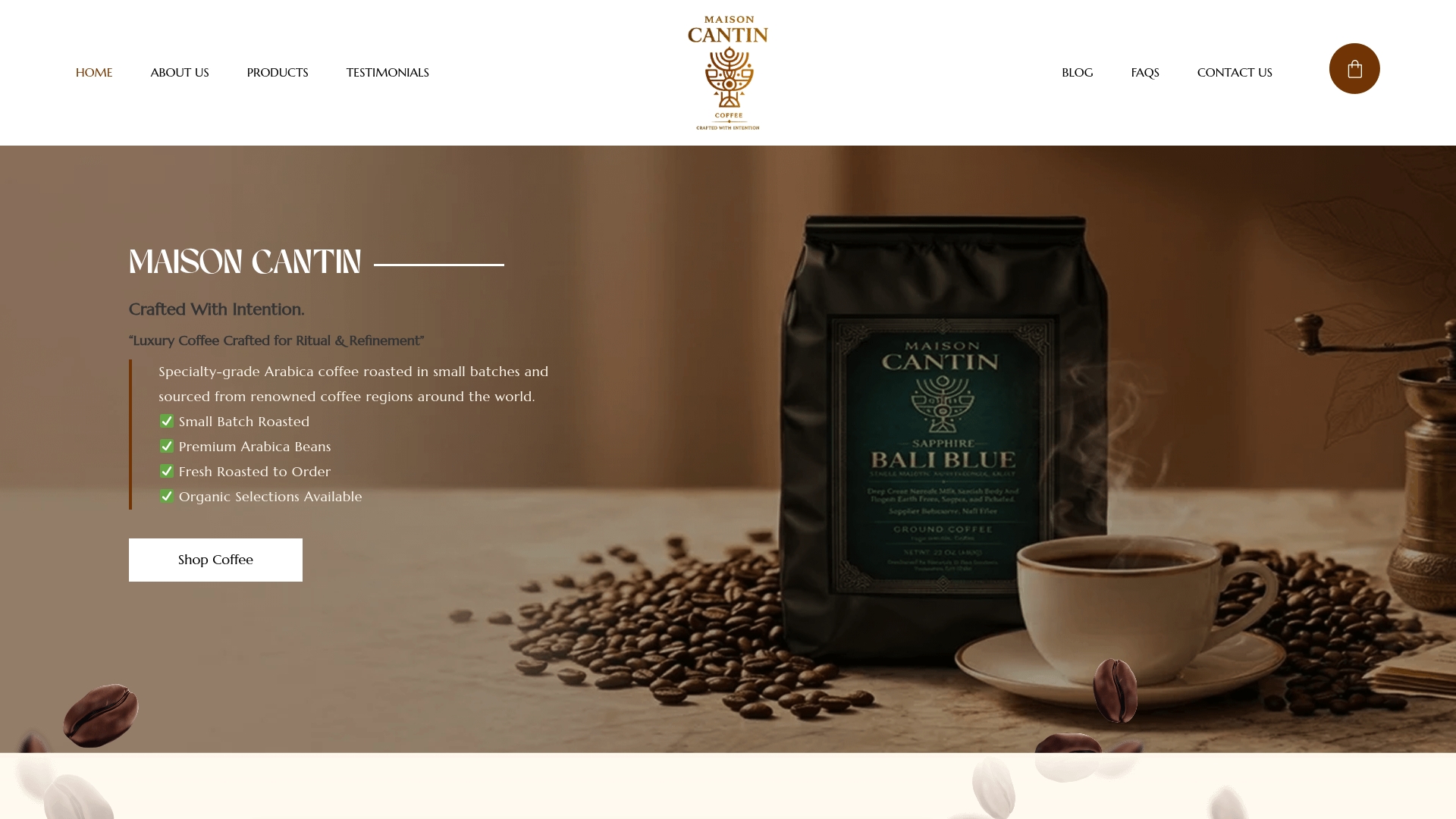
Maisoncantin sources premium specialty-grade Arabica with full origin transparency, roasting each batch fresh to order in small quantities to preserve the sensory qualities that define genuine specialty coffee. Every bag reflects the same cost drivers described in this article: careful sourcing, precise roasting, and a commitment to craft over convenience. If you want to taste the difference that traceability and roast precision make, browse the Maisoncantin coffee catalog and find a lot that matches your palate. For context on how Arabica’s growing conditions shape its flavor and price, the guide on Arabica production factors is a natural next read.
FAQ
Why is specialty coffee so expensive compared to regular coffee?
Specialty coffee costs more because it is grown at higher altitudes, processed with greater precision, and graded against a measurable quality standard. Every stage from farm to roaster adds traceable cost that commodity coffee bypasses entirely.
What is the average price of a specialty coffee bag in 2026?
The median specialty coffee bag price in 2026 is $19.78, with an average of $22.40 across a dataset of 5,978 bags. Prices range from under $5 to $198 depending on quality tier, origin, and lot scarcity.
Does a higher price always mean better specialty coffee?
Not always. Rarity, branding, and packaging influence retail price without guaranteeing superior cup quality. A published SCA sensory score above 86 points is a more reliable quality indicator than price alone.
Why do single-origin coffees cost more than blends?
Single-origin coffees carry an average $3.67 premium over blends because consumers pay for origin transparency and full traceability to a specific farm or region. Blends allow roasters to balance cost and consistency across multiple sources.
Can specialty coffee prices rise even when commodity prices fall?
Yes. Specialty retail prices rose 3.9% in Q1 2026 while commodity green coffee prices fell 7.2%. Specialty roasters use direct-trade contracts and forward purchasing that decouple their pricing from short-term commodity market movements.