
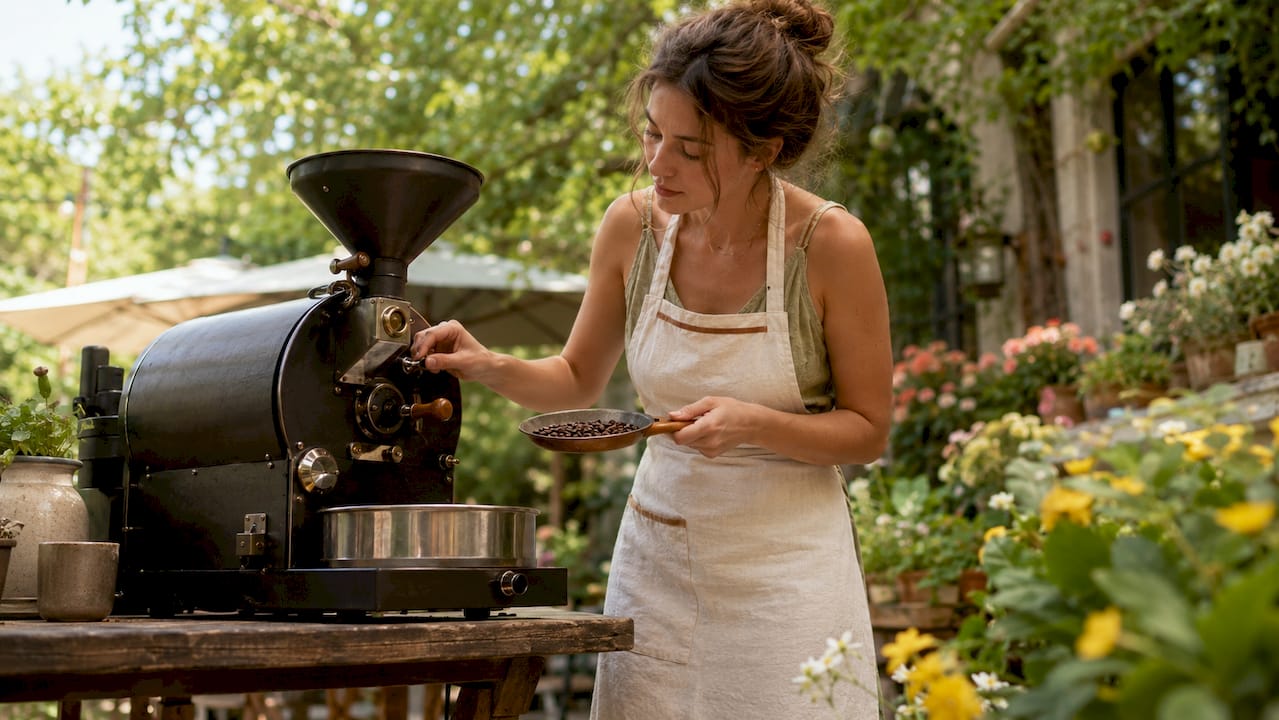
Small batch roasting is defined as the practice of roasting coffee beans in quantities typically ranging from 500 grams to 5 kilograms, with the primary goal of maximizing flavor control and freshness over volume. This method, also known in professional circles as artisan roasting or micro-roasting, stands apart from industrial production by treating each batch as its own ceremony. Where mass roasting prioritizes throughput, small batch roasting prioritizes the bean. The result is a cup that carries the full character of its origin, roast level, and craft. For coffee enthusiasts who treat their morning ritual as something worth protecting, understanding what is small batch roasting is the first step toward a genuinely better cup.
What is small batch roasting and how does it work?
Small batch roasting is the art of roasting limited quantities of green coffee beans under precise, monitored conditions to develop complex, repeatable flavor profiles. Professional micro-roasters use machines ranging from 500 grams for testing and experimentation up to 5 kilograms for commercial production, with every variable, including airflow, drum rotation, and temperature, held under close watch.
The process unfolds in four distinct phases. Each phase shapes the final flavor of your cup in a specific way.
- Drying phase: Beans enter the drum with roughly 10–12% moisture content. Heat rises to approximately 160°C, and the beans shift from green to yellow as moisture evaporates.
- Maillard reaction: Sugars and amino acids interact under heat, producing the bread-like, toasty aromas that signal the beans are developing. This is where foundational flavor complexity is built.
- First crack: At around 196°C, the initial crack occurs. Beans audibly pop as internal pressure releases. This marks the entry into light and medium roast territory.
- Development phase: After first crack, the roaster controls the final minutes carefully. Temperature settles near 170°C as the roaster decides when to drop the beans based on the desired roast level and flavor outcome.
Monitoring tools are non-negotiable at this level of craft. Roasters rely on calibrated thermometers, digital scales, timers, and increasingly on data-logging software to record every parameter. That documentation is what separates a repeatable roast from a lucky one.
Pro Tip: Keep your batch size consistent from roast to roast. Changing the weight of green beans by even 10% alters heat transfer dynamics and can shift your flavor profile noticeably.
Small batch roasting vs. mass roasting: what is the real difference?
The difference between small batch and mass roasting is not just scale. It is a fundamentally different philosophy about what coffee is for.
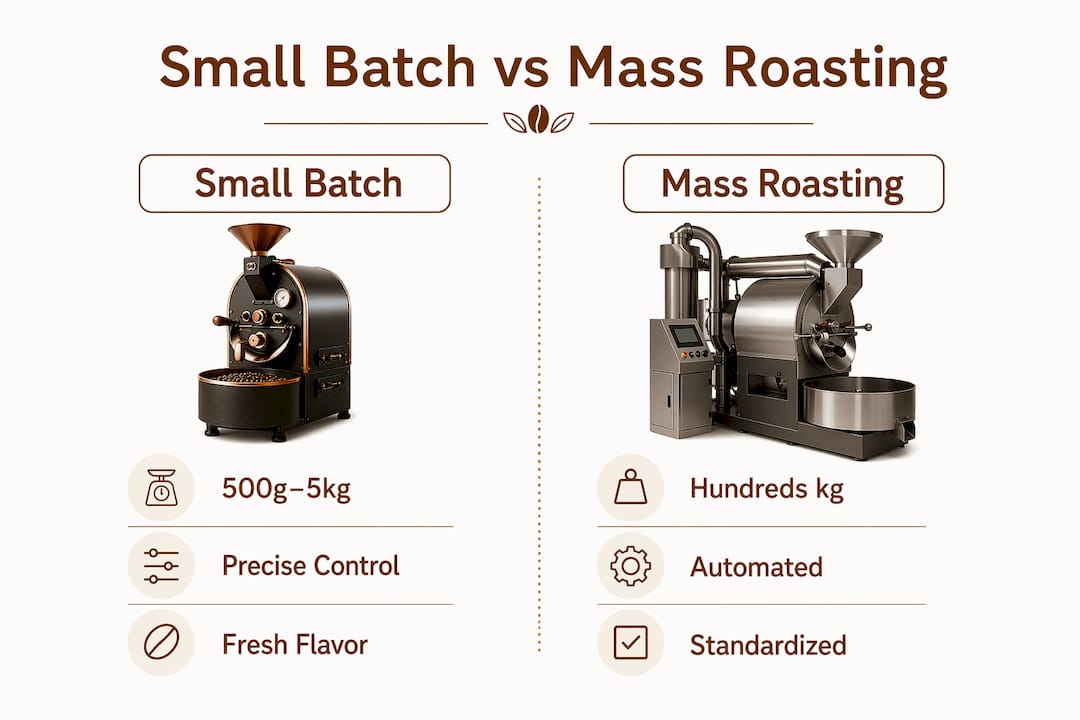
Small batch roasting typically means under 25 pounds per batch, with professional micro-roasteries often working in the 2–5 kg range. Industrial mass roasters process hundreds of kilograms per cycle, prioritizing consistency across enormous volumes rather than nuanced flavor development.
| Factor | Small Batch Roasting | Mass/Industrial Roasting |
|---|---|---|
| Batch size | 500g–5kg per cycle | Hundreds of kg per cycle |
| Flavor control | High, profile tailored to each bean | Standardized across blends |
| Freshness | Roasted frequently, often to order | Roasted in bulk, stored longer |
| Bean sourcing | Single-origin, micro-lot, direct trade | Commodity-grade, large-lot blends |
| Production speed | Slower, deliberate | Fast, volume-driven |
| Roaster skill | Artisan, hands-on | Automated, formula-based |
The freshness advantage deserves particular attention. Small batch roasting involves more frequent, smaller roasts that keep beans closer to their peak flavor window. Mass-roasted coffee often sits in warehouses for weeks or months before reaching your cup. That gap in time is a gap in flavor.
Small batch roasting also supports a different supply chain. It connects directly to small-lot farming practices and direct trade relationships, where the roaster knows the farm, the harvest, and the processing method. That traceability is impossible at industrial scale.
- Flavor profiles are tailored to each specific bean’s origin and density
- Roast cycles happen more frequently, meaning beans reach you fresher
- Direct trade sourcing supports farming communities and quality incentives
- Smaller operations can pivot quickly to seasonal or limited-release beans
Why small batch roasting produces better flavor
Small batch roasting produces superior flavor because it gives the roaster the ability to respond to each bean’s individual characteristics rather than forcing every bean through the same formula.
Roasting in small quantities allows precise flavor profiling by adjusting roast level, timing, and temperature at each phase. A Yirgacheffe from Ethiopia, known for its bright acidity and floral notes, demands a different approach than a Sumatra Mandheling, which calls for a longer development time to bring out its earthy body. Small batch roasting makes those adjustments possible. Mass roasting flattens those distinctions.
Small batch roasting also encourages experimentation with bean origins and roast profiles in ways that large-scale operations simply cannot accommodate. A micro-roaster can test a new single-origin bean at three different roast levels in a single afternoon and choose the profile that best honors the bean’s character.
The sensory results are measurable. Freshly roasted coffee, roasted in small quantities and consumed within two to four weeks of roasting, delivers:
- Aroma: Volatile aromatic compounds are preserved when beans are roasted and used quickly, producing a more expressive fragrance in both dry grounds and brewed coffee
- Acidity: Bright, clean acidity, a hallmark of quality specialty Arabica, is better preserved in fresh, carefully roasted beans
- Body: Controlled development time builds the mouthfeel and weight of the cup without tipping into bitterness
- Sweetness: Proper Maillard reaction management produces natural caramel and fruit notes without the burnt edge common in over-roasted mass-produced coffee
Understanding how roast profiles shape flavor is the foundation of getting the most from any small batch method.
How to start small batch roasting at home
Starting small batch roasting at home is more accessible than most enthusiasts expect. The learning curve is real, but the equipment barrier is lower than it once was.
Essential equipment:
- A dedicated home or prosumer roaster (capacity: 100g–500g for home use)
- A calibrated digital thermometer
- A precise digital scale (accurate to 1 gram)
- A cooling tray or colander with a fan
- Adequate ventilation, since roasting produces significant smoke
Once your setup is ready, follow this process:
- Source quality green beans. Start with a single-origin bean from a reputable green coffee supplier. Ethiopian, Colombian, and Guatemalan origins are forgiving for beginners and reward careful roasting.
- Weigh your batch. Start with 200–300 grams. Consistency in batch size is the single most important variable for repeatability.
- Preheat your roaster to the manufacturer’s recommended starting temperature, typically around 160–180°C.
- Load the beans and monitor temperature. Watch for the color shift from green to yellow (drying phase), then the onset of the Maillard reaction as aromas develop.
- Listen for first crack at approximately 196°C. Decide your roast level: drop the beans shortly after first crack for a light roast, or extend development time for medium.
- Cool immediately. Transfer beans to your cooling tray and agitate them until they reach room temperature. Slow cooling continues the roast and can push beans darker than intended.
- Rest and taste. Allow beans to off-gas for 12–24 hours before brewing. Taste at 48 hours and again at 5 days to track how flavor evolves.
Documenting roast parameters including temperature, time, batch weight, and tasting notes is what separates a roaster who improves from one who repeats the same mistakes. A simple notebook works. Dedicated apps like Artisan or RoastLog work even better.
Pro Tip: Do not rush the development phase after first crack. Pulling beans too early produces a grassy, underdeveloped flavor sometimes called “baked” or “green.” Give the roast at least 60–90 seconds of development time after first crack for a clean, sweet result.
Pairing your roasting practice with a deeper understanding of brewing specialty coffee at home will help you evaluate your roasts more accurately and refine your technique faster.
Key takeaways
Small batch roasting delivers superior flavor, freshness, and craft by prioritizing precise control over volume at every stage of the roast.
| Point | Details |
|---|---|
| Batch size defines the method | Small batch roasting uses 500g–5kg per cycle, enabling hands-on control over every variable. |
| Four phases shape flavor | Drying, Maillard reaction, first crack, and development each require deliberate temperature management. |
| Freshness is a structural advantage | Frequent, smaller roast cycles mean beans reach you closer to their peak flavor window. |
| Documentation drives repeatability | Logging temperature, time, and tasting notes is the only reliable path to consistent quality. |
| Sourcing and roasting are linked | Small batch roasting connects directly to single-origin and direct trade sourcing for traceability and quality. |
The craft demands patience, and that is the point
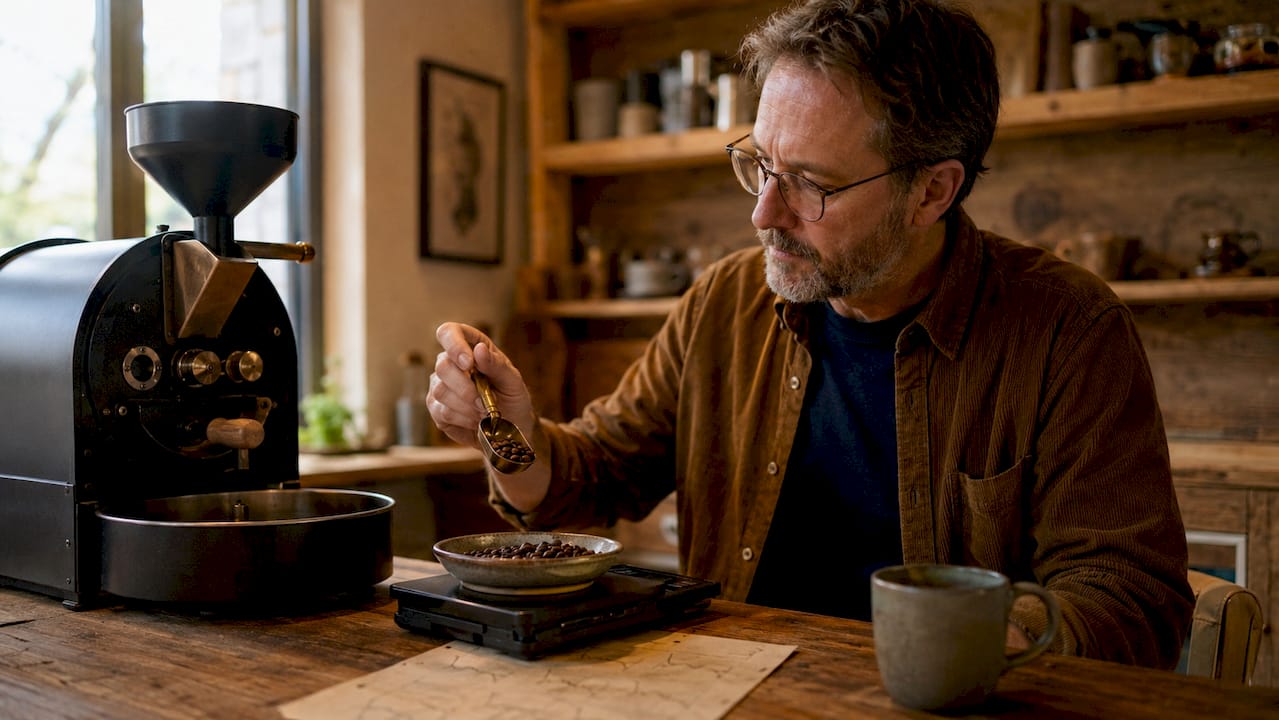
I have spent years tasting coffee roasted at every scale, from single-cup pourover experiments to full commercial production runs, and the gap in quality is not subtle. Small batch roasting does not just produce fresher coffee. It produces more intentional coffee.
The part that surprises most beginners is how much the process teaches you about the bean itself. When you roast 250 grams of a washed Kenyan and watch it move through each phase, you start to understand why that bean tastes the way it does. You are not just applying heat. You are making decisions. That is the craft dimension that mass roasting eliminates entirely.
My honest advice: resist the urge to scale up too quickly. The temptation, once you taste your first successful roast, is to buy a larger machine and roast more. But the skill lives in the small batches. The attention, the listening, the adjustments. Scale before you have mastered the fundamentals and you will just produce more mediocre coffee faster.
Experimentation is where the real satisfaction lives. Try the same bean at three different roast levels. Adjust your development time by 30 seconds and taste the difference. Keep notes. The roast profile is your creative tool, and small batch roasting is the only context where you have full creative control.
One more thing: do not underestimate the value of sourcing. The best roasting technique in the world cannot rescue a mediocre green bean. Start with specialty-grade Arabica and your learning curve will reward you much faster.
— Lily
Experience small batch craft with Maisoncantin
If this process resonates with you, the next step is tasting what it produces at its best.
Maisoncantin roasts every order fresh, in small batches, using specialty-grade Arabica sourced from carefully selected origins. There are no warehouses, no sitting inventory, and no compromises on freshness. Every bag ships at peak flavor, so you experience the full character of the bean as the roaster intended. Browse the full product collection to find single-origin offerings and thoughtfully crafted blends, or explore the specialty-grade Arabica guide to deepen your understanding of what makes a bean worth roasting this carefully. Your morning ritual deserves this level of craft.
FAQ
What is small batch roasting in simple terms?
Small batch roasting is the practice of roasting coffee in quantities of 500 grams to 5 kilograms per cycle to maximize flavor control and freshness. It prioritizes craft and bean quality over production volume.
How does small batch roasting differ from mass roasting?
Small batch roasting uses under 5 kilograms per cycle and tailors each roast to the bean’s specific characteristics, while mass roasting processes hundreds of kilograms using standardized formulas that prioritize consistency over nuance.
What equipment do i need to start small batch roasting at home?
The core setup includes a dedicated home roaster, a digital thermometer, a precise scale, a cooling tray, and good ventilation. Data-logging tools like Artisan or RoastLog help track roast parameters for repeatability.
What roasting temperature stages should i know?
The drying phase begins around 160°C, the Maillard reaction follows as aromas develop, first crack occurs near 196°C, and the development phase continues until the roaster decides to drop the beans based on the target roast level.
Why does small batch roasting produce fresher coffee?
Small batch roasting involves more frequent, smaller roast cycles, meaning beans spend less time in storage before reaching the consumer. That shorter gap between roast and cup preserves volatile aromatic compounds and peak flavor.