
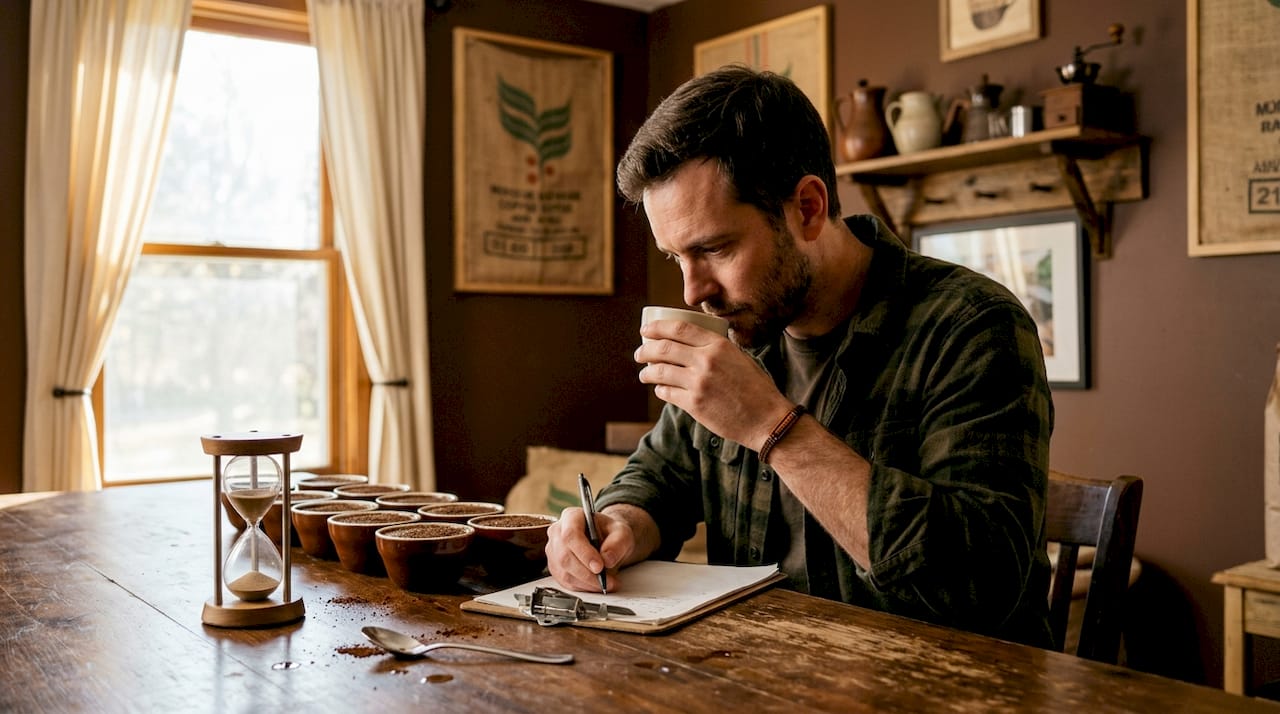
Arabica coffee is the defining choice of specialty coffee professionals because it delivers flavor complexity, balanced acidity, and a smooth cup profile that no other species consistently matches. The species Coffea arabica accounts for 60 to 70% of global coffee production and holds an even stronger grip on the specialty segment, where origin expression and sensory nuance are the standard. Understanding why arabica preferred by professionals requires looking beyond taste preference into chemistry, agriculture, and craft. This article covers all three, with the precision that baristas and roasters actually need.
Why arabica is preferred by professionals: the chemical foundation
The core reason Arabica dominates professional coffee selections is biochemical. Arabica beans contain approximately 60% more lipids and nearly twice the sugar concentration of Robusta beans. More lipids mean a richer mouthfeel and better aroma retention. More sugars mean the Maillard reaction during roasting produces deeper sweetness and more nuanced caramelization.
Arabica also carries lower concentrations of caffeine and chlorogenic acids than Robusta. Chlorogenic acids are the primary source of bitterness and astringency in brewed coffee. Lower caffeine and bitter compounds translate directly into a smoother, cleaner cup. This is not a minor difference. Robusta can contain nearly twice the caffeine of Arabica, and that gap shapes everything from flavor balance to the physical sensation of drinking it.
Key chemical distinctions that shape Arabica’s flavor profile:
- Higher lipid content: Contributes to body, mouthfeel, and the preservation of volatile aromatic compounds through roasting
- Higher sugar concentration: Produces greater sweetness and more complex caramelization during the roast
- Lower caffeine: Reduces bitterness and the sharp, harsh edge common in commodity blends
- Lower chlorogenic acids: Minimizes astringency, allowing fruit, floral, and chocolate notes to come forward
Pro Tip: When cupping an unfamiliar Arabica lot, pay attention to the finish. A clean, sweet aftertaste with no harsh bite is the clearest signal of low chlorogenic acid content and good bean development.
Roasting transforms these compounds rather than creating them. A skilled roaster working with quality Arabica is amplifying what is already present in the green bean. That is why sourcing matters as much as technique.
How growing conditions shape Arabica’s flavor complexity
Arabica’s flavor advantages are not purely genetic. They are deeply environmental. High-altitude growing conditions lead to slower coffee cherry maturation, and that slower development is where complexity is built. Cooler temperatures at elevation slow the conversion of sugars, allowing the bean to accumulate a more intricate chemical profile over time.
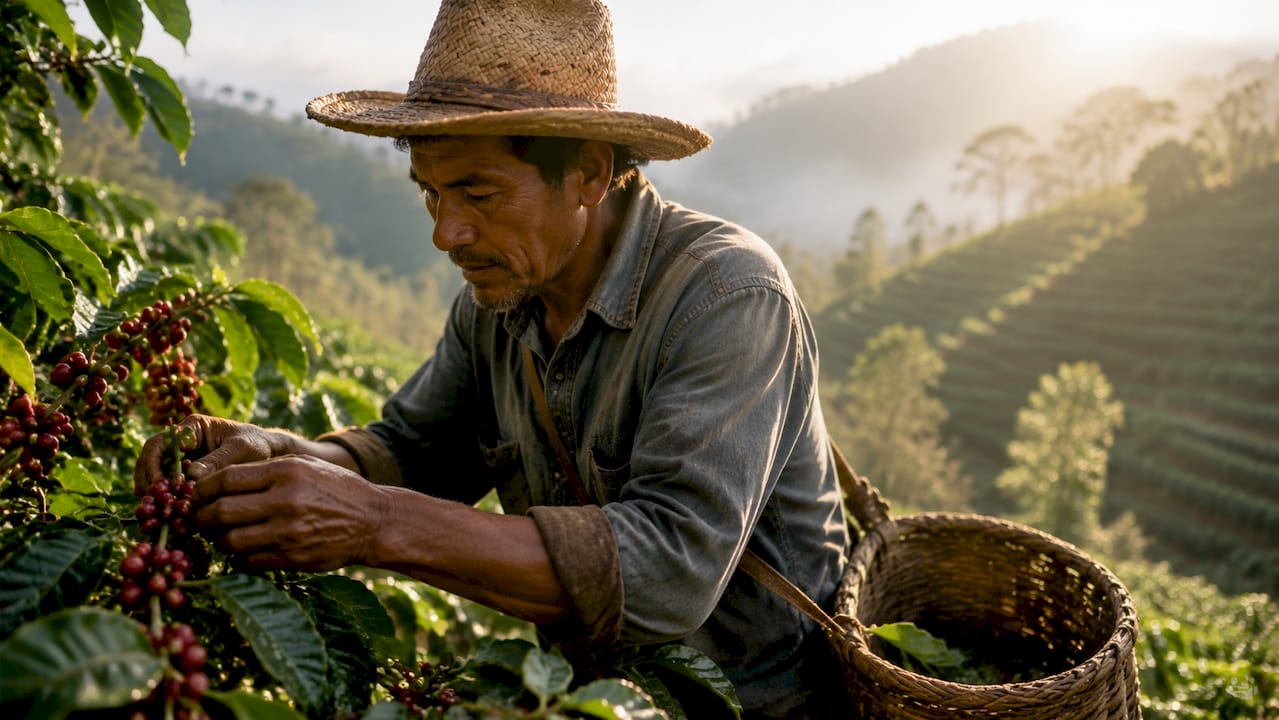
The concept of terroir, borrowed from wine, applies directly here. Altitude, soil mineral content, rainfall patterns, and shade cover all leave measurable signatures in the cup. An Ethiopian Yirgacheffe processed naturally will express jasmine and stone fruit. A washed Guatemalan Huehuetenango from the same harvest year will lean toward brown sugar and citrus. Terroir drives altitude, soil, and climate influences that specialty programs use to differentiate their offerings at a premium.
Environmental factors that define Arabica quality:
- Altitude (1,200 to 2,200 meters): Cooler air slows maturation and concentrates sugars and aromatic precursors
- Stable climate: Arabica is sensitive to temperature swings, requiring consistent conditions to develop evenly
- Soil composition: Volcanic soils in regions like Colombia, Ethiopia, and Guatemala contribute mineral complexity
- Shade and canopy: Reduces stress on the plant, producing denser, more developed beans
Pro Tip: When reviewing green coffee offers, always ask for the specific farm altitude and processing method together. Altitude tells you the potential; processing tells you how much of that potential was preserved.
Post-harvest handling and quality control are equally critical. A high-altitude Arabica lot processed carelessly will lose the clarity that made it worth growing. Fermentation control, drying uniformity, and moisture content at export all determine whether the terroir story survives to the roaster’s table.
Arabica vs Robusta: what professionals actually choose and why
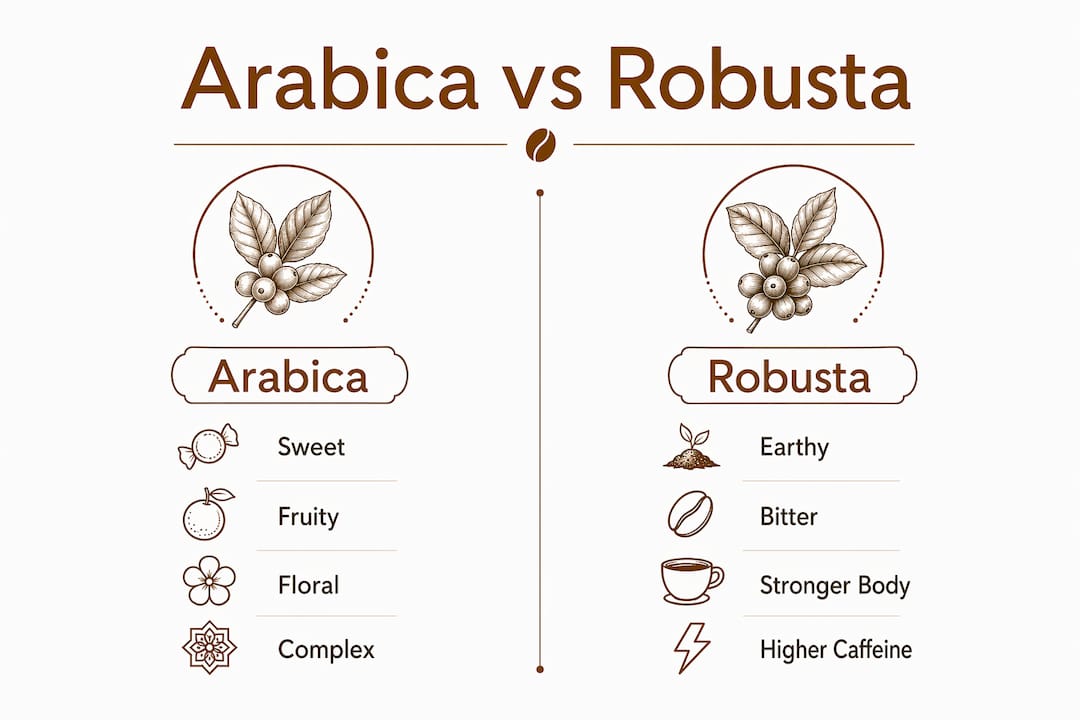
The Arabica vs Robusta preference among professionals is not a debate. It is a decision shaped by purpose. Arabica is the standard for specialty and origin-focused programs. Robusta has its place, but that place is defined by function rather than flavor.
| Attribute | Arabica | Robusta |
|---|---|---|
| Flavor profile | Sweet, fruity, floral, complex | Earthy, bitter, woody, flat |
| Caffeine content | Lower (approx. 1.2 to 1.5%) | Higher (approx. 2.2 to 2.7%) |
| Lipid content | Higher, richer mouthfeel | Lower, thinner body |
| Acidity | Bright, structured | Low, dull |
| Specialty use | Single origin, pour-over, specialty espresso | Crema enhancement, cost-reduction blending |
| Growing altitude | 1,200 to 2,200 meters | Sea level to 800 meters |
| Price point | Premium | Commodity |
Arabica’s higher acidity is one of the most misunderstood qualities among consumers, but professionals treat it as an asset. Acidity in coffee is not sourness. It is brightness. It is the quality that prevents a cup from tasting flat or one-dimensional. A well-structured Arabica from Sidama or Nariño carries acidity the way a good Burgundy carries tartness: as a structural element, not a flaw.
Espresso blends often combine mostly Arabica with small Robusta additions to boost crema and body. That is a practical compromise for commercial volume. But in specialty espresso programs, pure Arabica is the standard because the flavor complexity and sweetness of the shot depend on it. The benefits of Arabica coffee in espresso are most visible in the cup’s finish: clean, sweet, and expressive rather than harsh and flat.
What professionals consider when selecting Arabica for roasting and brewing
Choosing Arabica beans for professional use involves more than reading a flavor wheel. It requires understanding how the bean’s chemistry will respond to heat, water, and time.
-
Roast profile flexibility. Arabica performs across light, medium, and darker roast profiles, but each range reveals different qualities. Light roasts preserve the origin character: floral notes, fruit acidity, and terroir. Medium roasts develop sweetness and balance. Darker roasts shift toward chocolate and caramel while reducing acidity. Understanding roast profiles is the first practical skill in working with Arabica at a professional level.
-
Brew method alignment. Arabica’s acidity and aroma make it ideal for filter methods like Chemex, V60, and Kalita Wave, where clarity and brightness can fully express. For espresso, the same acidity requires careful extraction management. Grind size, water temperature, and brew ratio all interact with Arabica’s sugar and acid content in ways that Robusta simply does not demand. Explore how specialty espresso differs from commercial coffee to understand why these variables matter more with Arabica.
-
Sourcing and traceability. Arabica plants require more care and are more disease-prone, which is part of why they command premium pricing and why traceability matters. Knowing the farm, the altitude, the harvest date, and the processing method is not optional in specialty coffee. It is the foundation of quality control. Professionals use this information to predict flavor behavior before the first roast.
-
Storytelling and product positioning. Arabica’s terroir sensitivity is a commercial advantage. Arabica dominates specialty coffee precisely because it allows roasters and cafes to build narratives around origin, farmer relationships, and seasonal lots. That storytelling creates the perceived and real value that justifies premium pricing. Robusta cannot carry that story because its flavor profile does not change meaningfully with origin.
Pro Tip: When building a seasonal menu, anchor each Arabica offering to a specific processing method and altitude range. Customers who understand why a washed Ethiopian tastes different from a natural Brazilian will return for the next lot.
Key takeaways
Arabica is preferred by professionals because its chemical composition, growing conditions, and flavor complexity create a cup that Robusta cannot replicate at the specialty level.
| Point | Details |
|---|---|
| Chemical superiority | Arabica’s higher lipids and sugars produce sweetness, body, and aroma that define specialty coffee. |
| Terroir expression | High-altitude slow maturation creates the nuanced flavor profiles that origin programs are built on. |
| Acidity as an asset | Arabica’s structured acidity adds brightness and prevents flat, one-dimensional cups. |
| Roast and brew versatility | Arabica performs across all roast levels and brew methods, giving professionals creative range. |
| Traceability and storytelling | Arabica’s sensitivity to origin makes it the only species that supports premium product narratives. |
Why Arabica still earns its place at every professional table
From my perspective, the conversation about why Arabica holds its position in specialty coffee is not really about chemistry or altitude, even though both matter enormously. It is about what the species demands of everyone who works with it.
Arabica is not forgiving. It requires precise growing conditions, careful harvesting, controlled fermentation, and thoughtful roasting. Every step where attention slips shows up in the cup. That unforgiving nature is exactly what makes it worth working with. The difficulty is the quality signal.
What I find most telling is how the industry has responded to Arabica’s challenges rather than worked around them. Specialty roasters invest in direct trade relationships, travel to origin, and pay above Fair Trade prices not because it is easy but because the flavor return on that investment is real. A lot from a single farm in Huila, Colombia, processed with precision and roasted to highlight its natural sweetness, delivers something that no commodity blend can approximate.
The trend toward identifying specialty grade Arabica with greater precision reflects this. Professionals are not just choosing Arabica over Robusta. They are choosing specific Arabica lots, specific processing methods, and specific roast windows. That level of intentionality is what separates specialty coffee from everything else.
Arabica also enables a kind of meaningful differentiation that matters in a crowded market. When two roasters source from the same region but different farms, the cups will taste different. That is not marketing. That is the species doing what it does best: translating place into flavor.
— Lily
Explore Maisoncantin’s premium Arabica collection
At Maisoncantin, we believe every cup of coffee deserves the same care that went into growing it. Our small-batch, fresh-roasted-to-order Arabica coffees are sourced with traceability and crafted to let origin speak clearly in the cup.
Whether you are a barista building a seasonal menu or an enthusiast refining your morning ritual, our guides on Arabica caffeine differences and specialty grade identification offer the depth you need to choose with confidence. Browse our full Arabica range and find the lot that speaks to your palate. Morning clarity. Midday focus. Evening conversation. It begins with the right bean.
FAQ
Why do coffee professionals prefer Arabica over Robusta?
Arabica delivers flavor complexity, balanced acidity, and a smooth finish that Robusta cannot match. Its higher lipid and sugar content produces sweetness and aroma that define specialty coffee standards.
Does Arabica have less caffeine than Robusta?
Arabica contains roughly half the caffeine of Robusta, which directly reduces bitterness and the harsh edge associated with high-caffeine blends. This lower caffeine level is one of the key Arabica coffee advantages in professional settings.
Is Arabica’s acidity a problem for espresso?
No. Professionals treat Arabica’s acidity as a structural quality that adds brightness and prevents flat flavor. Proper extraction management, including grind calibration and water temperature, channels that acidity into a clean, expressive shot.
What growing conditions produce the best Arabica?
High altitudes between 1,200 and 2,200 meters, stable cool climates, and mineral-rich soils produce the best Arabica. These conditions slow cherry maturation and allow complex sugars and aromatic compounds to develop fully.
Can Robusta ever replace Arabica in specialty coffee?
Robusta is used in small quantities to add crema and body to espresso blends, but it cannot replace Arabica for origin-focused specialty programs. Its flat flavor profile and low lipid content make it unsuitable for the nuanced cup quality that specialty coffee requires.