
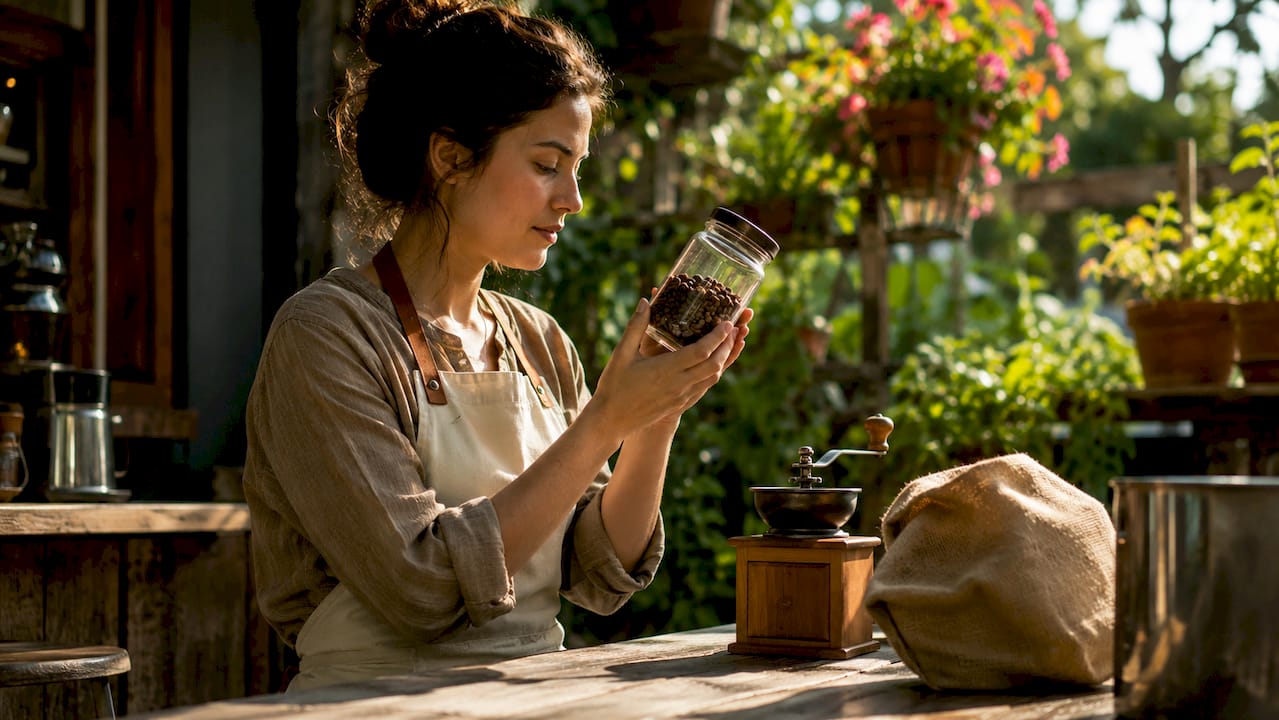
Choosing high quality coffee beans means selecting beans that are fresh, well-roasted, and matched to your brewing method and taste preferences. The industry term for the highest tier is specialty coffee, defined by the Specialty Coffee Association (SCA) as beans scoring 80 or above on a 100-point grading scale. Most coffee drinkers never see this standard applied to what they buy. Understanding it changes everything about how you shop, brew, and taste.
How to choose high quality coffee beans: start with freshness
Freshness is the single most overlooked factor in best coffee bean selection. A bag can look premium, carry an exotic origin story, and still taste flat if the beans are weeks past their peak. Roast date determines freshness, not the best-by date printed on the back of the bag. Best-by dates on commercial coffee often extend 12–18 months from roasting. That tells you shelf stability, not flavor quality.
The peak flavor window for most beans falls 5–21 days post-roast. Within that window, the sugars, acids, and aromatic compounds are at their most expressive. After three weeks, oxidation begins to dull the cup.
There is one nuance worth knowing. Roasted beans release CO2 for the first few days after roasting, a process called degassing. That CO2 causes uneven extraction if you brew too soon. Letting fresh beans rest 3–7 days before brewing actually improves the result. Very fresh is good. Brewed the same day as roasting is not.
Practical freshness habits to build:
- Always look for a printed roast date, not just a best-by date
- Beans without a roast date signal low transparency and likely older, commercial-grade coffee
- Buy smaller bags more frequently rather than large bulk quantities
- Buy 200–250g bags every 2–3 weeks rather than 1kg at once to stay near peak freshness
- Store beans in an airtight, opaque container away from heat and light
Pro Tip: Specialty roasters always print the roast date clearly. If a bag only shows a best-by date two years out, put it back on the shelf.
What roast level suits your brewing method?
Roast level shapes the flavor of every cup more than almost any other variable. Light, medium, and dark roasts are not just degrees of color. They represent fundamentally different flavor profiles, and each performs differently depending on how you brew.
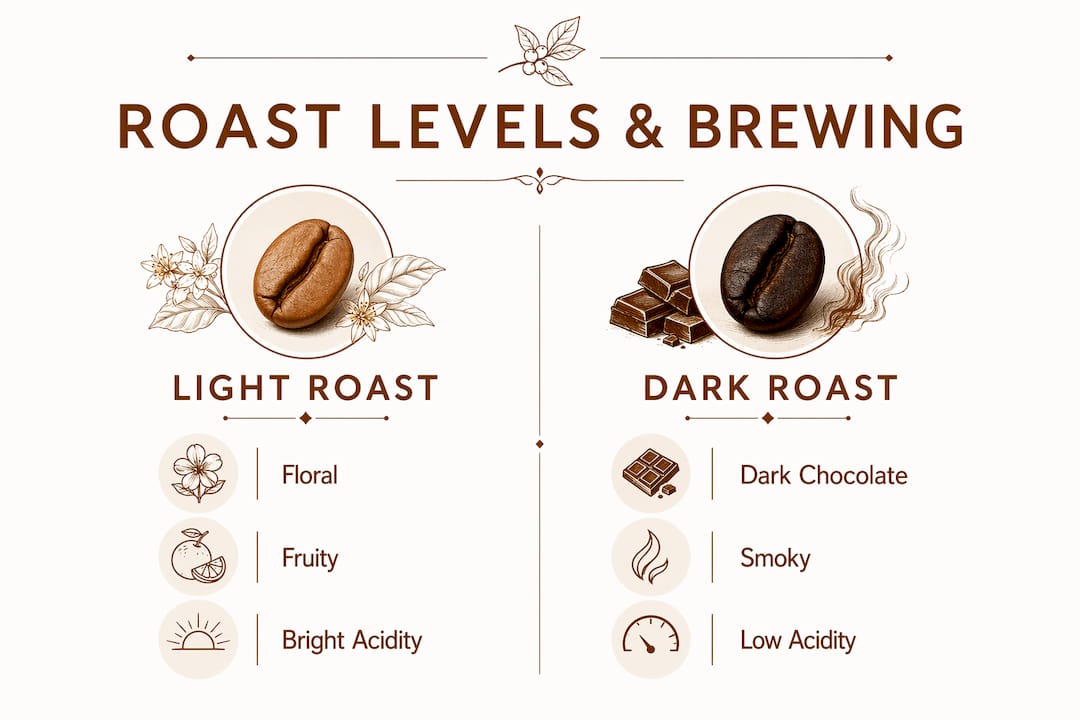
Light roasts preserve the most origin character. They tend toward floral, fruity, and tea-like flavors with bright acidity. The bean’s natural sugars are less caramelized, so the terroir of the farm comes through clearly. Light roasts are best suited to pour-over methods like the Hario V60 or Chemex, where water temperature and contact time can be controlled precisely.
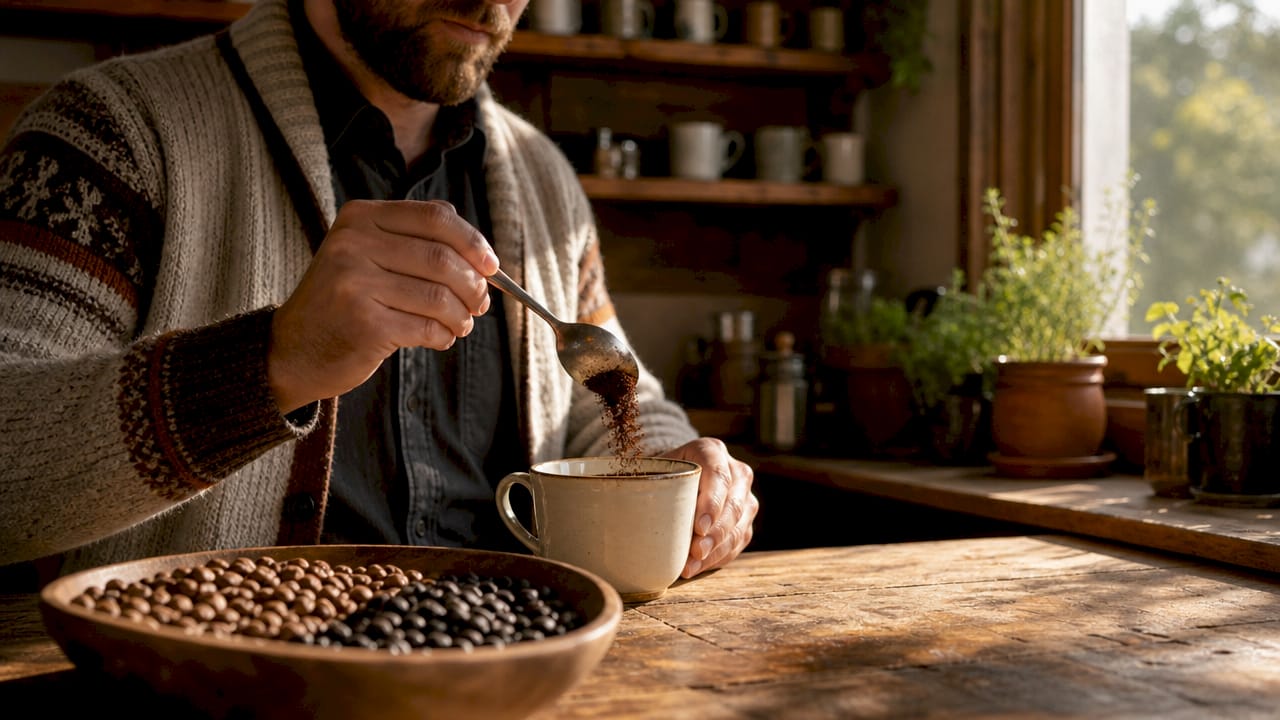
Medium roasts balance origin character with roast-developed sweetness. Caramel, chocolate, and nut notes emerge. This range works well for drip coffee, AeroPress, and flat white-style espresso. Medium to dark roasts yield traditional espresso flavor profiles, though any roast level can technically be pulled as espresso.
Dark roasts push roast-forward flavors: dark chocolate, smoke, and low acidity. Cold brew benefits from dark roasts because the long, cold extraction softens bitterness and amplifies body. French press also suits dark roasts well.
| Roast level | Flavor profile | Best brewing methods |
|---|---|---|
| Light | Floral, fruity, bright acidity | Pour-over, Chemex, V60 |
| Medium | Caramel, chocolate, balanced | Drip, AeroPress, flat white |
| Medium-dark | Bittersweet, full body | Espresso, moka pot |
| Dark | Smoky, low acidity, bold | Cold brew, French press |
Pro Tip: If you pull espresso at home, start with a medium roast. It forgives minor grind inconsistencies far better than a light roast, which demands near-perfect extraction to avoid sourness.
For a deeper look at how roast development affects flavor, the roast profiles guide at Maisoncantin walks through each level with sensory detail.
How do origin and processing affect coffee bean quality?
Origin is the address of flavor. The soil, altitude, rainfall, and temperature of a coffee farm all shape the bean’s chemical composition before it ever reaches a roaster. Coffee origin and processing method significantly affect flavor, and understanding both helps you predict what a cup will taste like before you brew it.
Arabica vs. Robusta is the first distinction to make. Arabica beans grow at higher altitudes, contain more complex sugars and aromatic compounds, and produce a smoother, more nuanced cup. Robusta grows at lower altitudes, carries roughly twice the caffeine, and delivers a harsher, more bitter flavor. Specialty coffee is almost exclusively Arabica. Maisoncantin works exclusively with specialty-grade Arabica, which reflects the standard that serious coffee enthusiasts recognize as the foundation of a refined cup.
Processing method is the step between harvested coffee cherry and dried green bean. It changes flavor dramatically:
- Washed (wet) process: The fruit is removed before drying. The result is a clean, bright cup where origin character shines clearly.
- Natural (dry) process: The whole cherry dries around the bean. This produces fruity, wine-like, and fermented notes with heavier body.
- Honey process: A middle path. Some fruit mucilage remains during drying, creating sweetness and complexity between washed and natural.
When you buy premium coffee beans, check the label for these provenance details:
- Country and region of origin
- Farm or cooperative name
- Variety (Bourbon, Typica, Gesha, SL28, etc.)
- Processing method
- Harvest year
Specialty roasters disclose all of this. Commercial brands rarely do. That gap in transparency is itself a quality indicator. For a full breakdown of how processing shapes taste, the coffee processing methods guide at Maisoncantin covers each method with tasting notes.
How do you evaluate coffee bean quality using grading and sensory cues?
The SCA grades specialty coffee on a 100-point scale, with 80 or above defining specialty grade. Scores in the 82–86 range are common for premium single-origin selections. A score above 90 is considered exceptional and rare. This system gives buyers an objective benchmark that goes far beyond marketing language like “premium” or “artisan.”
Cupping score sheets break the final score into individual attributes. Each of these tells you something specific:
- Aroma: Fragrance dry and wet; a good bean smells complex and clean
- Acidity: Brightness and liveliness, not sourness; quality acidity feels pleasant
- Body: Weight and texture on the palate; full body is not always better, just different
- Uniformity: Consistency cup to cup; defects show up here
- Finish: How long and pleasantly the flavor lingers after swallowing
Asking a roaster for a cupping score sheet is entirely reasonable. Specialty roasters expect the question. If a roaster cannot provide one, that is a signal worth noting.
At home, you can apply a simplified version of sensory evaluation. Smell the dry grounds before brewing. A high-quality bean smells complex, not musty or flat. After brewing, taste for clarity. A well-sourced, well-roasted bean produces a cup where individual flavors are distinct, not muddled. Common defects to avoid include a fermented or sour smell in dry grounds, a papery or cardboard taste in the cup, and a harsh, astringent finish that does not fade.
How to align bean selection with brewing and dialing-in
Selecting a great bean is only half the work. Extraction determines whether those qualities actually reach your cup. Dialing-in grind size first is the most effective approach to homebrew flavor tuning. Grind size controls extraction rate more than any other variable.
A structured approach to dialing-in:
- Fix your recipe first. Set a consistent dose, water temperature, and brew ratio before changing anything else.
- Adjust grind size only. Change one variable at a time. Changing grind and dose simultaneously makes it impossible to identify what improved the cup.
- Diagnose by taste. Sour flavors indicate under-extraction; bitter astringency signals over-extraction. Grind finer to extract more, coarser to extract less.
- Account for roast level. Light roasts need finer grinds and higher temperatures to extract fully. Dark roasts extract faster and can turn bitter quickly.
- Rest your beans. Very fresh beans degas aggressively and resist even extraction. Wait 3–7 days post-roast before brewing for best results.
Consistency is what reveals bean quality over time. A stable recipe removes the variables that mask or distort what the bean actually tastes like. For a complete walkthrough of extraction technique, the guide on brewing specialty coffee at home at Maisoncantin covers grind, dose, and temperature in practical detail.
Key Takeaways
Choosing high quality coffee beans requires freshness, roast-to-method matching, origin transparency, and consistent extraction to reveal the bean’s true character.
| Point | Details |
|---|---|
| Roast date over best-by | Buy beans within 5–21 days of roast date for peak flavor. |
| Match roast to brew method | Light roasts suit pour-over; medium to dark roasts suit espresso and cold brew. |
| Check origin and processing | Washed, natural, and honey processes each produce distinct flavor profiles. |
| Use SCA grading as a benchmark | Specialty grade starts at 80 points; scores of 82–86 indicate premium quality. |
| Dial-in grind size first | Adjust grind before any other variable to diagnose under or over-extraction. |
What I’ve learned from years of chasing the perfect cup
The most common mistake I see among coffee enthusiasts is spending money on expensive beans and then brewing them on stale autopilot. A $30 bag of single-origin Gesha brewed with a two-year-old grind setting and tap water at the wrong temperature will taste worse than a $15 medium roast dialed in with care. The bean matters. The process matters equally.
My honest experience is that the shift from commercial to specialty coffee feels disorienting at first. Light roasts taste sour to palates trained on dark, heavily roasted blends. That sourness is often not a defect. It is brightness. It takes a few weeks of intentional tasting to recalibrate. I recommend starting with a well-sourced medium roast from a transparent roaster before moving into lighter, more complex single-origins.
The small-batch roasting model has changed what is accessible to home brewers. When a roaster roasts to order, the beans arriving at your door are days old, not months. That gap used to be invisible to most buyers. Now, with roast dates printed clearly and direct-to-consumer roasters shipping within 48 hours of roasting, freshness is no longer a luxury. It is a reasonable expectation.
One thing I would tell anyone starting this path: buy smaller bags, more often. Resist the bulk discount. Freshness is not recoverable once lost, and no amount of careful storage fully compensates for beans that have already peaked and declined.
— Lily
Premium specialty Arabica coffee, roasted to order at Maisoncantin
Maisoncantin sources specialty-grade Arabica exclusively, roasting in small batches and only fresh to order. Every bag ships within days of roasting, so the 5–21 day peak freshness window works in your favor from the moment it arrives.
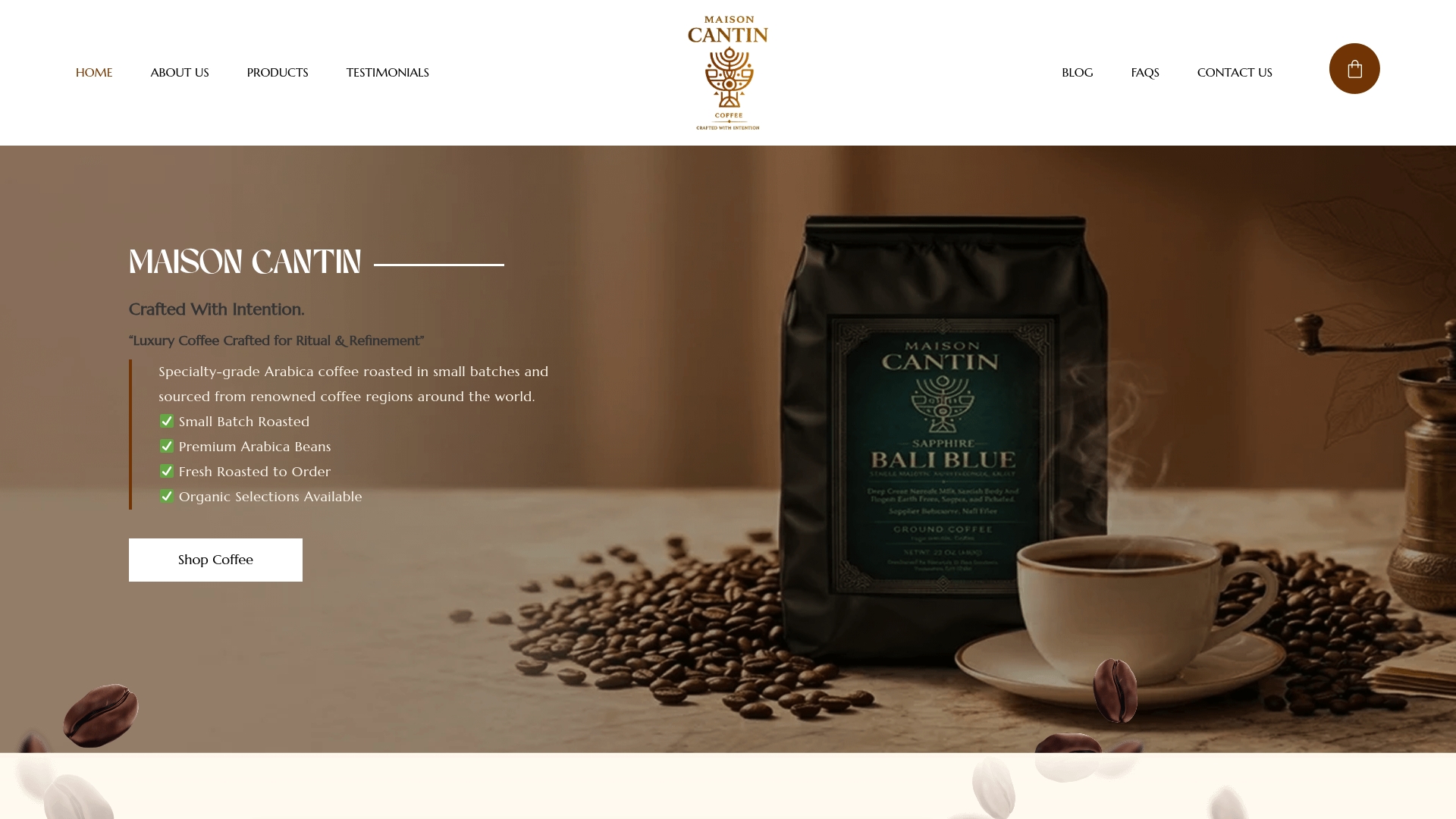
Each offering includes full origin transparency: country, region, processing method, and roast profile. Organic options and crafted blends are available for those who want both flavor complexity and clean sourcing. Whether you are building a morning ritual around a bright Ethiopian washed or settling into an evening with a full-bodied natural process, Maisoncantin’s specialty-grade Arabica collection gives you the foundation to brew with intention. For those curious about why Arabica commands the attention of serious coffee enthusiasts, the Arabica preferred by professionals page explains the distinction clearly.
FAQ
What does “specialty grade” mean for coffee beans?
Specialty grade means the beans scored 80 or above on the SCA’s 100-point scale. Scores in the 82–86 range are common for premium selections, and anything above 90 is considered exceptional.
How soon after roasting should I brew my coffee?
The peak flavor window is 5–21 days post-roast. Let very fresh beans rest 3–7 days first, since aggressive degassing in the first few days after roasting causes uneven extraction.
Is Arabica always better than Robusta?
For specialty coffee, yes. Arabica grows at higher altitudes, contains more complex sugars and aromatic compounds, and produces a cleaner, more nuanced cup. Robusta has higher caffeine but a harsher, more bitter flavor profile.
How do I know if a coffee bag is fresh without tasting it?
Look for a printed roast date. Bags that only show a best-by date, especially one 12 or more months out, signal older or commercial-grade coffee with low transparency about actual freshness.
Why does my espresso taste sour even with good beans?
Sourness in espresso signals under-extraction. Grind finer, increase brew temperature slightly, or extend extraction time. Adjust one variable at a time to isolate the cause before changing anything else.


https://shorturl.fm/r7y6C