

Most coffee lovers can identify a roast level or brewing style, yet the single greatest influence on what ends up in your cup happens long before any roaster touches the bean. Coffee processing methods explained properly reveal that the transformation from ripe cherry to green bean is where fruit-forward sweetness, bright acidity, or earthy depth is either created or lost. Processing transforms coffee cherries through natural, washed, honey, and other techniques, each shaping flavor compounds in fundamentally different ways. Understanding these methods changes how you read a coffee label and, more importantly, how you choose what to drink.
Table of Contents
- Key Takeaways
- Coffee processing methods explained: the natural (dry) process
- The washed (wet) process: clarity in every cup
- The honey process: sweetness by design
- Lesser-known methods worth understanding
- How fermentation and drying shape quality
- My perspective on processing and coffee appreciation
- Taste the difference processing makes
- FAQ
Key Takeaways
| Point | Details |
|---|---|
| Three core methods exist | Natural, washed, and honey processing each produce distinctly different flavor profiles and body. |
| Fermentation drives flavor | How long and how sugars ferment during processing shapes sweetness, acidity, and potential off-notes. |
| Drying conditions matter | Temperature and speed during drying affect aroma compounds and overall cup quality significantly. |
| Honey process is a spectrum | Yellow, red, and black honey grades reflect mucilage retention levels that shift sweetness and body. |
| Labels alone are not enough | The specific fermentation style and drying control within a method matter more than the method name itself. |
Coffee processing methods explained: the natural (dry) process
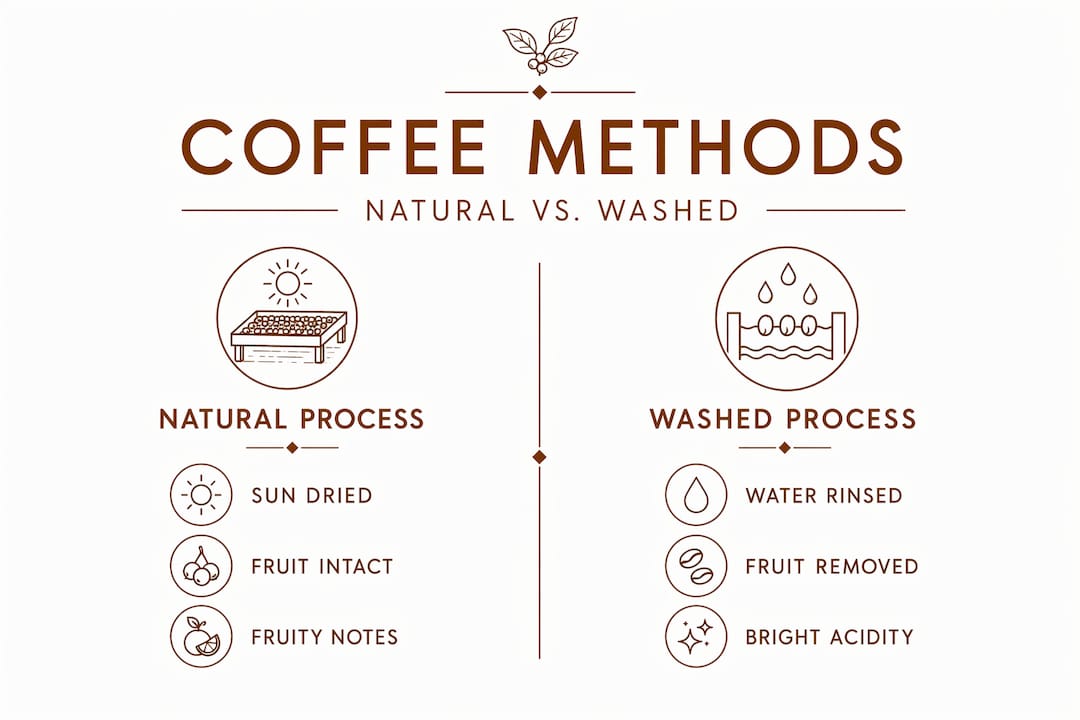
The natural process is the oldest method in coffee production, and it remains one of the most expressive. After harvest, whole coffee cherries are laid out on raised drying beds or patios and left to dry intact for three to six weeks. The fruit skin, pulp, and mucilage all stay on the bean throughout. As the cherry dries, sugars inside the fruit ferment slowly and migrate into the seed. That fermentation is what gives naturally processed coffees their signature character.
The flavor results are unmistakable:
- Body: Full, heavy, almost syrupy
- Fruit notes: Blueberry, strawberry, tropical fruit, and wine-like complexity
- Acidity: Lower and softer compared to washed coffees
- Sweetness: Pronounced, sometimes bordering on dessert-like
This method thrives in dry climates where rain during the drying phase is unlikely. Ethiopia and Brazil are the most celebrated regions for natural processing, partly because their climates allow for consistent, controlled drying. The method also uses far less water than washed processing, which makes it practical in water-scarce regions.
The risk, however, is real. If cherries are not turned regularly or if humidity spikes, mold and fermentation defects can develop. Poorly managed naturals taste sour, musty, or fermented in an unpleasant way. Quality defects often originate during fermentation and drying, which is why skilled producers monitor drying beds with near-obsessive attention.
Pro Tip: When buying a natural process coffee, look for producers who specify raised drying beds rather than ground patios. Elevated airflow reduces the risk of uneven fermentation and produces cleaner, more complex fruit notes.
The washed (wet) process: clarity in every cup
Washed processing, also called the wet process, takes a completely different philosophy. The goal is to remove all fruit material from the bean as quickly as possible, allowing the coffee’s intrinsic terroir to speak without the influence of extended fruit fermentation.
Here is how the process unfolds:
- Depulping: Immediately after harvest, a machine removes the outer cherry skin and most of the pulp
- Fermentation tank: Beans sit in water or dry fermentation for 24 to 72 hours, breaking down the sticky mucilage layer
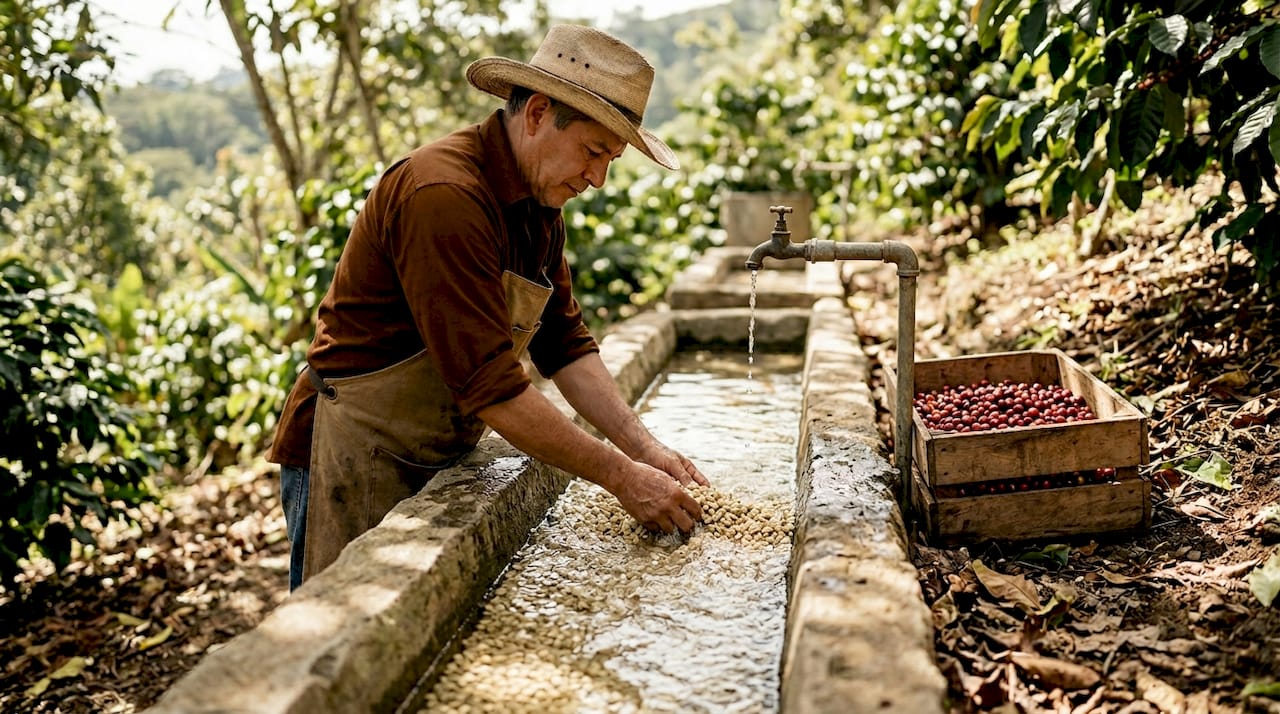
- Washing: Beans are rinsed thoroughly with clean water to remove all remaining mucilage residue
- Parchment drying: Beans dry in their parchment layer on raised beds or mechanical dryers until they reach the correct moisture content
Postharvest washing modifies volatile compounds and acidity, which is why washed coffees taste so distinctly different from naturals. The cup is clean, bright, and transparent. You taste the origin. A washed Ethiopian Yirgacheffe offers jasmine, lemon, and bergamot. A washed Colombian might show red apple and caramel. The fruit is gone, but the place remains.
The trade-off is resource intensity. Washed processing requires significant volumes of clean water and proper wastewater management. Fermentation control also demands precision. Over-fermentation creates vinegary or onion-like off-flavors that cannot be corrected at the roasting stage.
Pro Tip: When evaluating washed coffees, pay attention to fermentation time noted on the bag or producer description. Shorter fermentation (under 36 hours) tends to produce crisper, more delicate acidity. Longer fermentation can add complexity but also increases defect risk.
The honey process: sweetness by design
Honey processing sits between the natural and washed methods, and it gives producers a remarkable degree of creative control. The outer cherry skin is removed, as in washed processing, but the mucilage layer is left on the bean during drying. The amount of mucilage retained determines the “honey grade.”
| Honey grade | Mucilage retained | Flavor profile |
|---|---|---|
| Yellow honey | 25% or less | Light sweetness, brighter acidity, closer to washed |
| Red honey | 50 to 75% | Balanced sweetness and body, stone fruit notes |
| Black honey | 90% or more | Rich, full-bodied, fruity complexity, closest to natural |
Honey processing yields flavors between natural and washed, with medium acidity and body that many enthusiasts find particularly approachable. Costa Rica popularized this method, and it has since spread across Central America and beyond. The controlled mucilage retention means producers can dial in a specific flavor target rather than relying entirely on ambient fermentation.
A black honey coffee from a skilled producer can rival the complexity of a natural while maintaining more structural clarity. Yellow honey, on the other hand, offers a gentle sweetness that works beautifully in milk-based drinks without overwhelming the espresso’s base character.
Pro Tip: Asking about honey type when purchasing a honey process coffee matters more than most buyers realize. “Honey process” without a grade tells you very little. A yellow honey and a black honey from the same farm can taste like entirely different coffees.
Lesser-known methods worth understanding
Beyond the three core techniques, two regional methods deserve attention from anyone serious about understanding coffee processing types fully.
Semi-washed processing involves partial mucilage removal before drying. The bean enters the drying stage with some mucilage still attached, but less than in honey processing. The result sits in a middle zone: more body than fully washed, less fruit intensity than honey or natural. It is common in parts of Sumatra and Brazil, where it serves as a practical middle ground given local climate and infrastructure.
Wet-hulled processing, known locally as giling basah, is unique to Indonesia and is one of the most misunderstood methods in specialty coffee. Wet-hulled coffees are hulled at 35 to 40% moisture, meaning the protective parchment layer is removed while the bean still holds significant moisture. This is the opposite of how other methods work, where hulling happens after the bean has dried fully.
The effects on the cup are dramatic:
- Body: Very heavy, almost thick
- Acidity: Low and muted
- Flavor notes: Earthy, cedar, dark chocolate, tobacco, sometimes mushroom-like
- Roast behavior: The bean responds differently to heat, requiring careful roast profiling
Distinguishing mucilage management from parchment hulling is what clarifies why Indonesian coffees taste so different from other origins, even when grown at similar altitudes with similar varietals. It is not the soil alone. It is the timing of a single processing step.
How fermentation and drying shape quality
Understanding coffee processing techniques at a deeper level means recognizing that the method label is only the beginning. What happens within each method, particularly during fermentation and drying, determines whether a coffee reaches its potential or falls short.
-
Fermentation chemistry: Yeast and bacteria break down sugars and produce organic acids, alcohols, and flavor precursors. The microbial population present, influenced by altitude, water source, and ambient temperature, shapes the final flavor compounds. Metabolomic shifts from processing strongly correlate with sensory traits like bitterness, astringency, and balance.
-
Drying temperature: Heat management during drying is critical. Temperatures above 50°C degrade quality compounds, reducing aroma complexity and producing markers associated with overheating. Mechanical dryers, if poorly calibrated, can push beans past safe thresholds in ways that raised bed drying rarely does.
-
Drying speed: Drying too fast locks in undesirable fermentation byproducts. Drying too slowly invites mold. The ideal rate allows enzymatic activity to complete naturally while preserving volatile aromatic compounds.
-
Anaerobic fermentation: A newer technique where beans ferment in sealed, oxygen-free tanks. Research from 2026 found that black honey and anaerobic fermentation scored highest for mouthfeel and balance in sensory evaluations, while wet and dry processes showed more bitterness and astringency.
“Buying guides that focus only on method names miss the point. The fermentation style and drying control within any given method are what separate extraordinary coffee from ordinary coffee.” — FNB Coffee
Multiple processing steps collectively shape flavor rather than the umbrella label alone. A washed coffee with poor fermentation control will always taste worse than a natural from a meticulous producer. The label tells you the direction. The craft determines the destination.
My perspective on processing and coffee appreciation
I have spent years tasting coffees across every processing style, and the insight that changed how I approach a cup is this: most people are chasing roast profiles when they should be chasing processing stories.
When someone tells me they only drink light roasts, I ask whether they have tried a natural process light roast versus a washed one. The difference is staggering. The same roast level, the same origin, processed differently, and you are holding two entirely different experiences. One feels like biting into a ripe plum. The other tastes like a bright, clean morning.
The misconception I encounter most often is that fruity or fermented notes in coffee are flaws. They are not. In a well-managed natural or black honey, those notes are intentional and exquisite. The flaw is uncontrolled fermentation, not fermentation itself.
My honest advice: start with washed coffees to understand what a clean origin tastes like, then try a honey process from the same region to feel how mucilage shifts the texture and sweetness. Finally, try a natural. By that point, you will taste the processing as clearly as you taste the roast. That is when coffee stops being a habit and becomes a genuine ceremony.
Exploring the Sapphire Collection at Maisoncantin is a good place to begin that journey. The range reflects processing diversity in a way that makes the differences tangible, not theoretical.
— Lily
Taste the difference processing makes
Every cup in the Maisoncantin catalog carries a processing story. We curate specialty-grade Arabica coffees that represent the full range of processing craft, from the clean brightness of washed origins to the layered fruit complexity of naturally processed lots. Our small-batch, fresh-roasted collections are built to let the processing speak clearly in every brew. When you understand what you are tasting and why, the experience deepens. Browse the full Maisoncantin catalog and let the processing method guide your next selection. Each coffee is a moment worth pausing for.
FAQ
What are the main coffee processing methods?
The three core methods are natural (dry), washed (wet), and honey (pulped natural). Each varies in how much fruit material remains on the bean during drying, directly shaping flavor, body, and acidity.
How does processing affect coffee flavor?
Processing determines which sugars, acids, and aromatic compounds develop in the bean. Natural processing produces fruity, full-bodied flavors through extended fruit fermentation, while washed processing yields cleaner, brighter cups that highlight origin character.
What is honey process coffee?
Honey process coffee retains part of the mucilage layer during drying after the outer skin is removed. The grade (yellow, red, black) reflects how much mucilage remains, with black honey producing the richest, most complex flavor closest to a natural process.
Is wet-hulled coffee the same as washed coffee?
No. Wet-hulled coffee (giling basah) removes the parchment layer at high moisture content, which is a hulling timing choice unique to Indonesia. Washed coffee removes fruit and mucilage before drying but hulls the bean only after it has fully dried.
Why do two coffees with the same processing taste different?
The method label describes the general approach, but fermentation duration, drying temperature, and microbial environment within that method all vary by producer. These variables, more than the method name alone, determine the final cup quality and flavor complexity.


One Comment