

Coffee bean density is defined as a bean’s mass relative to its volume, expressed in grams per cubic centimeter, and it is one of the most reliable indicators of coffee quality available to roasters and home baristas. Understanding this single measurement unlocks a clearer picture of how your coffee will roast, how it will taste, and how to brew it for maximum clarity. Coffee bean density explained properly goes beyond a lab measurement. It becomes a practical guide for every decision from bean selection to your final cup. At Maisoncantin, we believe the most intentional coffee experiences begin with knowing what is inside the bag before the kettle ever boils.
What is coffee bean density and how is it measured?
Coffee bean density is the bean’s mass relative to its volume, treated as a structural property distinct from moisture content and water activity. The standard method is straightforward: weigh a sample of green beans on a precision scale, then measure the volume they displace in a graduated cylinder filled with water. Divide mass by volume and you have the density figure. This calculation gives roasters a number that reflects how tightly the cellular structure of the bean has developed.
Two alternative methods are also used in the industry. Floatation testing places beans in water to observe which sink and which float, with denser beans sinking more decisively. Sieving separates beans by screen size, which correlates loosely with density, though screen size and density are not the same measurement. Screen size reflects physical dimensions; density reflects internal mass distribution.
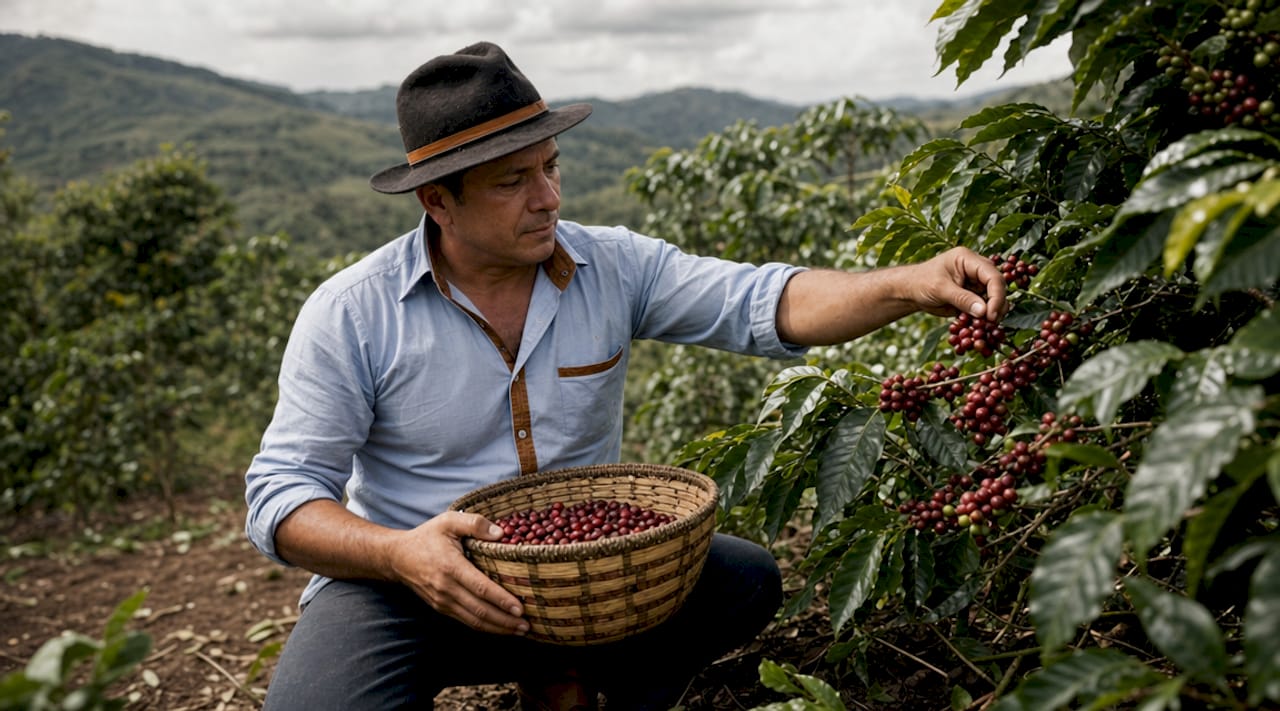
Why does density vary so much between lots? The answer lies in growing conditions. High altitude often leads to denser beans because cooler temperatures slow cherry maturation, giving the seed more time to accumulate sugars and structural compounds. Altitude grading systems like Strictly Hard Bean (SHB) in Guatemala and Honduras use elevation as a proxy for density and potential complexity. Farm management practices, varietal genetics, and rainfall patterns all contribute as well, meaning two farms at the same altitude can still produce beans of noticeably different density.
Pro Tip: When sourcing green beans, ask your supplier for density figures alongside moisture readings. A density figure without moisture context tells only half the story.
How does density affect roasting processes and outcomes?
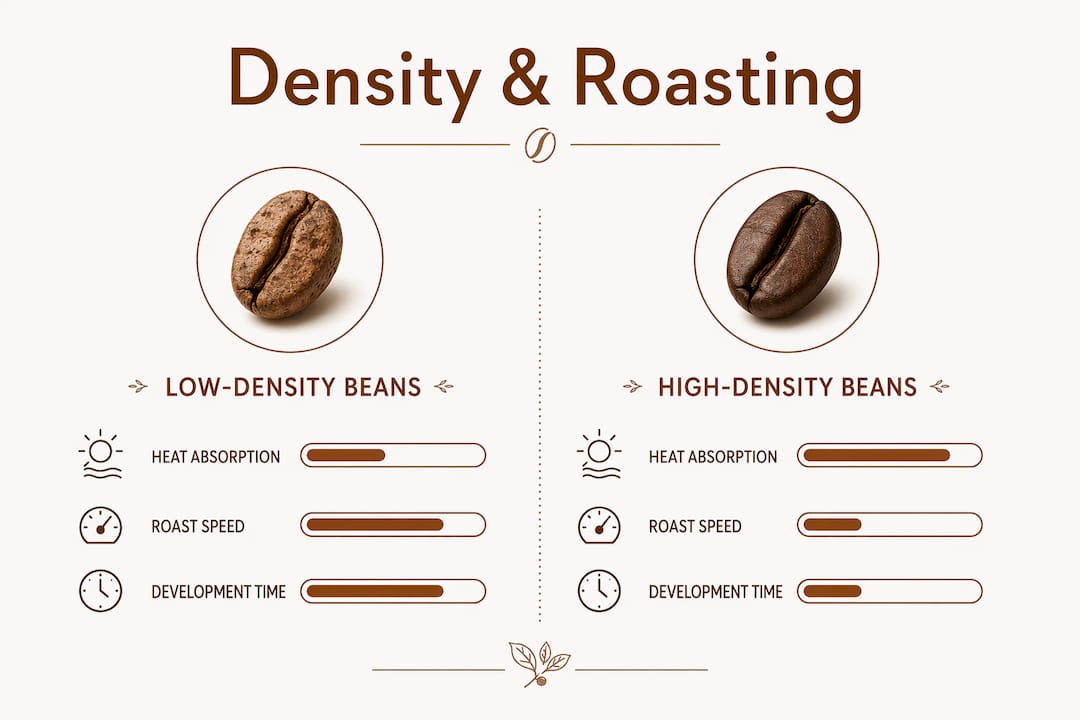
Denser beans roast slower and more evenly, requiring longer development time because their tighter cellular structure changes how heat transfers through the bean. This is the most consequential thing a home roaster can understand about density. The energy you apply does not translate immediately into visible change. Color shifts, steam release, and first crack all arrive later than they would with a lower-density lot.
This creates a common mistake among newer roasters: they see slow color development and respond by increasing heat. That approach disrupts roast momentum rather than correcting it. The goal is to manage the rate of energy absorption, not to force faster visible milestones. Roasters who understand density learn to read early olfactory and visual cues differently depending on the lot in front of them.
Here is how density reshapes the key roasting milestones you watch for:
- Color change: Arrives later in denser beans. The Maillard reaction takes longer to initiate because heat penetrates the structure more gradually.
- Steam release: Sustained and steady in dense beans, reflecting the slower release of bound moisture from a compact cellular matrix.
- First crack: Delayed and often sharper in sound with dense beans, as internal pressure builds more slowly before the cell walls fracture.
- Development time: Requires proportionally more time after first crack to achieve full sugar caramelization and aromatic development.
| Parameter | Low-density beans | High-density beans |
|---|---|---|
| Heat absorption | Fast, uneven | Slow, even |
| First crack timing | Earlier | Later |
| Development time needed | Shorter | Longer |
| Roast consistency | More variable | More predictable |
| Flavor risk | Underdevelopment, flatness | Underdevelopment if rushed |
Density should not be treated as an absolute guide to temperature targets alone. Two lots with identical density can roast differently if their moisture levels differ. Density informs the structural behavior of the bean; moisture informs the thermal load. Both matter.
Pro Tip: For precise roast control, focus on how density alters the timing of roasting milestones rather than only temperature targets. Milestone-based tuning consistently yields better results than chasing a fixed temperature curve.
How does bean density shape flavor and brewing?
Higher-density green coffees develop more slowly on the tree, concentrating sugars and aromatic precursors, and they are linked with better structure, clarity, and sweetness in the cup. This is not a minor difference. A well-developed, high-density Ethiopian or Colombian bean carries a depth of flavor that a stressed, low-density bean from the same region simply cannot replicate. Lower-density coffees are often underdeveloped or grown under stress, producing muted aromatics and a flat or inconsistent flavor profile.
The flavor benefits of high density trace back to cherry maturation. Slower maturation produces concentrated sugars and aromatic compounds that translate directly into cup clarity and sweetness. When you taste a bright, clean Guatemalan or a floral Ethiopian Yirgacheffe, you are tasting the result of altitude, slow growth, and the density that follows from both.
Density also shapes how your coffee extracts during brewing:
- Grind size: Denser beans are physically harder and require slightly more force to grind. A grind setting that works for a low-density bean may produce uneven particle distribution with a denser lot, leading to inconsistent extraction.
- Water temperature: Higher-density beans benefit from slightly higher brew temperatures, typically in the 94 to 96 degrees Celsius range, to fully open the cellular structure and release aromatic compounds.
- Brew ratio: Dense beans often reward a slightly finer grind at the same ratio rather than an increased dose, preserving clarity without overwhelming the cup with body.
- Extraction time: Expect slightly longer extraction times with denser beans in pour-over methods like the Hario V60 or Chemex, as water moves through the bed more deliberately.
Denser beans may require different grind settings for optimal flavor, and baristas who adjust brewing parameters with density in mind achieve more consistent results across different lots.
How to use density knowledge to improve your home brewing
Applying coffee bean density knowledge at home does not require laboratory equipment. It requires attention, a few adjustments, and the willingness to treat each new bag as its own conversation.
- Select beans from high-density origins. Ethiopia, Colombia, Guatemala, and Kenya consistently produce high-altitude, high-density lots. When you explore specialty coffees from these origins, you are starting with a structural advantage in flavor potential.
- Adjust your roast profile based on density cues. If you home roast, extend your development time for dense lots. Watch for a delayed first crack and resist the urge to increase heat prematurely. Let the bean guide the pace.
- Recalibrate your grinder when switching lots. Moving from a low-density to a high-density bean often requires a finer grind to achieve equivalent extraction. Taste before assuming your previous setting transfers.
- Monitor water temperature deliberately. For dense, high-altitude beans, brewing at the lower end of the temperature range can leave sweetness locked inside the structure. A temperature of 95 degrees Celsius is a reliable starting point.
- Track density alongside moisture. If your supplier provides both figures, use them together. Density and moisture together predict roasting dynamics and storage stability better than either measurement alone.
A common pitfall is assuming that a premium origin automatically means high density. Processing method, harvest timing, and storage conditions all affect the final density of the bean you receive. A washed Ethiopian processed carelessly post-harvest can arrive at lower density than its altitude would suggest.
Pro Tip: Keep a simple brewing log noting the origin, processing method, and any density information from your supplier. After three or four sessions with a new lot, patterns in grind adjustment and extraction time become clear and repeatable.
How does density compare to other green coffee characteristics?
Density is one of three structural measurements that define how a green coffee lot will behave. Moisture content and water activity are the other two, and none of the three tells the full story alone.
| Characteristic | What it measures | Primary influence |
|---|---|---|
| Density | Mass per unit volume | Heat transfer rate, flavor potential |
| Moisture content | Water weight as percentage of total mass | Thermal load during roasting |
| Water activity | Free water available for microbial activity | Storage stability, shelf life |
| Screen size | Physical bean dimensions | Roast uniformity, visual grading |
Moisture content determines how much thermal energy the roaster must expend driving off water before Maillard reactions begin. A high-density bean with elevated moisture requires more total energy than a high-density bean at ideal moisture levels. Water activity, often overlooked by home enthusiasts, governs how stable the green coffee is during storage. A lot with high water activity is at risk of mold development even if density and moisture figures look acceptable.
Two lots with identical density can roast differently if moisture or water activity differ. This is why professional roasters treat these three measurements as a set, not as independent signals. Screen size adds a fourth layer: uneven screen distribution in a lot means some beans will develop faster than others in the drum, creating roast inconsistency regardless of how well you manage density-informed timing.
Key takeaways
Coffee bean density is the single most informative structural measurement available to home baristas and roasters, but it delivers its full value only when read alongside moisture content and water activity.
| Point | Details |
|---|---|
| Density defined | Mass divided by volume in g/cm³, reflecting cellular development and maturation quality. |
| High altitude equals higher density | Cooler growing climates slow cherry maturation, concentrating sugars and producing denser, more flavorful beans. |
| Density slows roasting milestones | Denser beans delay color change, steam release, and first crack, requiring longer development time. |
| Flavor clarity follows density | Higher-density beans produce sweeter, cleaner cups with greater aromatic concentration. |
| Density needs context | Moisture and water activity must be measured alongside density for accurate roast prediction and storage assessment. |
Why density is the most underused tool in home roasting
I have tasted hundreds of home-roasted coffees over the years, and the most common flaw is not bad technique. It is applying the same roast profile to every bag regardless of what is inside. Density is the variable most home roasters ignore, and it is the one that explains the most inconsistency.
The misconception I encounter most often is that density is a professional concern, something for green buyers and production roasters with Cropster logs and moisture meters. That thinking leaves real quality on the table. Even a simple floatation test at home, dropping a handful of beans in water and observing how they sink, gives you a directional read on density before you commit to a roast.
What I have found through practice is that density rewards patience more than any other variable. A dense Ethiopian lot rushed through development produces a flat, grassy cup that bears no resemblance to what the bean is capable of. The same lot given an extra 30 to 45 seconds of development time after first crack opens into something genuinely memorable. Sweetness, clarity, and a long finish that lingers. That is not magic. That is structure meeting time.
I also caution against treating density as a quality guarantee. A high-density bean that has been stored poorly, or processed carelessly, will still disappoint. Density tells you the potential. Your roast profile decisions and brewing choices determine whether that potential is realized. Use density as your starting point, not your conclusion.
— Lily
Discover Maisoncantin’s specialty coffees, crafted for moments like this
At Maisoncantin, every lot we select begins with an assessment of origin, altitude, and the structural qualities that density reflects. We roast in small batches, fresh to order, so the beans that reach you carry the full aromatic potential their density promises. Whether you are refining your home roast or simply seeking a cup that rewards your attention, our specialty coffee collection is curated with exactly this kind of intentionality in mind. Morning clarity. Midday focus. Evening conversation. Each moment deserves a coffee that was chosen and crafted with care. Visit Maisoncantin to explore our current offerings and find the lot that speaks to your ritual.
FAQ
What is coffee bean density?
Coffee bean density is the ratio of a bean’s mass to its volume, typically expressed in grams per cubic centimeter. It reflects how fully the bean developed during maturation on the tree and serves as a key indicator of flavor potential and roasting behavior.
Why do high-altitude coffees tend to be denser?
Cooler temperatures at high altitude slow cherry maturation, giving the seed more time to accumulate sugars and structural compounds. Origins like Ethiopia, Colombia, and Guatemala consistently produce denser beans because of this extended development period.
How does density affect the flavor of my coffee?
Higher-density beans concentrate more sugars and aromatic precursors during growth, producing cups with greater sweetness, clarity, and aromatic depth. Lower-density beans often yield muted or inconsistent flavors due to underdevelopment or stress during growth.
Do I need special equipment to measure coffee bean density at home?
A precision kitchen scale and a graduated cylinder are sufficient for a basic mass-to-volume calculation. A simple floatation test in water also gives a directional read on relative density without any specialized tools.
Should I adjust my grind when brewing high-density beans?
Yes. Denser beans are physically harder and may require a finer grind setting to achieve equivalent extraction compared to lower-density lots. Adjusting grind size when switching between origins with different density profiles improves consistency and flavor clarity.