
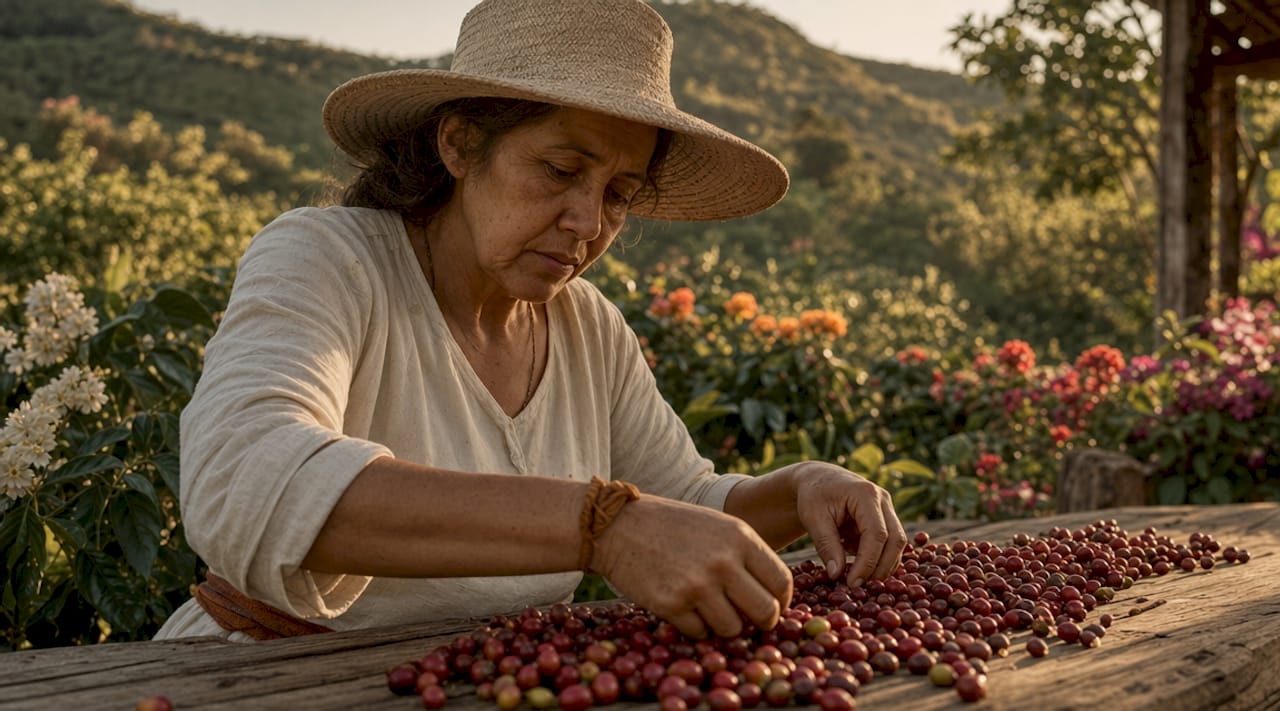
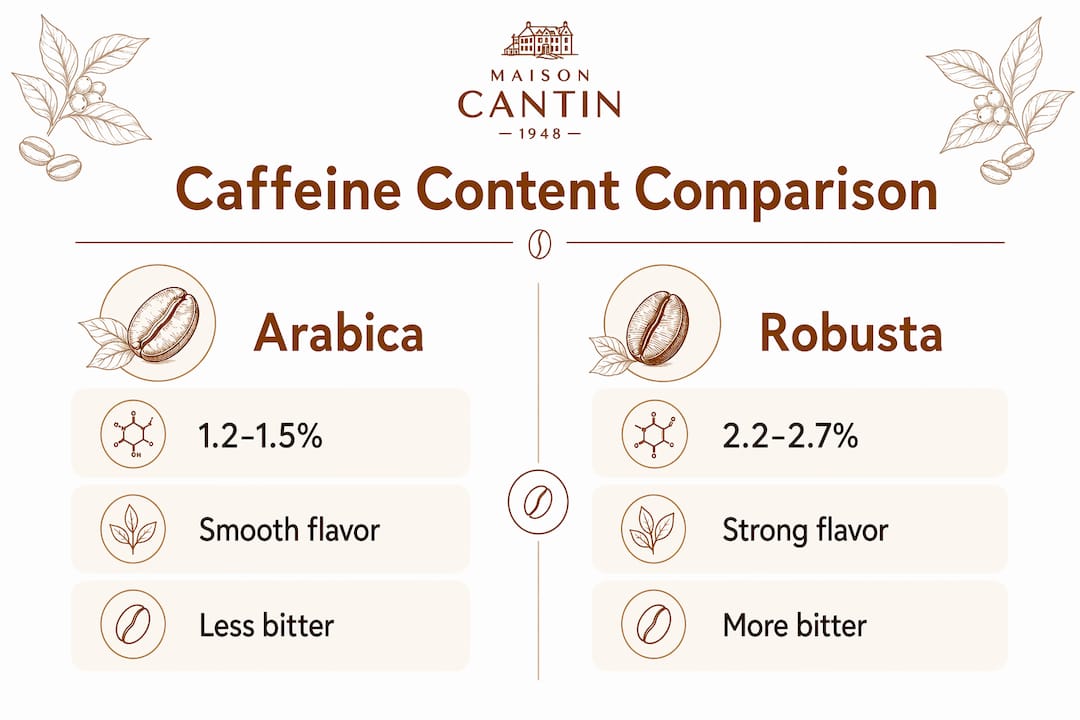
Arabica coffee beans contain roughly half the caffeine of Robusta beans, a difference rooted in plant genetics and natural defense mechanisms that also shapes every aspect of flavor, body, and bitterness in your cup. Specifically, Arabica holds 1.2–1.5% caffeine by dry weight while Robusta reaches 2.2–2.7%, nearly double the amount. That gap is not accidental. It reflects millions of years of separate evolution across two very different ecosystems. Understanding why Arabica is less caffeinated than Robusta transforms how you read a coffee label, choose a blend, and experience each sip as a deliberate, informed ritual.
Why arabica has lower caffeine than robusta: the genetic explanation
The caffeine difference between Arabica and Robusta begins at the molecular level. Caffeine biosynthesis pathways are genetically regulated, and the two species carry distinct enzyme activity profiles that govern how much caffeine each plant produces. Arabica (Coffea arabica) is a tetraploid species, meaning it carries four sets of chromosomes, while Robusta (Coffea canephora) is diploid. This chromosomal difference influences gene expression across secondary metabolite pathways, including those responsible for caffeine synthesis.
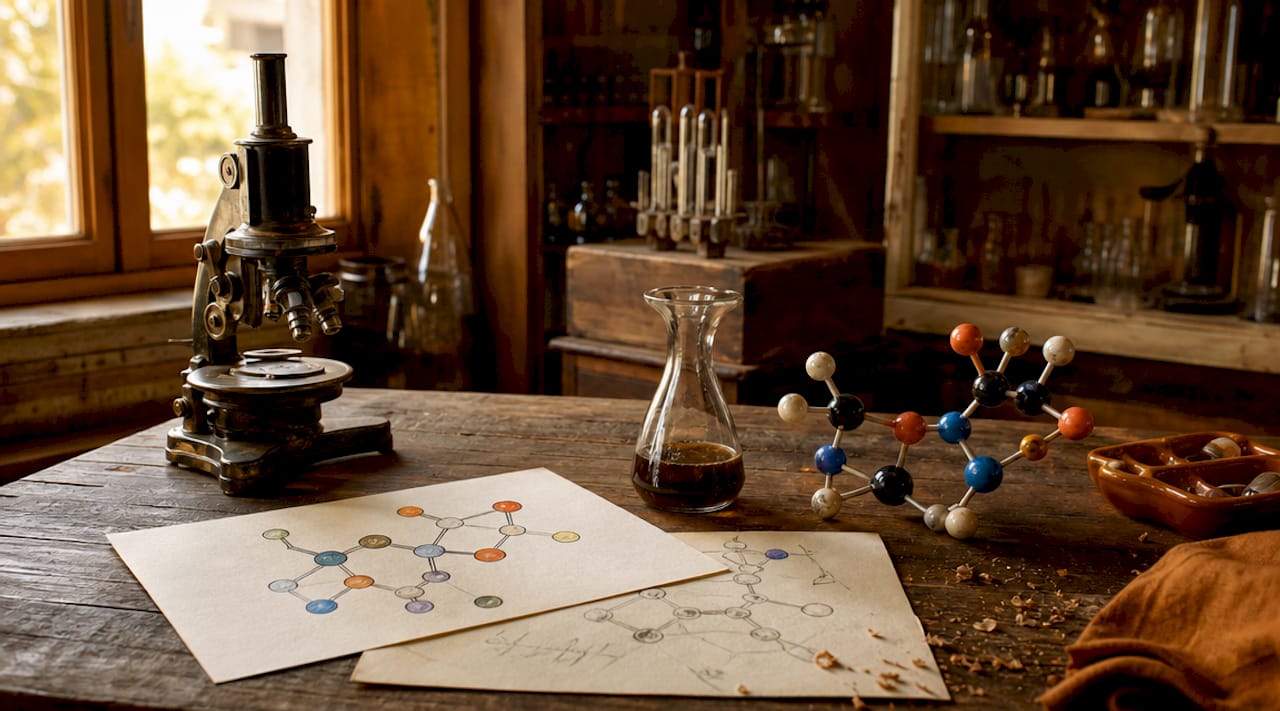
Ecology shaped these genetic differences over time. Arabica evolved in the cool, high-altitude forests of Ethiopia and South Sudan, where lower temperatures and dense canopy naturally suppressed insect populations. With less pest pressure, the plant had less evolutionary incentive to produce high concentrations of caffeine as a chemical deterrent. Robusta, by contrast, evolved in warmer, low-altitude environments across Central and West Africa, where heat and humidity create ideal conditions for insects and fungal pathogens. Higher caffeine production became a survival advantage.
Several biological factors explain the caffeine gap:
- Enzyme activity: Robusta expresses higher activity of N-methyltransferase enzymes, which drive caffeine synthesis from xanthosine precursors.
- Genetic diversity: Wild Robusta populations in regions like Yangambi, DR Congo show significant genetic variation in caffeine metabolism, suggesting ongoing evolutionary pressure.
- Chromosomal structure: Arabica’s tetraploid genome dilutes the expression of high-caffeine traits inherited from its parent species.
- Secondary metabolite allocation: Arabica redirects metabolic resources toward sugars and lipids rather than alkaloids, contributing to its sweeter, more complex flavor.
Pro Tip: When sourcing specialty Arabica, look for beans grown above 1,500 meters. Higher altitude correlates with slower cherry development, lower caffeine, and more concentrated sugars, all of which produce a cleaner, more nuanced cup.
How caffeine shapes bitterness and flavor in each variety
Caffeine is bitter by nature, but it does not act alone. Caffeine accounts for roughly 10–30% of coffee’s perceived bitterness, with chlorogenic acids and trigonelline contributing the remainder. This means Arabica’s lower caffeine reduces baseline bitterness, but the full flavor picture depends on a broader chemical orchestra.
Arabica beans carry higher concentrations of sugars and lipids, which soften acidity and create the layered, fruit-forward or floral notes that specialty coffee enthusiasts prize. Robusta’s higher caffeine and phenolic compounds produce a denser body, stronger bitterness, and the characteristic earthy, woody notes that work well in espresso blends. The crema in a well-pulled espresso shot is partly a function of Robusta’s higher caffeine and protein content.
| Characteristic | Arabica | Robusta |
|---|---|---|
| Caffeine by dry weight | 1.2–1.5% | 2.2–2.7% |
| Bitterness level | Mild to moderate | Strong |
| Primary flavor notes | Fruit, floral, chocolate | Earthy, woody, nutty |
| Sugar and lipid content | Higher | Lower |
| Espresso crema contribution | Moderate | High |
Bitterness perception is also deeply personal. Two people drinking the same Arabica single-origin will register different levels of bitterness depending on their genetic sensitivity to caffeine and chlorogenic acids. This is why why arabica tastes different from robusta is not purely a chemistry question. It is also a sensory one.
Pro Tip: If you find Arabica too acidic rather than bitter, try a natural-processed bean from Ethiopia or Brazil. Natural processing increases sugar contact during drying, which rounds out acidity and adds a fruit-forward sweetness that balances the cup.
How altitude and cultivation affect caffeine levels
Altitude is the single most reliable environmental predictor of caffeine content within the Arabica species. Cooler temperatures at elevation slow the coffee cherry’s metabolic rate, which reduces caffeine synthesis and extends the time sugars develop in the bean. Arabica grown above 1,800 meters in regions like Yirgacheffe, Ethiopia or Huila, Colombia consistently produces beans at the lower end of the caffeine range.
Robusta thrives at elevations below 800 meters, where warmth and humidity accelerate growth and stimulate higher caffeine output as a pest defense. The relationship between altitude and caffeine is not a marketing claim. It reflects measurable biochemical differences tied to temperature-regulated enzyme activity.
Cultivation choices also introduce meaningful variation:
- Cultivar selection: Within Arabica, varieties like Typica and Bourbon tend toward lower caffeine, while some hybrid cultivars bred for disease resistance carry slightly higher levels.
- Hybridization: Arabica-Robusta hybrids such as Timor Hybrid and Catimor carry Robusta genetics, which can push caffeine content above typical Arabica ranges.
- Growing conditions: Shade-grown Arabica, common in traditional Ethiopian and Yemeni farming, produces beans with slightly lower caffeine and more complex aromatics compared to sun-grown crops.
- Processing method: Primary processing methods like washed or natural fermentation influence caffeine metabolism at the cellular level, creating subtle but measurable differences within the same species.
Caffeine content ranges vary within species, meaning the “Arabica is always lower caffeine” rule holds as a general guide, not an absolute law. Some Robusta cultivars grown at higher altitudes with specific genetic profiles overlap with the upper caffeine range of Arabica.
How brewing variables change the caffeine in your cup
Caffeine content by dry weight is not the same as caffeine in your finished cup. Brewing variables including time, temperature, grind size, and dose significantly alter how much caffeine actually reaches your palate. A finely ground, long-extracted Arabica can deliver more caffeine per cup than a coarsely ground, short-extracted Robusta.
Here is how each variable plays out in practice:
- Grind size: Finer grinds increase surface area and accelerate caffeine extraction. A fine-ground Arabica espresso extracts more caffeine per gram than a coarse-ground Robusta French press.
- Brew time: Longer contact between water and grounds increases caffeine yield. Cold brew, which steeps for 12 to 24 hours, extracts a high proportion of available caffeine regardless of bean variety.
- Water temperature: Higher temperatures extract caffeine more efficiently. Brewing Robusta at 96°C versus 88°C produces a measurably stronger cup in both caffeine and bitterness.
- Dose: More coffee per cup means more caffeine, regardless of species. A double-shot espresso made with Arabica can exceed the caffeine of a single-shot Robusta espresso.
- Brew method: Espresso concentrates caffeine per milliliter, while drip coffee delivers more caffeine per serving due to larger volume. Specialty espresso techniques that use precise ratios and temperatures give you direct control over caffeine extraction.
Understanding these variables means you hold more control over your caffeine intake than the bean species alone suggests. The arabica vs robusta caffeine difference is a starting point, not a fixed outcome.
Choosing between Arabica and Robusta for your ritual
The choice between Arabica and Robusta is not a quality judgment. It is a preference calibration. Each variety serves a different purpose depending on what you want from your cup.
- Choose Arabica when you want a nuanced, lower-caffeine experience with fruit, floral, or chocolate notes. Single-origin Arabica from Ethiopia, Colombia, or Guatemala rewards slow brewing and attentive tasting.
- Choose Robusta when you need a stronger stimulant effect, a denser body, or a richer crema in espresso. Vietnamese coffee culture, for example, is built on Robusta brewed through a phin filter with condensed milk, celebrating rather than hiding its intensity.
- Choose a blend when you want balance. Many Italian espresso traditions use 70–80% Arabica with 20–30% Robusta to combine Arabica’s sweetness with Robusta’s body and caffeine strength.
- Consider origin and processing: A washed Arabica from Kenya delivers bright acidity and moderate caffeine. A natural Robusta from Uganda delivers earthiness and high caffeine. Both are valid choices for different moments in your day.
Pro Tip: If you are sensitive to caffeine but love the ritual of a strong-tasting cup, try a dark-roasted Arabica. Darker roasts degrade some caffeine during the roasting process, and the deeper caramelization creates a bold, full-bodied flavor that reads as intense without the caffeine load of Robusta.
Key takeaways
Arabica contains roughly half the caffeine of Robusta due to genetic differences in biosynthesis pathways and evolutionary adaptation to cooler, high-altitude environments, and this lower caffeine directly shapes its milder, more complex flavor profile.
| Point | Details |
|---|---|
| Caffeine content gap | Arabica holds 1.2–1.5% caffeine by dry weight; Robusta holds 2.2–2.7%. |
| Genetic and ecological roots | Arabica’s tetraploid genome and high-altitude origins reduce caffeine biosynthesis enzyme activity. |
| Bitterness is multi-compound | Caffeine drives 10–30% of bitterness; chlorogenic acids and trigonelline account for the rest. |
| Brewing overrides bean genetics | Grind size, dose, and brew time can make an Arabica cup rival Robusta in caffeine delivery. |
| Blending offers balance | Combining Arabica and Robusta in espresso blends captures both flavor complexity and caffeine strength. |
What I have learned from years of tasting both varieties
There is a tendency in specialty coffee circles to treat Arabica as the only serious choice and Robusta as a compromise. I find that view limiting. Robusta’s intensity is not a flaw. It is a different kind of honesty. When you understand that its bitterness comes from a plant defending itself against insects with chemical precision, you start to taste it differently. There is something almost elemental about it.
What genuinely surprises most people I talk with is how little caffeine alone explains bitterness. I have tasted Arabica single-origins from Ethiopia that felt more astringent than a well-processed Robusta from Vietnam, because chlorogenic acid levels and processing method mattered more than caffeine content in those specific beans. The science confirms this: bitterness perception is multi-dimensional, and caffeine is only one contributor.
My honest recommendation is to stop choosing between Arabica and Robusta and start choosing for the occasion. Morning clarity calls for a clean, high-altitude Arabica. A long afternoon that needs staying power might welcome a Robusta-forward blend. The knowledge of where caffeine comes from, and why, makes every cup a more deliberate pause. That intentionality is what separates a ritual from a habit.
— Lily
Discover your perfect cup with Maisoncantin
At Maisoncantin, we believe the difference between a good cup and a great one lives in the details: the origin of the bean, the altitude it grew at, the care taken in roasting. Every coffee we offer is roasted fresh to order in small batches, so the caffeine and flavor compounds you read about in this article arrive in your cup at their peak.
Whether you are drawn to the refined complexity of specialty-grade Arabica or curious about blends that balance flavor and caffeine strength, our full coffee collection is curated for exactly this kind of discerning choice. For those who want to begin with something exceptional, the Amber Collection offers a carefully selected range of beans that reward both the curious and the experienced palate. Visit Maisoncantin and let your next cup be a moment worth savoring.
FAQ
Why does Arabica have less caffeine than Robusta?
Arabica produces less caffeine because its genetic makeup and high-altitude evolutionary origins created lower enzyme activity in caffeine biosynthesis pathways. Robusta evolved in warmer, pest-heavy environments where higher caffeine served as a natural chemical defense.
Does lower caffeine mean Arabica is less bitter?
Lower caffeine reduces one source of bitterness, but caffeine accounts for only 10–30% of perceived bitterness in coffee. Chlorogenic acids and trigonelline also contribute significantly, so Arabica can still taste bitter depending on roast level and processing method.
Can brewing method change the caffeine difference between Arabica and Robusta?
Yes. Grind size, dose, brew time, and temperature all affect caffeine extraction, meaning a finely ground, long-extracted Arabica can deliver more caffeine per cup than a coarsely ground Robusta. Bean species sets the ceiling; brewing determines how close you get to it.
Is Robusta always higher in caffeine than Arabica?
Generally yes, but caffeine ranges vary within species based on cultivar, altitude, and growing conditions. Some Robusta cultivars overlap with the upper caffeine range of Arabica, making species a reliable guide rather than an absolute rule.
Which is better for espresso, Arabica or Robusta?
Neither is universally better. Robusta contributes dense crema and caffeine strength, while Arabica adds sweetness and aromatic complexity. Most quality espresso blends combine both, typically 70–80% Arabica with 20–30% Robusta, to capture the strengths of each variety.


One Comment