
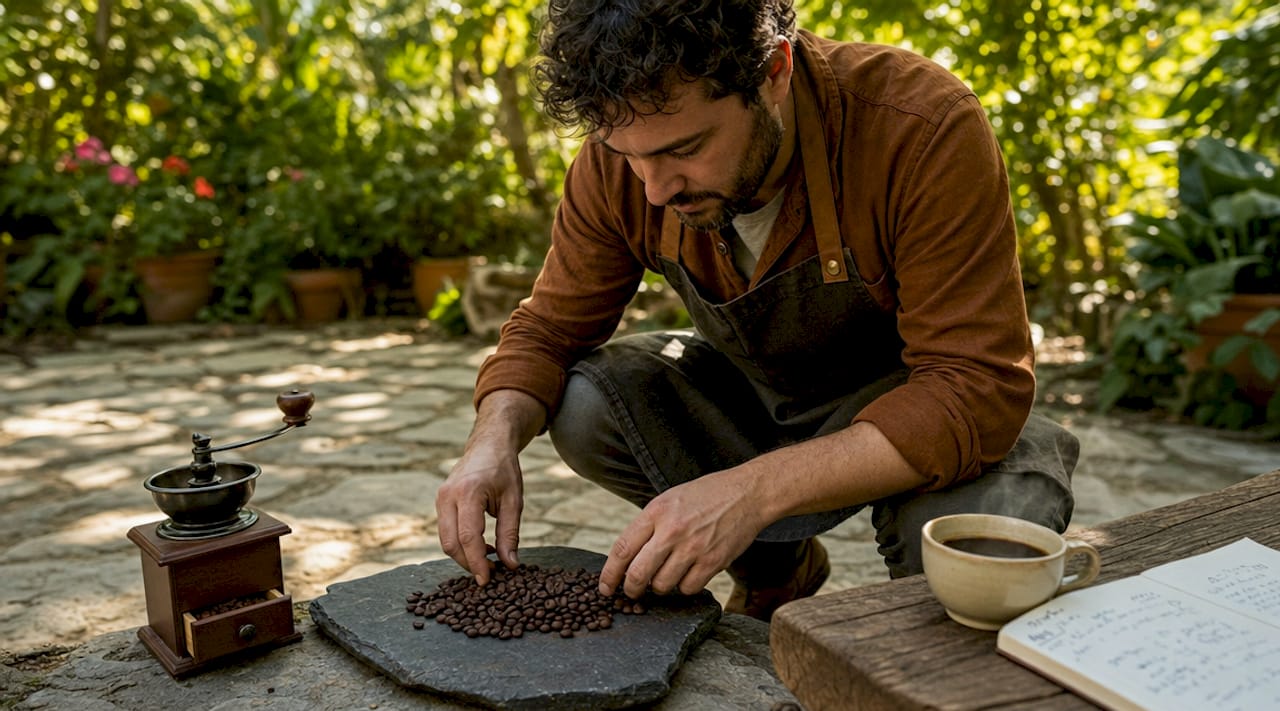
Specialty grade Arabica coffee is defined as coffee scoring 80 points or above on the Specialty Coffee Association’s 100-point scale, evaluated by certified Q Graders, with zero primary defects in a 350-gram green bean sample. This standard separates a genuinely exceptional cup from the commodity coffee filling most supermarket shelves. Arabica is the species of choice for specialty coffee because its genetic complexity produces the layered flavors, bright acidity, and aromatic depth that high scores demand. If you want to identify specialty grade arabica coffee with confidence, understanding the SCA system, the physical markers, and the sensory signals is where you begin.
How the Specialty Coffee Association grades Arabica coffee
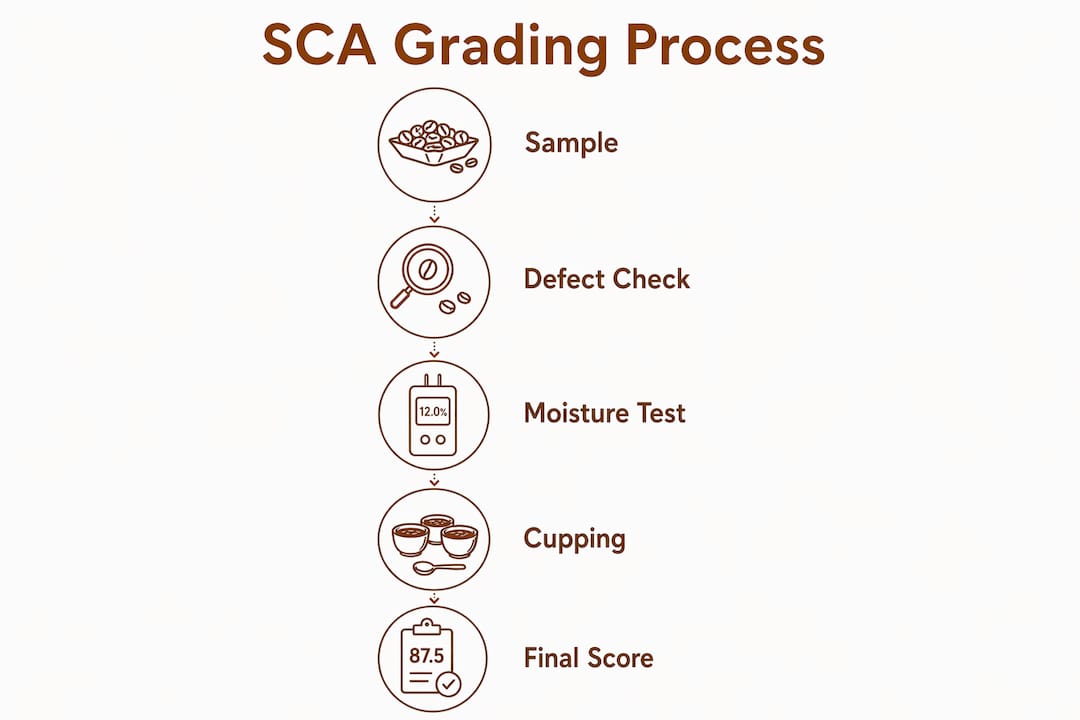
The SCA grading system is the closest thing the coffee world has to a universal quality standard. Certified Q Graders, trained and licensed by the Coffee Quality Institute, evaluate green and roasted samples against a structured 100-point cupping protocol. The score a coffee receives places it into one of three specialty tiers.
| Score Range | Classification | What It Means |
|---|---|---|
| 80.00 – 84.99 | Very Good Specialty | Clean, pleasant, and above commodity grade |
| 85.00 – 89.99 | Excellent Specialty | Distinct origin character, notable complexity |
| 90.00 – 100.00 | Outstanding / Exceptional | Rare, memorable, benchmark-setting cups |
Scores below 80 are classified as premium, exchange, or below-standard grade. They do not qualify as specialty, regardless of how the packaging is worded. That distinction matters because specialty grade scoring is the only objective measure separating marketing language from verified quality.
The defect system is equally strict. A single primary defect in a 350-gram green bean sample disqualifies a coffee from specialty classification entirely. Primary defects include full black beans, full sour beans, stones, sticks, and dried cherry fragments. These are not minor blemishes. They are structural flaws that corrupt flavor at the cup level.
Secondary defects, such as partial blacks, partial sours, and broken beans, are tolerated up to a maximum of five per sample. Beyond that count, the coffee drops out of specialty grade. Specialty qualification requires zero primary defects, a maximum of five secondary defects, and a cupping score of 80 or above. All three conditions must be met simultaneously.
The SCA also evaluates moisture content and physical uniformity. Water activity below 0.70 is recommended to prevent mold and preserve flavor stability during storage and transport. These physical criteria exist alongside sensory scoring because a visually clean bean that was improperly dried can still fail the cup.
Pro Tip: When a roaster lists a cupping score on their bag, ask whether it was scored by a certified Q Grader or by the roaster themselves. Self-scored coffees are common and not equivalent to third-party SCA evaluation.
What do specialty grade Arabica beans look like?
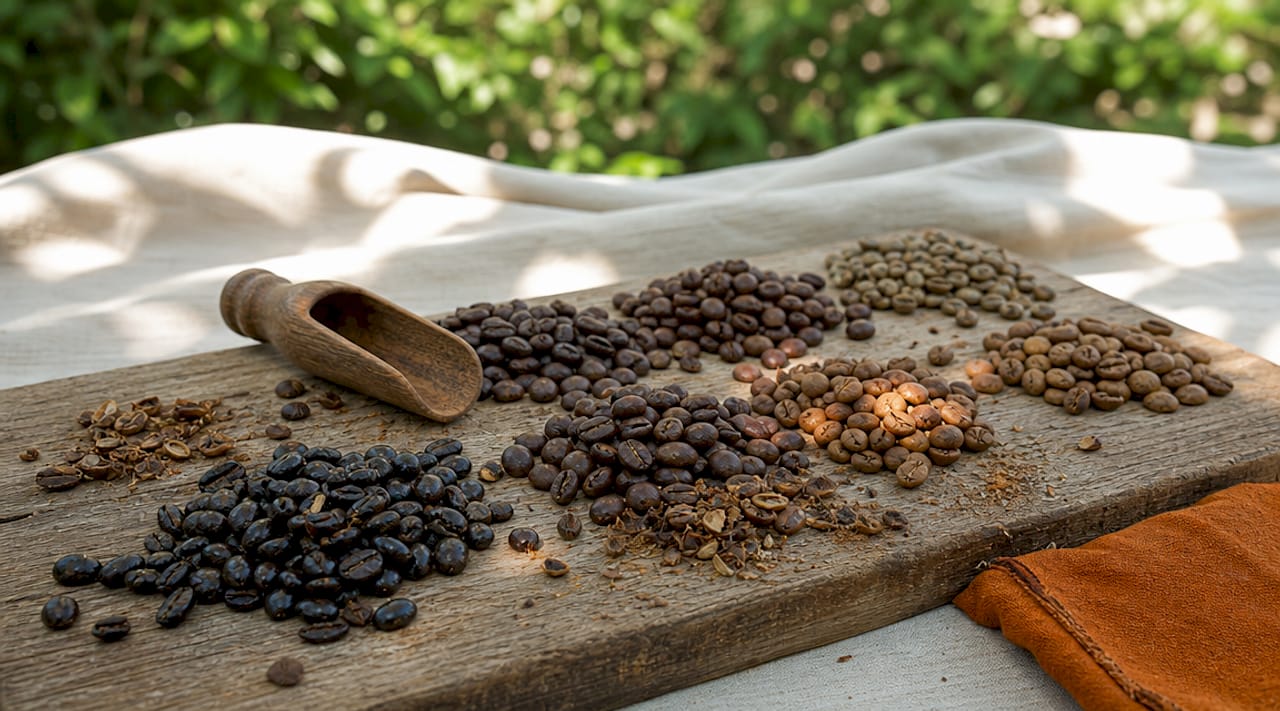
Physical inspection is your first line of evaluation before a single gram hits your grinder. Arabica beans are typically oval-shaped and larger, with a gently curved crease running along the flat side. That S-shaped center cut is a reliable visual marker distinguishing Arabica from the straighter crease of Robusta beans.
Beyond species identification, specialty grade Arabica beans share several physical traits worth examining:
- Color uniformity: Roasted beans should display consistent color across the batch. Patches of significantly lighter or darker beans within the same roast suggest uneven processing or mixed-lot sourcing.
- Size consistency: Specialty lots are typically screen-sorted to remove undersized beans. Noticeable size variation within a bag is a signal of lower-grade sourcing.
- Absence of visible defects: No black beans, no white or chalky beans, no obvious insect damage. Even one visually confirmed black bean in a small sample is a red flag.
- Surface texture: Well-roasted specialty beans have a smooth, slightly oily or matte surface depending on roast level. Excessively oily dark roasts can mask defects, which is one reason many specialty roasters favor medium roasts.
Processing method affects what you see. Natural-processed coffees often show more surface variation and slight fruit residue on the parchment layer, while washed coffees tend to look cleaner and more uniform. Understanding how processing methods affect appearance helps you interpret what you are seeing rather than misreading normal variation as a defect.
Pro Tip: Spread a small sample of roasted beans on a white plate before brewing. You can spot broken beans, shells (husks), and color outliers in under a minute. This is the home version of a green coffee defect sort.
What does specialty grade Arabica coffee taste like?
The SCA cupping protocol scores ten sensory attributes: fragrance and aroma, flavor, aftertaste, acidity, body, balance, uniformity, sweetness, clean cup, and defects. Each attribute is scored out of 10, and defects subtract from the total. This structure means a coffee cannot score 80 or above by excelling in one area alone. It must perform across the board.
Here is what each core attribute signals in a specialty-grade cup:
- Fragrance and aroma: Dry fragrance from ground coffee and wet aroma from the brew. Specialty coffees produce distinct, pleasant scents. Flat, musty, or fermented aromas indicate defects.
- Flavor: The central taste impression. Specialty Arabica shows clarity and complexity. Muddy, hollow, or harsh flavors suggest commodity-grade sourcing.
- Acidity: Brightness and liveliness in the cup. Specialty acidity is pleasant and specific, often described as citric, malic, or tartaric. Harsh or vinegary acidity signals a sour bean defect.
- Body: The weight and texture of the liquid on your palate. Specialty coffees range from tea-like to syrupy depending on origin and process.
- Aftertaste: The finish after swallowing. Long, clean, and pleasant aftertastes are a hallmark of high-scoring coffees. Short or unpleasant finishes drag scores down.
- Balance: How well all attributes integrate. A coffee that excels in acidity but lacks body, or has great aroma but a harsh finish, loses balance points.
“Higher graded coffees deliver more complex, balanced, and memorable cup experiences. Specialty Arabica often shows distinct flavor profiles linked to origin and processing, such as Yirgacheffe’s floral and citrus notes.” — Pulled Coffee
For home enthusiasts, a structured tasting practice approximates professional cupping. Brew the same coffee three ways: as a pour-over, as a French press, and as a simple cupping (grounds in water, crust broken at four minutes). Each method reveals different attributes. The pour-over shows clarity and acidity. The French press reveals body. The cupping exposes the full aromatic range. Rotating through these methods builds the sensory vocabulary you need to evaluate specialty grade claims with your own palate.
How to identify specialty grade Arabica coffee when buying
Knowing the standards is one thing. Applying them at the point of purchase is another. Follow these steps to evaluate any coffee before you buy.
- Look for Q Grader scores or SCA certifications on the packaging. Traceability to farm or lot and the presence of verified certifications are the most reliable indicators of specialty grade status. A score printed without attribution to a certified evaluator carries less weight.
- Check the origin and lot information. Specialty coffees are traceable. Single-origin lots from named farms, cooperatives, or washing stations in Ethiopia, Colombia, Guatemala, Kenya, or Panama are common markers. Blends labeled only by country or region without lot detail are harder to verify.
- Inspect the roast date. Specialty coffee is a perishable product. Roasted coffee reaches peak flavor between 5 and 21 days post-roast for most brewing methods. A bag without a roast date, or one roasted more than six weeks ago, cannot deliver the sensory experience the score was based on.
- Examine the beans visually using the method described above. Even a quick scan for color uniformity and visible defects tells you something about sourcing and processing care.
- Compare price as a proxy. Specialty grade Arabica costs more to produce, sort, and certify. Coffees priced below $12 per 250 grams from a specialty-positioned roaster warrant closer scrutiny of their grade claims.
| Buying Signal | What It Confirms | What It Does Not Confirm |
|---|---|---|
| Q Grader score on packaging | Third-party sensory evaluation | Freshness at time of purchase |
| Farm or lot traceability | Origin integrity and sourcing care | Defect count of your specific bag |
| Roast date within 3 weeks | Peak flavor window | Score tier of the coffee |
| SCA certification mark | Adherence to grading standards | Your personal taste preference |
Visual cleanliness alone cannot confirm specialty grade. A bag can look pristine and still score below 80 due to flavor deficiencies invisible to the eye. The combination of verified scoring, traceability, and freshness is what you are looking for. Specialty coffee is increasingly valued not just for defect-free beans but for distinctive cup attributes tied to origin, processing, and sustainability practices.
Key takeaways
Specialty grade Arabica coffee requires a verified SCA cupping score of 80 or above, zero primary defects, and a maximum of five secondary defects in a 350-gram sample.
| Point | Details |
|---|---|
| SCA score is the standard | Only coffees scoring 80+ on the 100-point scale qualify as specialty grade. |
| Defects disqualify immediately | One primary defect in a 350-gram sample removes specialty status entirely. |
| Physical inspection matters | Check for color uniformity, size consistency, and absence of visible defects before brewing. |
| Sensory evaluation covers ten attributes | Fragrance, flavor, acidity, body, aftertaste, balance, and more all contribute to the final score. |
| Buying signals to prioritize | Q Grader scores, lot traceability, and roast dates within three weeks are the most reliable purchase indicators. |
What I have learned from years of evaluating specialty Arabica
The biggest mistake I see enthusiasts make is trusting the bag before trusting the cup. Beautiful packaging, origin stories, and even printed scores can all be accurate and still not prepare you for a coffee that simply does not resonate with your palate. The SCA system is a floor, not a ceiling. An 82-point coffee is specialty grade. So is a 94-point coffee. The gap between those two experiences is enormous.
I spent years fixating on origin as the primary quality signal. Ethiopia, Panama Geisha, Kenyan AA. These names carry weight for good reason, but I have tasted disappointing lots from celebrated origins and genuinely moving cups from lesser-known producers in Peru and Honduras. The score and the freshness matter more than the country name on the label.
The sensory habit that changed my evaluation most was slowing down the first sip. Not analyzing. Just noticing. What is the first thing you taste? What lingers? Does the cup feel complete, or does something feel absent? That pause, that moment of attention, is where specialty coffee reveals itself. It is also where the ritual begins to mean something beyond caffeine.
My honest recommendation: buy from roasters who publish their sourcing relationships and roast dates openly. Transparency at that level is not accidental. It reflects a supply chain built around quality at every stage. Learning to distinguish specialty from commercial coffee through repeated tasting is the most reliable skill you can build as an enthusiast.
— Lily
Discover specialty Arabica coffee crafted for your ritual
At Maisoncantin, every coffee in our collection is specialty grade Arabica, sourced with full lot traceability and roasted fresh to order in small batches. We do not hold inventory. Your bag is roasted when you order it, which means you receive coffee at peak flavor, not weeks past its prime.
Whether you are building your sensory vocabulary or deepening a ritual you already love, our specialty Arabica collection offers a range of origins and processing styles to explore. From the floral brightness of Ethiopian naturals to the clean precision of Colombian washed lots, each selection reflects the standards described in this guide. Visit Maison Cantin to explore what specialty grade truly tastes like when freshness is non-negotiable.
FAQ
What is specialty grade coffee exactly?
Specialty grade coffee scores 80 points or above on the SCA’s 100-point cupping scale, evaluated by a certified Q Grader, with zero primary defects in a 350-gram green bean sample. It is the only internationally recognized standard for premium coffee quality.
How many defects are allowed in specialty grade Arabica?
Specialty grade Arabica allows zero primary defects and a maximum of five secondary defects per 350-gram sample. One full black bean or sour bean disqualifies the entire lot from specialty classification.
Can I identify specialty grade coffee by taste alone?
Experienced tasters can recognize specialty grade Arabica through clarity, complexity, and pleasant acidity, but taste alone cannot confirm a verified score. Checking for Q Grader evaluations and lot traceability on packaging provides objective confirmation alongside sensory assessment.
What flavor profiles are typical for specialty grade Arabica?
Specialty Arabica flavor profiles vary significantly by origin and processing. Ethiopian Yirgacheffe is known for floral and citrus notes, Kenyan lots often show blackcurrant and tomato acidity, and Colombian washed coffees typically deliver caramel and red fruit clarity. Higher-scoring coffees show greater complexity and balance across all ten SCA sensory attributes.
Does roast date affect specialty grade status?
Roast date does not change a coffee’s certified grade, but it directly affects whether the cup delivers the sensory experience the score was based on. Specialty Arabica tastes best between 5 and 21 days post-roast. Stale coffee cannot express the attributes that earned its score.