
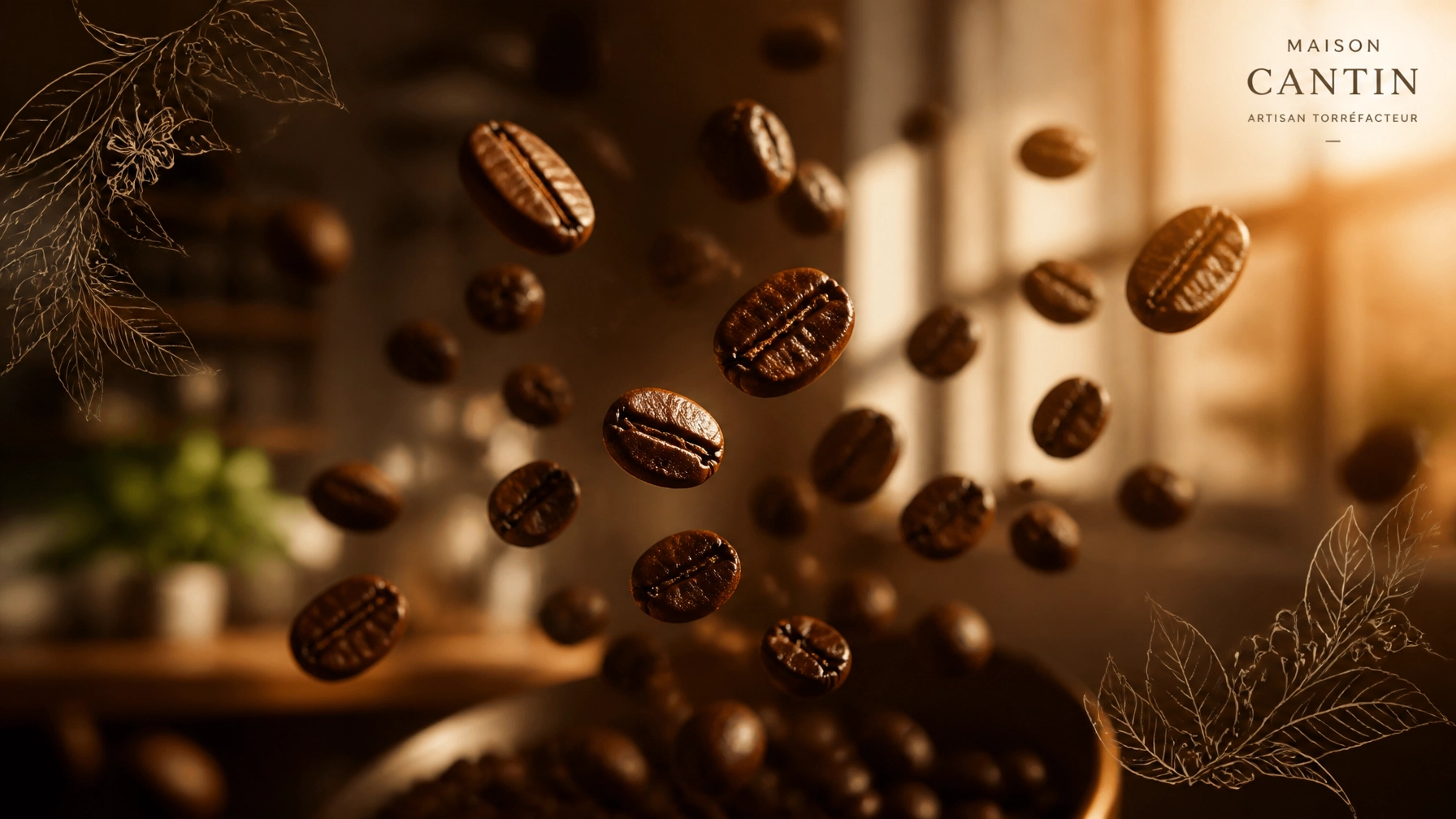
If you are buying your coffee from a supermarket shelf, you are not drinking coffee; you are drinking a ghost of what it once was. Most consumers treat coffee like a non-perishable pantry staple, akin to rice or flour. This is a fundamental error. Coffee is a fresh agricultural product, and from the moment the roasting process ends, a relentless chemical countdown begins.
At Maison Cantin, we operate on a roast-to-order model because the difference between a bag roasted forty-eight hours ago and one roasted forty-eight days ago isn't just a matter of "preference." It is the difference between a complex, aromatic ritual and a flat, bitter chore.
To understand why freshness is the ultimate metric of quality, we must look past the marketing jargon and into the science of the bean.
The Science of the "Bloom": Degassing and CO2
During the roasting process, intense heat triggers the Maillard reaction and caramelization, transforming green seeds into the brown beans we recognize. This process also generates a significant amount of Carbon Dioxide (CO2) trapped within the bean’s porous structure.
Degassing is the natural release of this gas. In the first 24 hours after roasting, coffee loses approximately 40% of its CO2. While you don’t want to brew coffee immediately out of the roaster (the gas is so volatile it actually blocks water from extracting flavor), you need that gas present to protect the bean.

Why CO2 Matters:
- The Protective Shield: As CO2 escapes, it forms a pressurized "blanket" around the bean, pushing away oxygen.
- The Extraction Indicator: When you pour hot water over fresh grounds, they swell and bubble. This is the "bloom." If your coffee doesn't bloom, it’s dead. The gas has already left, and oxygen has moved in.
Oxidation: The Aromatic Assassin
Once the CO2 shield weakens, oxidation begins. This is the same process that turns an apple brown or makes iron rust. In coffee, oxygen attacks the Volatile Aromatic Compounds (VOCs), the delicate oils responsible for the notes of blueberry, jasmine, or toasted almond.
Oxidation doesn't just mute the flavor; it creates it. As the lipids (fats) in the coffee oxidize, they turn rancid. This is where that "stale," "cardboard," or "dusty" taste comes from in grocery store beans. No amount of cream or sugar can mask the chemical reality of an oxidized bean.
The Freshness Timeline: When to Brew
There is a common misconception that "fresh" means "today." In the world of specialty coffee, there is a peak window.
| Days Post-Roast | Status | Character |
|---|---|---|
| 1 – 3 Days | Too Fresh | High gas levels lead to uneven, "sharp," and hollow extraction. |
| 4 – 14 Days | The Sweet Spot | CO2 has settled. Aromatics are at their peak. Maximum clarity. |
| 15 – 25 Days | The Decline | Subtle origin notes start to fade. Body remains, but complexity drops. |
| 30+ Days | Stale | Most VOCs are gone. Coffee tastes generic, bitter, or flat. |
Pro Tip: If your bag doesn't have a "Roasted On" date, it was likely roasted months ago. Supermarkets rely on "Best By" dates, which are often set 12 to 24 months in the future. By the time you buy it, the coffee is already in the "Stale" zone.
Small-Batch vs. Industrial Roasting
The reason mass-market brands can't offer freshness is structural. Their supply chain, roaster to warehouse to distributor to shelf, takes months. To compensate, they often over-roast the beans (Dark Roast) to hide the stale flavors behind a wall of carbon and bitterness.
At Maison Cantin, we prioritize the ritual over the routine. Our Amber Breakfast Arabica and Sapphire Bali Blue are roasted in small batches and shipped immediately. We don't have warehouses full of aging inventory. We have a roaster that waits for your order.

Whole Bean vs. Ground: The Surface Area Trap
If you want to maintain the integrity of a specialty-grade bean, you must buy whole beans.
Grinding coffee increases its surface area by thousands of times. This exposes nearly every cell of the bean to oxygen instantly. Pre-ground coffee stales in minutes, not days. If you are buying freshly roasted coffee but getting it pre-ground, you are essentially buying a Ferrari and driving it only in first gear.
Invest in a quality burr grinder. Grind only what you need, exactly when you need it. This is the single most important step in elevating your morning ceremony.
Honest Take: The "Aha" Moment
I spent years drinking whatever was on sale at the local market. I thought coffee was supposed to be bitter, that its only purpose was the caffeine delivery. The first time I brewed a bean that had been roasted just five days prior, the difference wasn't subtle; it was shocking. I could actually taste the "Blue" in our Sapphire Bali Blue, a distinct, fruity acidity that I didn't know coffee was capable of possessing. Once you cross that threshold, there is no going back to the supermarket aisle.
How to Protect Your Ritual
Even the freshest roast can be ruined by poor storage. Follow these three imperative commands:
- Keep it in the dark: Light accelerates the breakdown of VOCs.
- Seal the air out: Use the resealable, one-way valve bags your Maison Cantin coffee arrives in. Do not move it to a clear glass jar.
- Avoid the fridge: This is a common myth. The moisture and fluctuating temperatures in a refrigerator cause condensation inside the bean, which ruins the oils instantly. Store it in a cool, dry cupboard.

Frequently Asked Questions
How long does coffee stay "fresh" after opening?
Once the seal is broken and oxygen enters the bag, you have about 7 to 10 days of peak flavor. This is why we recommend buying smaller amounts more frequently rather than bulk-buying.
Can I freeze my coffee to keep it fresh?
Yes, but only if it is in an airtight, vacuum-sealed container and you only take it out once. Constant thawing and refreezing creates moisture that destroys the flavor.
Why does my fresh coffee taste "sour"?
If it was roasted in the last 48 hours, it's likely too fresh: the CO2 is interfering with the extraction. Wait two more days. If it's older, you may be "under-extracting" (your water isn't hot enough or your grind is too coarse).
What is the "one-way valve" on the bag for?
It allows CO2 to escape (so the bag doesn't explode) while preventing oxygen from entering. It is a critical piece of technology for maintaining freshness.


https://shorturl.fm/RSCfo
https://shorturl.fm/S5LbD