
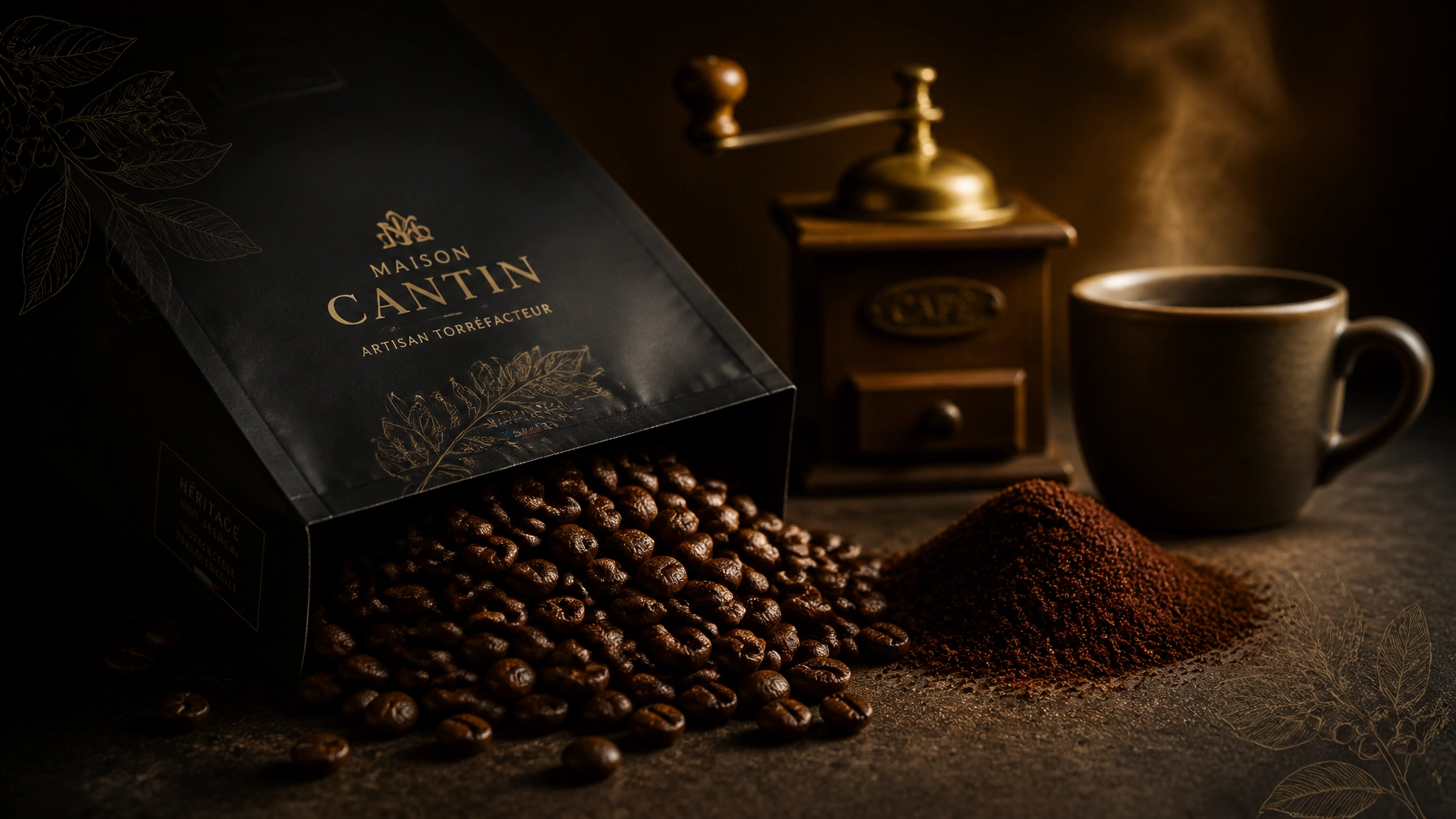
For the discerning coffee drinker, the morning brew is not a chore; it is a ritual. It is a deliberate pause, a moment of clarity before the world demands your attention. Yet, even the most intentional ritual can be undermined by a single fundamental choice: the state of your beans at the moment of purchase.
At Maison Cantin, we specialize in small-batch, specialty-grade Arabica coffee. Whether you are brewing our Amber Italian Reserve or the nuanced Sapphire Bali Blue, you face a crossroads. Should you opt for the convenience of pre-ground coffee, or the uncompromising quality of whole beans?
This guide moves beyond surface-level preference. We will examine the chemical and physical realities of coffee degradation to help you decide which path best serves your daily ceremony.
The Science of Degradation: Why Surface Area Matters
The primary enemy of specialty coffee is oxygen. From the moment a coffee bean is roasted, it begins a process known as degassing, where carbon dioxide (CO2) escapes the bean’s porous structure. This CO2 acts as a protective shield, preventing oxygen from reaching the delicate oils and volatile aromatic compounds inside.
When you grind coffee, you are essentially increasing the surface area of the bean by orders of magnitude. A single whole bean is broken into hundreds of smaller particles. This massive increase in exposure leads to three immediate consequences:
- Rapid Oxidation: Oxygen reacts with the coffee oils, turning them rancid and dulling the vibrant flavor notes of the origin.
- Accelerated Degassing: The CO2 shield is shattered, allowing aromatic compounds to evaporate into the air rather than into your cup.
- Moisture Absorption: Ground coffee is highly hygroscopic. It absorbs humidity and odors from its environment, further compromising the integrity of the roast.
Technical Reality: Whole beans remain at peak freshness for 2–4 weeks after roasting if stored correctly. Once ground, the most delicate floral and fruity notes can begin to dissipate within 15 to 30 minutes.

Whole Bean: The Choice for the Connoisseur
If you view coffee as a craft, whole bean specialty coffee is the only logical choice. It grants you total control over the variables that determine extraction quality.
1. Superior Flavor Retention
Whole beans act as natural vaults. They protect the distinct flavor profiles, like the cedar and dark chocolate notes in our Amber Italian Reserve, until the very second you are ready to brew. Grinding "on-demand" ensures that the oils are freshly released into the hot water, resulting in a rich, textured crema and a multi-layered sensory experience.
2. Customization of Grind Size
Different brewing methods require specific particle sizes. A French Press requires a coarse, salt-like grind to prevent over-extraction, while an espresso machine demands a fine, powdery consistency. By choosing whole beans, you can adapt your fresh roasted coffee delivery to any equipment in your kitchen.
3. The Sensory Ritual
There is an undeniable psychological benefit to the ritual of grinding. The tactile feedback of the grinder, the sudden burst of aroma that fills the room, and the visual transition from bean to brew, all these elements signal to the brain that it is time to slow down and focus.
Pro Tip: If you are using a blade grinder, stop immediately. Invest in a burr grinder. Blade grinders "shatter" the beans into inconsistent sizes, leading to a cup that is simultaneously bitter and sour. Burr grinders "crush" the beans into uniform particles, ensuring even extraction.
Ground Coffee: The Ritual of Efficiency
While whole bean is the gold standard for flavor, there are circumstances where pre-ground coffee is the more practical choice. At Maison Cantin, we understand that "ceremony" looks different for everyone. This is why we offer our signature blends, including the Sapphire Bali Blue Ground, in professionally ground formats.
1. Consistency Over Complexity
Not everyone has a high-end burr grinder at home. If you are using a standard drip machine, our professional-grade grinders provide a level of particle uniformity that entry-level home grinders cannot match. This consistency can often result in a more balanced cup than "badly ground" whole beans.
2. Convenience Without Compromise
On mornings when time is a luxury you do not possess, ground coffee removes a step without forcing you to descend to the level of mass-produced grocery store brands. Because Maison Cantin roasts every order fresh, even our ground coffee arrives with a level of vitality that far exceeds anything found on a supermarket shelf.
3. The Perfect Travel Companion
For those who maintain their coffee rituals while traveling, carrying a grinder is rarely feasible. Pre-ground bags or our best organic coffee pods allow you to enjoy specialty-grade Arabica without the logistical weight of extra equipment.

Comparison: Whole Bean vs. Ground
To make an informed decision, refer to the following table comparing the two formats across critical quality metrics:
| Metric | Whole Bean Specialty Coffee | Pre-Ground Specialty Coffee |
|---|---|---|
| Shelf Life (Peak) | 3 to 5 Weeks | 5 to 7 Days |
| Aroma Intensity | High (released at brew time) | Moderate (fades after opening) |
| Versatility | Excellent (any brew method) | Limited (optimized for drip/pour-over) |
| Convenience | Requires 2-3 extra minutes | Instant preparation |
| Flavor Profile | Complex, nuanced, vibrant | Muted, stable, consistent |
| Best For | Slow mornings, pour-over, espresso | Busy schedules, office brewing, travel |
My Honest Take: The Middle Ground
As a roaster, I will always advocate for whole bean coffee for the purist. However, I have learned that the "best" coffee is the one you actually enjoy drinking.
If grinding your own beans feels like a chore that prevents you from enjoying your morning, then you have defeated the purpose of the ritual. My recommendation? Keep a bag of Amber Italian Reserve Ground for your busy workdays, and reserve our Sapphire Bali Blue Whole Bean for your slow weekend mornings.
Quality is not just about the chemistry of the bean; it is about the harmony between the coffee and your lifestyle.

Common Mistakes to Avoid
- Buying in Bulk: Oxygen starts its work the moment the bag is opened. Do not buy more than you can consume in three weeks. Our small-batch roasting ensures you can always get a fresh delivery when you need it.
- Storing in the Fridge: This is a myth. Coffee is porous and will absorb the smells of your leftovers. Furthermore, the moisture in a fridge can cause "freezer burn" on the beans. Store your coffee in a cool, dark cupboard in its original Maison Cantin packaging.
- Leaving the Bag Open: Always squeeze the air out of the bag and seal it tightly after every use. Exposure to air is the fastest way to turn a $24 bag of specialty coffee into a $5 bag of bitter dust.
Command Your Morning: Step-by-Step Selection
- Audit Your Equipment: If you do not own a burr grinder, choose Ground.
- Define Your Method: If you use a French Press or AeroPress, choose Whole Bean to ensure the correct grind size.
- Check Your Schedule: If you have less than 10 minutes for your coffee ritual, choose Ground.
- Prioritize Freshness: If you want the full spectrum of tasting notes (citrus, floral, chocolate), choose Whole Bean.

FAQ: Practical Concerns
Can I use ground coffee for espresso?
Yes, but it must be an "Espresso Grind." Most pre-ground coffee is a medium grind intended for drip machines. For a true espresso with proper pressure, we recommend grinding whole beans to a fine consistency.
How do I know if my coffee is stale?
Fresh coffee "blooms" (bubbles) when it hits hot water. If your coffee lies flat and produces no bubbles, the CO2 has escaped, and the coffee is likely stale.
Does grinding whole beans at the store help?
It is slightly better than buying pre-packaged ground coffee from a warehouse, but the oxidation process still begins immediately. Within 24 hours, much of the specialty-grade nuance will be gone.
Are Maison Cantin pods as good as the beans?
Our Sapphire Bali Blue Pods use the same specialty-grade Arabica. While no pod can perfectly replicate a hand-poured whole bean brew, ours are nitrogen-flushed to minimize oxidation, making them the superior choice for pod-machine owners.
Elevate your ritual today. Explore our collection of freshly roasted specialty coffee and experience the difference that professional craftsmanship makes in every cup.