
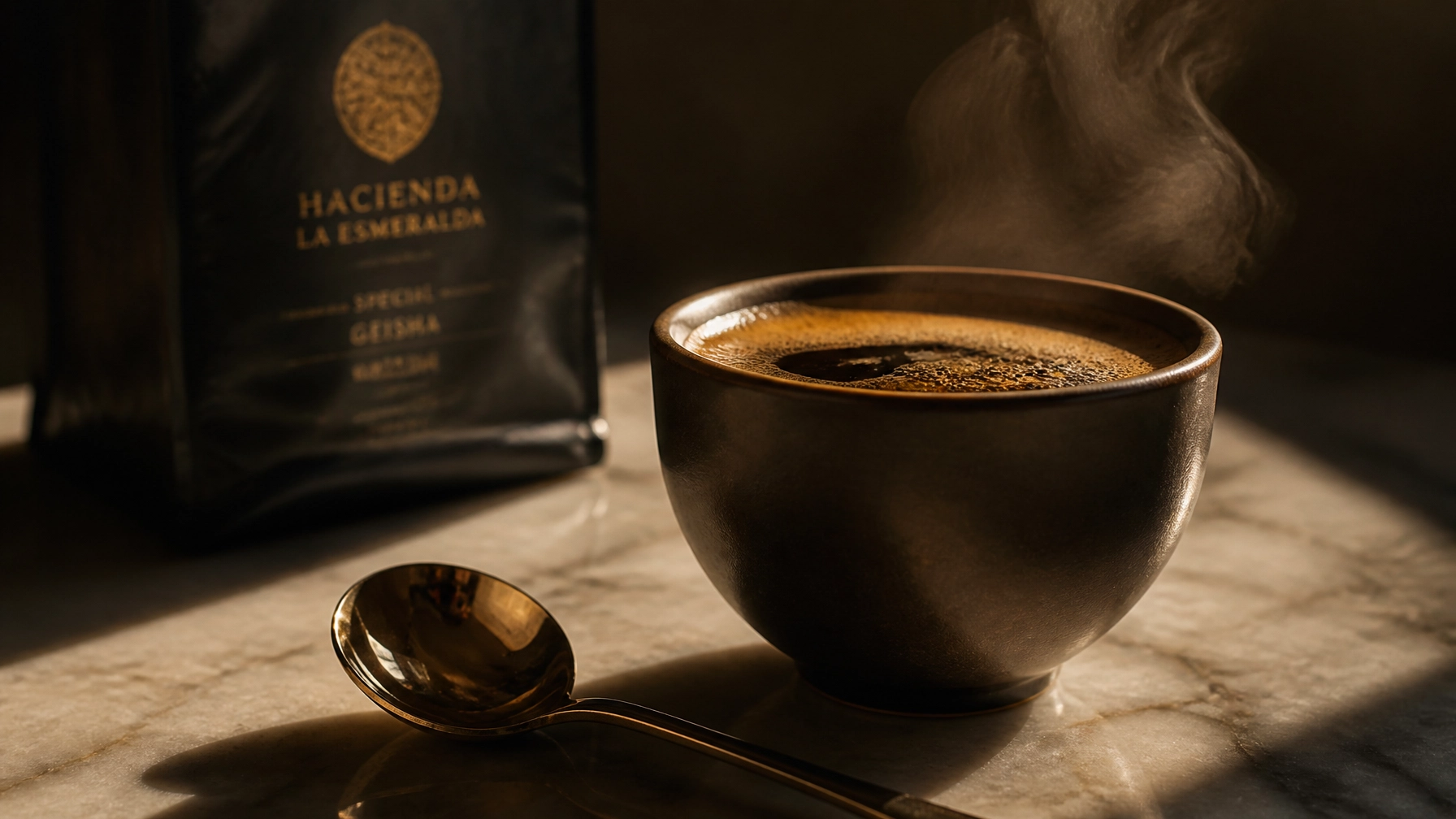
When you read a label on a bag of specialty coffee beans that describes "notes of jasmine, toasted almond, and blueberry," you are not reading an ingredients list. There are no artificial syrups or flavorings added to these beans. Instead, you are looking at a roadmap of the coffee’s inherent chemical complexity.
To the uninitiated, these descriptors can feel like marketing hyperbole. To the connoisseur, they are the result of a rigorous sensory evaluation known as "cupping." Understanding how to identify these notes is the first step in transitioning from a casual coffee drinker to a mindful practitioner of the coffee ritual.
At Maison Cantin, we approach coffee with the same technical precision as a sommelier approaches a vintage. This guide will demystify how origin, processing, and roasting converge to create the distinct profiles found in our luxury Arabica coffee.
The Chemistry of Flavor: Why Coffee Tastes Like More Than "Coffee"
Coffee is one of the most chemically complex beverages in existence, containing over 800 aromatic compounds. For comparison, wine contains approximately 200. These compounds, volatile aromatics, organic acids, and sugars, are what your palate perceives as "flavor notes."
These notes are grouped into broad categories on the SCA (Specialty Coffee Association) Flavor Wheel:
- Fruity: Often associated with berries, citrus, or stone fruits.
- Floral: Delicate scents like jasmine, hibiscus, or lavender.
- Nutty/Chocolatey: Found in heavier, more traditional roasts.
- Sweet: Ranging from brown sugar and caramel to honey.
- Spice/Earthy: Common in specific origins like Indonesia or in darker roasts.
Pro Tip: If you struggle to find flavor notes, start with the "Big Three" questions: Is it acidic (bright)? Is it sweet? Is it bitter? Identifying the balance between these three will lead you to the specific notes.
The Three Pillars of Flavor Development
The final profile in your cup is determined by three critical stages: where the coffee grew, how it was handled after harvest, and how it was roasted.
1. Origin and Terroir
Just like wine, coffee is a product of its environment. Factors such as soil minerals, altitude, and rainfall dictate the "base" personality of the bean.
- High Altitude (1,200m+): Slower maturation leads to higher sugar concentration and more complex acidity. This is where you find the vibrant, floral, and citrus-heavy profiles typical of Ethiopian or Kenyan beans.
- Lower Altitude: Produces beans that are less acidic, often manifesting as nutty, chocolatey, or mellow. Brazilian coffees are the gold standard for this profile.
Our Sapphire Bali Blue is a prime example of terroir. Grown in the volcanic soil of the Kintamani Highlands, it carries a distinct brightness and clean finish that is impossible to replicate in other regions.

2. Processing Methods: Natural vs. Washed
Processing refers to how the coffee cherry is removed from the bean. This stage can completely transform the flavor notes of the same crop.
- Washed (Wet) Process: The fruit is removed before drying. This results in a "clean" cup that highlights the bean's intrinsic acidity and floral notes.
- Natural (Dry) Process: The bean is dried inside the whole cherry. This allows the fruit’s sugars to ferment slightly and penetrate the bean, creating heavy-bodied, "jammy" notes of blueberry or strawberry.

3. The Role of the Roaster
As small batch coffee roasters, our task is to highlight, not hide, the work of the farmer. Roasting triggers the Maillard reaction (browning) and caramelization.
| Roast Level | Dominant Flavor Notes | Best For |
|---|---|---|
| Light | Floral, Citrus, Tea-like | Pour-over, Aeropress |
| Medium | Caramel, Milk Chocolate, Toasted Nut | Drip, French Press |
| Dark | Dark Chocolate, Spice, Molasses | Espresso, Moka Pot |
Our Amber Italian Reserve utilizes a dark roast profile to emphasize deep, bittersweet cocoa and toasted spice, perfect for those who appreciate a bold, classic experience.

How to Conduct a Home Tasting Ritual
To truly discern flavor notes, you must move beyond the "gulp." Follow these steps to refine your palate:
- Evaluate the Aroma: Before brewing, smell the dry grounds. Do you detect sweetness or spice? After brewing, smell the steam. The "break" (the first stir of the coffee crust) releases the most intense aromatics.
- The Slurp: Take a vigorous slurp from a spoon. This aerates the coffee, spreading it across all your taste buds and allowing the aromatics to reach your retro-nasal passage (the back of your nose).
- Temperature Change: Do not judge a coffee only when it is piping hot. As coffee cools, its acidity becomes more apparent and subtle fruit notes begin to emerge.
- The Mouthfeel (Body): Notice the weight of the coffee. Is it thin like tea, or heavy and creamy like whole milk?
Honest Take: When I first started cupping, I couldn't find "apricot" or "toasted marshmallow" to save my life. Everything just tasted like "good coffee." The breakthrough happened when I stopped looking for the exact fruit and started looking for categories. Is this "yellow fruit" (acidic/bright) or "red fruit" (sweet/jammy)? Start broad, and the precision will follow with practice.
Flavor Profiles in Maison Cantin Offerings
We curate our selections to provide a spectrum of sensory experiences.
- Amber Breakfast Arabica: A medium roast designed for balance. Expect smooth notes of milk chocolate and a clean, nutty finish.
- Amber Mushroom Coffee: While functional, this blend maintains a sophisticated palate. The addition of organic mushrooms adds an earthy, savory depth that complements the natural chocolate notes of our Arabica beans.
- Sapphire Bali Blue: For the curious palate, this offers a journey into the exotic, with subtle hints of dark chocolate and a mild, herbaceous finish.

Common Mistakes in Identifying Flavor
- Using Old Beans: Oxidation destroys volatile aromatics within weeks. If your coffee is from a grocery store shelf, the flavor notes have likely faded into a generic bitterness. Always choose beans from roasters who roast every order fresh.
- Incorrect Water Temperature: Water that is too hot (boiling) will over-extract the beans, leading to a burnt, bitter taste that masks all subtle notes. Aim for 195°F–205°F (90°C–96°C).
- Dirty Equipment: Residual oils from previous brews will turn rancid and taint your cup. Ensure your brewing equipment is pristine before a tasting session.
Summary FAQ
Do flavor notes mean the coffee is flavored?
No. Flavor notes describe the natural characteristics of the coffee bean. We never add oils or artificial extracts to our specialty beans.
Why does my coffee just taste bitter?
Bitterness is usually a sign of over-extraction (grind too fine or water too hot) or a very dark roast. Try a coarser grind or a lighter roast like our Amber Breakfast to reveal more nuanced sweetness.
Which brewing method is best for tasting notes?
The pour-over (Hario V60 or Chemex) is widely considered the best method for clarity, as the paper filter removes oils and sediment, allowing the delicate flavor notes to shine.
How should I store my coffee to preserve these notes?
Store your coffee in a cool, dark place in an airtight container. Avoid the refrigerator, as coffee is porous and will absorb the smells of your food. For more details, see our guide on how to choose and store high-quality beans.
Elevating your coffee experience is an exercise in mindfulness. By slowing down and questioning what you are tasting, you transform a daily habit into a genuine ritual of craftsmanship.


https://shorturl.fm/aBpXC