
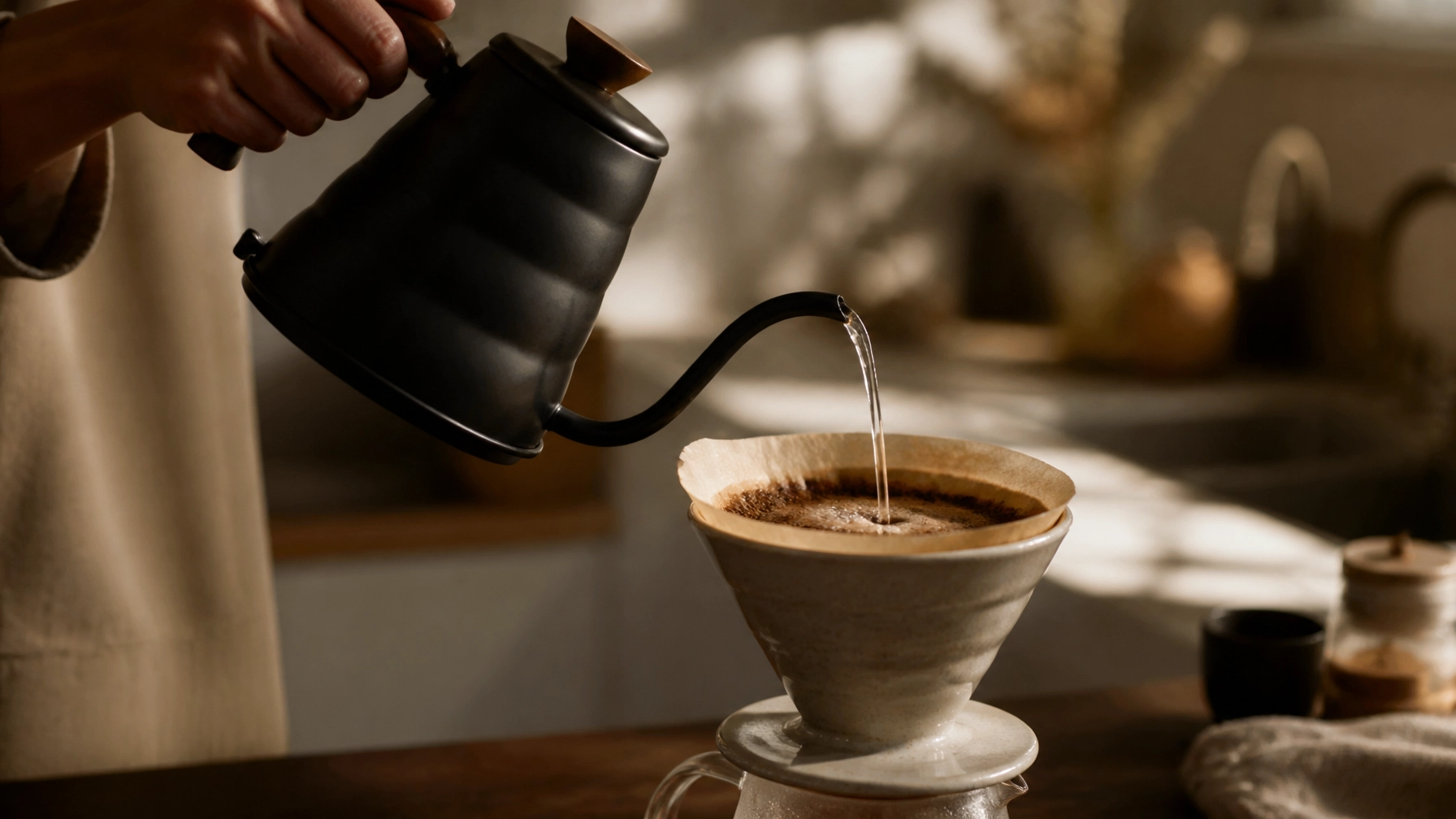
In the modern landscape of high-velocity productivity, coffee has been unfairly relegated to a mere utility, a liquid fuel consumed in haste to jumpstart the engine of the workday. We drink it in transit, gulp it down between meetings, and treat it as a chemical necessity rather than a sensory experience.
But there is a superior way to begin. To choose a morning ritual over a morning routine is to reclaim the first thirty minutes of your day. It is an act of defiance against the rush. By prioritizing the ritual of the pause, you transform your relationship with caffeine from one of dependence to one of intentionality.
At Maison Cantin, we advocate for the ceremony. When you choose luxury Arabica coffee, you aren't just buying beans; you are investing in a deliberate moment of clarity.
The Neuroscience of the Mindful Brew
The benefits of a mindful coffee ritual are not merely anecdotal; they are grounded in physiological response. When you engage in the tactile process of brewing, the sound of the grinder, the aroma of the bloom, the warmth of the ceramic, you activate the parasympathetic nervous system.
Research into mindfulness indicates that even brief "resets" can reduce activity in the brain’s default mode network, which is responsible for mind-wandering and rumination. By focusing on the sensory details of specialty coffee beans, you enter a "flow state" before your email inbox even has a chance to demand your attention.
Pro Tip: Avoid your smartphone until the first sip. The spike in cortisol from checking notifications ruins the grounding effect of the ritual.

Technical Foundation: The Anatomy of the Pause
A ritual is only as good as its components. You cannot achieve a transcendent morning experience with low-grade, mass-produced beans. To bridge the gap between amateur habits and professional standards, you must understand the "why" behind the "what."
1. The Grade: Specialty Arabica vs. Commodity Coffee
Most grocery store coffee consists of Robusta or low-grade Arabica blends. These are often over-roasted to mask defects. Specialty-grade Arabica, however, represents the top 3% of coffee grown globally. These beans are cultivated at higher altitudes, resulting in denser seeds with complex sugar structures.
2. The Integrity: Organic and Small-Batch
Choosing organic coffee beans ensures that the purity of your morning cup is not compromised by synthetic pesticides. At Maison Cantin, our roasting process is small-batch and order-specific. This ensures that the volatile aromatic compounds, the oils that carry the flavor notes of chocolate, citrus, or stone fruit, remain intact when they reach your kitchen.
| Feature | Commodity Routine | Maison Cantin Ritual |
|---|---|---|
| Bean Type | Low-grade blend | 100% Luxury Arabica |
| Freshness | Months old (stale) | Roasted to order |
| Purity | Often non-organic | Focus on Organic Selections |
| Outcome | Jittery caffeine hit | Sustained mental clarity |
The Step-by-Step Ceremony
To master the art of the pause, you must treat the brewing process as a series of deliberate commands. Follow this protocol for a standard pour-over using our Amber Breakfast Arabica.
- Measure with Precision: Use a digital scale. A 1:16 ratio (1 gram of coffee to 16 grams of water) is the industry standard for clarity.
- Temperature Control: Water at a rolling boil will scorch the beans. Aim for 200°F (93°C).
- The Bloom: Pour twice the weight of the coffee in water and wait 30 seconds. Watch the coffee "expand." This releases trapped CO2 and prepares the grounds for extraction.
- The Slow Pour: Pour in steady, concentric circles. Focus on the stream. This is where the "pause" happens.
- The Sensory Check: Before drinking, inhale the steam. Note the specific flavor profile, perhaps the toasted almond of a medium roast or the bright acidity of a light roast.

An Honest Take: Why I Stopped Drinking Coffee in My Car
For years, I believed I was being "efficient" by drinking my coffee during my commute. I viewed it as a transition tool. However, I realized that by doing so, I was starting my day in a state of high-alert reaction. The car is a place of stress; the coffee became an accelerant for that stress.
When I shifted to a 15-minute sitting ritual at home, my entire workday changed. I wasn't just "awake", I was centered. I stopped seeing coffee as a drug and started seeing it as a partner in my morning strategy. If you find yourself perpetually overwhelmed, I challenge you to look at how you drink, not just what you drink.
Common Mistakes and Solutions
Mistake: Using tap water.
Solution: Coffee is 98% water. If your water tastes like chlorine, your coffee will too. Use filtered water to allow the specialty coffee beans to shine.
Mistake: Storing beans in the freezer.
Solution: This introduces moisture and odors. Keep your beans in their original valved bag in a cool, dark cupboard.
Mistake: Buying pre-ground for "convenience."
Solution: Coffee begins to oxidize within minutes of grinding. Invest in a burr grinder. The ritual of grinding fresh is the single greatest upgrade you can make.

Elevating the Experience: Functional Additions
For those seeking an even deeper level of mental fortification, our Amber Mushroom Coffee incorporates functional fungi like Lion's Mane and Chaga. This isn't about "hiding" the coffee flavor; it's about augmenting the ritual. These organic ingredients work synergistically with the caffeine to provide a smoother energy curve, preventing the mid-morning crash that plagues lower-quality brews.
The Philosophy of the Final Sip
The ritual does not end when the carafe is empty. It ends with the intention you set for the hours ahead. As you finish your cup of Sapphire Bali Blue, take one final breath. You have transitioned from the quiet of sleep to the activity of the day with grace and precision.
Master your morning. Elevate your pause. Choose Maison Cantin.
FAQ: Mastering the Morning Ritual
Q: How long should a mindful coffee ritual take?
A: Between 10 to 15 minutes. This includes the time to grind, brew, and sit with your cup. It is a small investment for a significant psychological return.
Q: Can I achieve this with a pod machine?
A: Yes, but the intentionality must remain. Don't walk away while it brews. Stand by the machine, notice the aroma, and choose a high-quality pod like our Sapphire Bali Blue to ensure the flavor matches the moment.
Q: Why does luxury Arabica coffee taste less bitter?
A: Bitterness is often a result of poor-quality beans (Robusta) or over-roasting to hide defects. Luxury Arabica has a higher sugar and acid balance, resulting in a smoother, more palatable cup.
Q: Is organic coffee really worth the price?
A: Absolutely. Beyond the environmental impact, organic coffee beans are grown without synthetic fertilizers, allowing the natural terroir: the flavor of the soil( to be the primary profile you taste.)


https://shorturl.fm/q6Ld6