
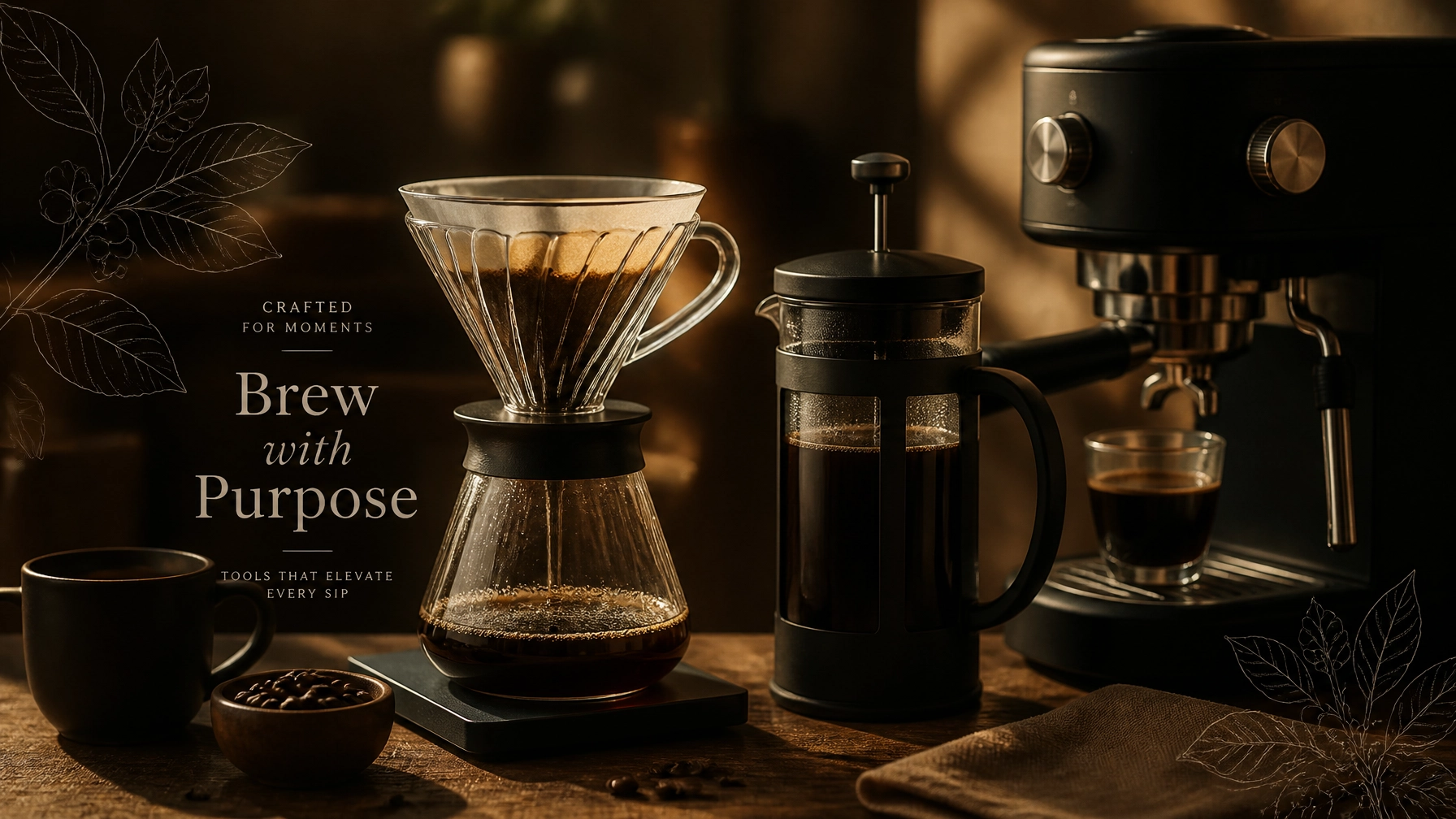
Coffee is not a commodity; it is a ritual. For the discerning enthusiast, the transition from a standard morning routine to a refined ceremony begins with the choice of brewing method. Whether you seek the crystalline clarity of a pour-over or the visceral intensity of a traditional espresso, your method dictates how the unique characteristics of specialty coffee beans are expressed.
At Maison Cantin, we believe that high-quality, fresh roasted coffee delivery is only half of the equation. To truly honor the craftsmanship of small batch coffee roasters, you must match the bean to the technique. This guide provides the technical precision and comparative data necessary to elevate your daily ritual.
The Brewing Matrix: At-A-Glance Comparison
Use this table to align your sensory preferences with the appropriate technical requirements.
| Method | Flavor Profile | Complexity | Time Investment | Best Maison Cantin Match |
|---|---|---|---|---|
| Pour-Over | Clean, nuanced, bright | High | 4–5 Minutes | Sapphire Bali Blue |
| French Press | Bold, heavy, textured | Low | 6–7 Minutes | Amber Italian Reserve |
| Espresso | Intense, syrupy, concentrated | Very High | 2–3 Minutes | Amber Italian Reserve |
| AeroPress | Smooth, versatile, clean | Moderate | 2–3 Minutes | Amber Breakfast Arabica |
| Auto Drip | Balanced, consistent, familiar | Very Low | 5–8 Minutes | Amber Breakfast Arabica |
1. Pour-Over: The Connoisseur’s Precision
The pour-over method is the gold standard for those who value clarity. By using a paper filter to remove oils and fine sediment, this method highlights the delicate, acidic, and floral notes inherent in high-altitude specialty coffee beans.

Technical Command:
- Grind Size: Medium-fine (resembling table salt).
- Water Temperature: 200°F to 205°F (93°C to 96°C).
- Ratio: 1:16 (1 gram of coffee to 16 grams of water).
Pro Tip: Always rinse your paper filter with hot water before adding the grounds. This removes any papery taste and pre-heats your vessel, ensuring thermal stability throughout the brew.
2. French Press: The Bold Purist
Immersion brewing is the most honest way to experience a coffee’s body. Because the coffee remains in contact with the water for the entire duration and is separated only by a metal mesh, the natural oils, and the flavor they carry, remain in the cup.

Technical Command:
- Grind Size: Coarse (resembling sea salt).
- Steep Time: 4 minutes followed by a gentle 3-minute rest after plunging.
- Best For: Darker roasts like our Amber Italian Reserve.
Pro Tip: After the 4-minute steep, use a spoon to break the "crust" of grounds on top. Scoop away the floating foam and bits before plunging to achieve a cleaner cup without losing the characteristic body.
3. Espresso: The Power Player
Espresso is the ultimate test of a barista's skill. It requires nine bars of pressure to force water through a compact "puck" of finely ground coffee, resulting in a concentrated shot crowned with a rich crema. This is the foundation of the ritual for those who appreciate intensity.
Technical Command:
- Grind Size: Extra-fine (resembling powdered sugar).
- Yield: A 1:2 ratio (e.g., 18g in, 36g out) in 25–30 seconds.
- Equipment: Requires a high-quality machine and a dedicated burr grinder.
4. AeroPress: The Modernist
The AeroPress is the chameleon of the coffee world. Utilizing a hybrid of immersion and pressure, it allows for endless experimentation. It is durable, portable, and capable of producing anything from a clean filter-style cup to a concentrated espresso-like base.

Technical Command:
- The Inverted Method: Assemble the AeroPress upside down to prevent premature dripping, allowing for full immersion control.
- Versatility: Ideal for our Amber Breakfast Arabica when you need a smooth, low-acidity cup.
Honest Take: My Personal Standard
If you are investing in fresh roasted coffee delivery, you owe it to the beans to treat them with respect. Personally, I find that the Sapphire Bali Blue performs most exquisitely in a V60 pour-over. The clean filtration allows the organic, single-origin notes of the Bali beans to shine without being obscured by heavy oils. However, on mornings that demand a more substantial presence, the Italian Reserve in a French press provides a velvety texture that no other method can replicate.
Common Mistakes & Immediate Solutions
-
The Mistake: Using tap water.
-
The Solution: Use filtered water. Coffee is 98% water; if your water tastes like chlorine, your coffee will too.
-
The Mistake: Guessing measurements.
-
The Solution: Buy a digital scale. Volumetric measurements (scoops) are inaccurate because coffee density varies by roast. Weigh your beans and water to the gram for consistency.
-
The Mistake: Using pre-ground coffee for immersion.
-
The Solution: Purchase whole beans and grind immediately before brewing. Once ground, coffee loses its aromatic complexity within minutes. Learn more about why freshness changes everything.
Elevate the Ritual
Choosing a brewing method is about more than just caffeine delivery. It is about the five minutes of mindfulness you carve out for yourself. Whether you prefer the tactile nature of the pour-over or the automated consistency of a high-end drip machine, ensure your beans are sourced from small batch coffee roasters who prioritize quality over volume.
Explore our full range of specialty selections at the Maison Cantin Shop and refine your morning ceremony today.
FAQ: Navigating Your Brew
Which method is easiest for beginners?
The French Press or Auto-Drip. They require the least technical skill to produce a consistent, palatable cup.
Does a finer grind always mean stronger coffee?
Not necessarily. A finer grind increases surface area, leading to faster extraction. If the grind is too fine for the method (like using espresso grind in a French press), the coffee will be over-extracted and bitter, not "stronger."
How often should I clean my brewing equipment?
After every single use. Coffee oils go rancid quickly. Residual oils from yesterday's brew will taint the flavor of today's fresh beans.
Can I use any bean for any method?
Technically, yes. However, light roasts excel in pour-overs, while dark roasts like our Italian Reserve are optimized for espresso and French press.


https://shorturl.fm/sjIBM
https://shorturl.fm/eebn9