

The nutritional profile of Arabica coffee is defined by near-zero calories and a surprisingly rich set of micronutrients. A standard 8-ounce cup of brewed black Arabica delivers just 2–2.4 calories, 0.3g of protein, and negligible fat and sugar. Yet within that modest package sit meaningful amounts of Riboflavin, Pantothenic Acid, Manganese, Niacin, and Potassium, alongside bioactive compounds like chlorogenic acids and flavonoids that drive its well-documented health benefits. For anyone making deliberate dietary choices, Arabica coffee is far more than a morning ritual. It is a functional beverage with a nutritional identity worth understanding.
1. What are the key micronutrients in Arabica coffee?
Brewed Arabica coffee delivers a measurable micronutrient contribution despite its minimal calorie count. Each 8-ounce cup provides 15% of your daily Riboflavin, 12% Pantothenic Acid, 4% Manganese, 3% Niacin, and 2% Potassium, all based on a 2,000-calorie diet. That is a meaningful nutritional return for a beverage most people drink two or three times a day.
Here is what each nutrient actually does for you:
- Riboflavin (Vitamin B2): Supports energy metabolism and cellular repair. At 15% DV per cup, two cups of Arabica cover nearly a third of your daily requirement.
- Pantothenic Acid (Vitamin B5): Plays a central role in synthesizing coenzyme A, which the body uses to metabolize fats and carbohydrates. The 12% DV per cup makes Arabica a quiet but consistent contributor.
- Manganese: Activates enzymes involved in bone formation and antioxidant defense. The 4% DV per cup adds up meaningfully across daily consumption.
- Niacin (Vitamin B3): Supports DNA repair and skin health. Coffee is one of the few non-meat sources of Niacin that most people consume daily.
- Potassium: Regulates fluid balance and supports heart muscle function. The 2% DV per cup is modest but consistent.
The cumulative effect of drinking two to three cups of quality Arabica daily is a real, if understated, contribution to your micronutrient intake. Most people do not account for this when they think about their diet.
2. Which bioactive compounds drive the health benefits of Arabica coffee?

Arabica coffee’s most powerful nutritional assets are not vitamins or minerals. They are its bioactive compounds, specifically chlorogenic acids, flavonoids, and caffeine. These compounds work at the cellular level to reduce inflammation, support metabolic health, and lower chronic disease risk.
Key bioactive compounds and their effects:
- Chlorogenic acids: The dominant antioxidant class in Arabica coffee. They neutralize free radicals, support glucose metabolism, and are linked to reduced type 2 diabetes risk with moderate consumption.
- Flavonoids: Anti-inflammatory compounds that support cardiovascular health. Arabica contains a broader flavonoid profile than most commercial blends.
- Caffeine: A well-studied stimulant that sharpens mental alertness and supports fat oxidation. Arabica contains roughly 1.2% caffeine by weight, which is gentler than Robusta’s 2.2%.
- Phenolic compounds: Found in both Arabica leaves and green beans, these compounds show dermatological benefits including UV protection and anti-aging effects. Research into topical applications is ongoing.
Pro Tip: If antioxidant intake is your priority, choose a light roast Arabica. Chlorogenic acids degrade with heat, so the darker the roast, the fewer antioxidants survive into your cup.
Arabica’s anti-inflammatory and hepatoprotective properties make it one of the more functionally interesting foods in a health-conscious diet. The bioactive profile is not incidental. It is the result of the plant’s natural chemistry, preserved best when the bean is handled with care from harvest through roasting.
3. How roast level and brewing method affect Arabica’s nutritional content
Roast level and brewing method are the two variables most people overlook when thinking about the arabica coffee nutritional values they actually consume. Both have a direct and measurable impact on what ends up in your cup.
-
Choose a light or medium roast for maximum antioxidants. Chlorogenic acid content decreases significantly with darker roasts. A light roast retains the highest concentration of these compounds. A dark roast trades antioxidants for a bolder, more bitter flavor profile.
-
Use a filtered brewing method to protect your cholesterol. Drip coffee makers and pour-over methods use paper filters that trap diterpenes, specifically cafestol and kahweol. These compounds raise LDL cholesterol when consumed regularly. French Press and espresso leave diterpenes in the cup.
-
Understand the French Press trade-off. French Press coffee delivers a richer, fuller body because the oils remain in the brew. That sensory experience comes at a cost for anyone managing cardiovascular health. Filtered brewing removes that risk without sacrificing flavor clarity.
-
Match your method to your health goals. For antioxidant retention and heart health, a light roast Arabica brewed through a paper filter is the most defensible choice. For those without cholesterol concerns, a medium roast French Press remains a nutritionally sound option.
Pro Tip: Explore roast profile differences before committing to a single roast level. Understanding what heat does to your bean helps you make a deliberate choice rather than a habitual one.
The healthiest Arabica preparation combines light-to-medium roasting with filtered brewing. That combination preserves the most chlorogenic acids while minimizing compounds that affect cardiovascular markers.
4. Arabica vs. Robusta: a nutritional comparison
Arabica and Robusta are the two dominant commercial coffee species, and their nutritional differences are significant. Arabica is not simply the premium choice for flavor. It is the more considered choice for health.
| Attribute | Arabica | Robusta |
|---|---|---|
| Caffeine content | ~1.2% by weight | ~2.2% by weight |
| Antioxidant level | Higher chlorogenic acid content | Lower antioxidant concentration |
| Stomach sensitivity | Gentler, lower acidity | Harsher, higher acidity |
| Flavor profile | Complex, nuanced, slightly sweet | Bitter, earthy, flat |
| Suitability for sensitive drinkers | High | Low |
Arabica contains roughly half the caffeine of Robusta and delivers more antioxidants per cup. That combination makes it the preferred choice for people managing caffeine sensitivity, anxiety, or sleep quality. The lower caffeine load also means you can drink Arabica later in the day without the same sleep disruption risk that Robusta carries.
Arabica’s lower caffeine and higher antioxidant content also produce a smoother metabolic response. You get mental clarity without the sharp spike and crash that higher-caffeine varieties tend to produce. For health-conscious drinkers, that steadier energy curve is a meaningful quality-of-life difference. You can read more about why Arabica has lower caffeine and what that means for your daily intake.
5. Practical tips to maximize the health benefits of Arabica coffee
The nutritional content of coffee is only as good as the habits surrounding it. These choices determine whether your daily cup works for your health or quietly against it.
- Drink it black. Adding sugar, cream, or flavored syrups can push a 2-calorie cup past 200 calories. That single habit erases most of the metabolic benefit Arabica offers.
- Choose organic or specialty-grade beans. Organic Arabica avoids synthetic pesticide residues that can accumulate with daily consumption. Specialty-grade beans also tend to be fresher and processed with more care, which preserves the bioactive compound profile. Learn more about the benefits of organic Arabica before your next purchase.
- Limit yourself to two to four cups per day. This range captures the metabolic and antioxidant benefits without pushing caffeine intake into territory that disrupts sleep or raises cortisol.
- Store beans properly. Exposure to air, light, and moisture degrades both flavor and bioactive compounds. Use an airtight, opaque container at room temperature. Avoid the freezer unless you are storing beans for more than two weeks.
- Grind fresh before brewing. Pre-ground coffee oxidizes quickly. Grinding immediately before brewing preserves the volatile aromatic compounds and slows the degradation of chlorogenic acids.
- Pair Arabica with a polyphenol-rich diet. Coffee antioxidants work synergistically with those from fruits, vegetables, and other plant foods. Your cup is most effective as part of a broader dietary pattern.
These habits are not complicated. They are the difference between drinking coffee and drinking coffee well.
Key takeaways
The nutritional profile of Arabica coffee combines near-zero calories with meaningful micronutrients and potent bioactive compounds, making it one of the most health-favorable beverages available when prepared correctly.
| Point | Details |
|---|---|
| Minimal calories, real nutrients | One cup delivers 2–2.4 calories with 15% DV Riboflavin and 12% DV Pantothenic Acid. |
| Bioactive compounds matter most | Chlorogenic acids and flavonoids drive anti-inflammatory and metabolic benefits. |
| Roast level changes the equation | Light roasts preserve more antioxidants; dark roasts reduce chlorogenic acid content significantly. |
| Filtered brewing protects your heart | Paper filters remove diterpenes that raise LDL cholesterol in unfiltered brews. |
| Arabica outperforms Robusta nutritionally | Lower caffeine and higher antioxidants make Arabica the better choice for sensitive and health-focused drinkers. |
Why I think most people underestimate what’s in their cup
People talk about coffee as a caffeine delivery system. That framing misses almost everything interesting about Arabica’s nutritional identity.
When I started paying attention to roast levels and brewing methods, the difference was not subtle. A light roast Arabica brewed through a pour-over tastes cleaner and feels different in the body than a dark French Press. That is not just flavor preference. It reflects a genuinely different chemical composition in the cup. The chlorogenic acid content, the diterpene load, the caffeine curve — all of it shifts based on decisions made before the water boils.
What surprises most people is how much the additives conversation matters. Drinking black Arabica is not an ascetic choice. It is the only way to actually receive the nutritional profile you are paying for. The moment you add two tablespoons of flavored creamer, you have fundamentally changed what you are drinking.
My honest recommendation is to treat your morning cup as a ceremony rather than a transaction. Select a specialty-grade, organic Arabica. Grind it fresh. Brew it filtered. Drink it black, or with minimal addition. That sequence, repeated daily, compounds into something genuinely meaningful for your health. The ritual and the nutrition reinforce each other. That is the part most coffee articles never say plainly enough.
— Lily
Experience Arabica coffee the way it was meant to be enjoyed
Maisoncantin was built on a single conviction: that your daily cup deserves the same intention you bring to everything else that matters.
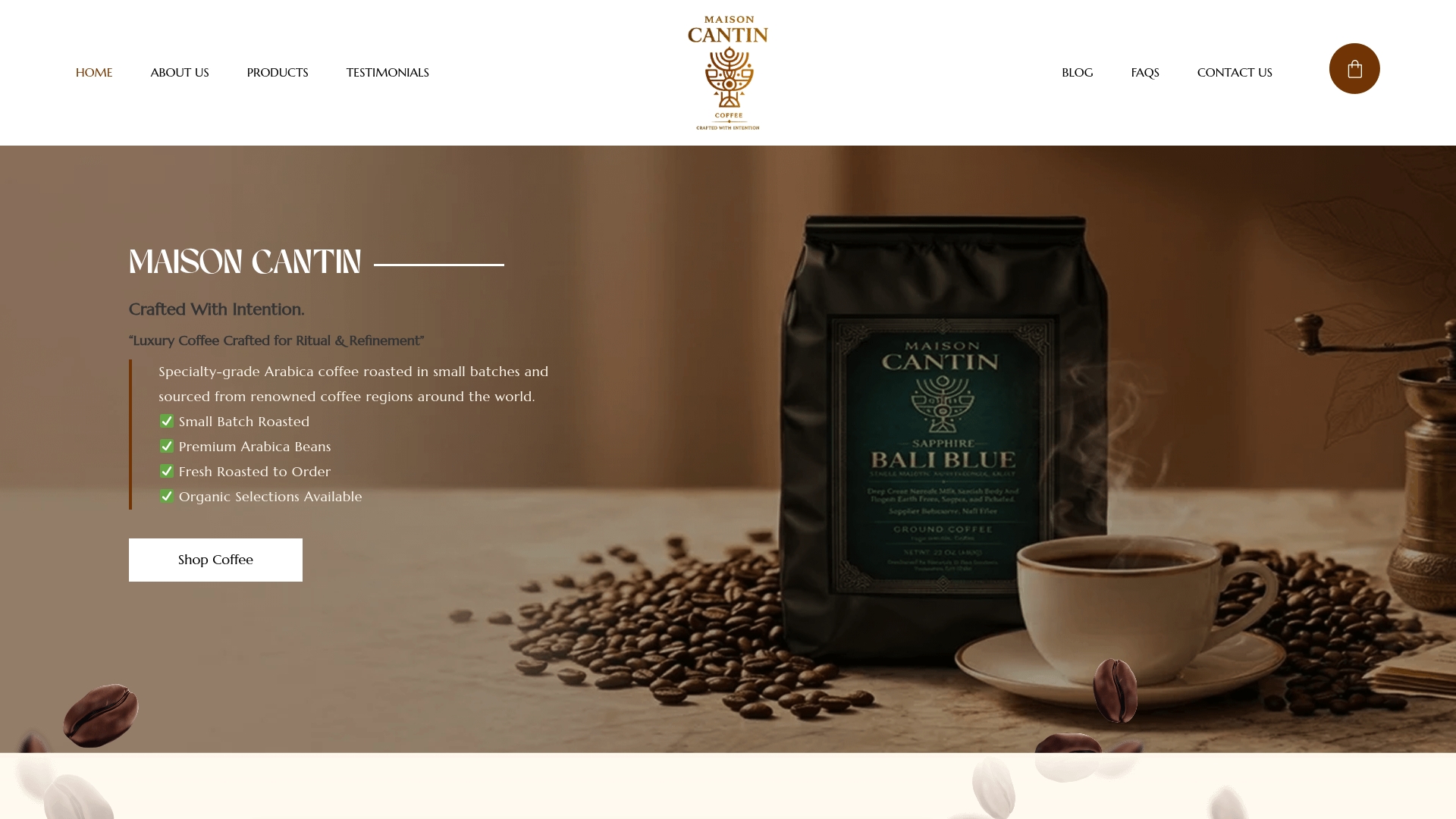
Every Arabica coffee at Maisoncantin is specialty-grade, roasted in small batches, and shipped fresh to order. That process is not a marketing detail. It is the reason the chlorogenic acids, flavonoids, and micronutrients described in this article actually survive into your cup. Organic options are available across the full range. Whether you are drawn to a light roast for maximum antioxidants or a medium roast for balanced complexity, Maisoncantin has a coffee crafted for that intention. Explore why Arabica is preferred by professionals and find the cup that fits your ritual.
FAQ
How many calories are in a cup of Arabica coffee?
A standard 8-ounce cup of brewed black Arabica coffee contains just 2–2.4 calories. Adding milk, sugar, or cream increases that count dramatically, often past 200 calories.
What vitamins does Arabica coffee contain?
Arabica coffee provides Riboflavin (15% DV), Pantothenic Acid (12% DV), Niacin (3% DV), Manganese (4% DV), and Potassium (2% DV) per 8-ounce cup. These percentages are based on a standard 2,000-calorie daily diet.
Is Arabica coffee high in antioxidants?
Arabica coffee is rich in chlorogenic acids and flavonoids, which are among the most studied dietary antioxidants. Light roasts retain the highest concentration of these compounds because heat degrades chlorogenic acids during the roasting process.
How does Arabica coffee compare to Robusta for caffeine?
Arabica contains roughly 1.2% caffeine by weight, compared to approximately 2.2% in Robusta. That lower caffeine level makes Arabica gentler on the nervous system and better suited for people sensitive to caffeine’s effects.
Does brewing method affect the health benefits of Arabica coffee?
Filtered brewing methods like drip or pour-over remove diterpenes such as cafestol and kahweol that can raise LDL cholesterol. Unfiltered methods like French Press leave these compounds in the cup, which matters for anyone managing cardiovascular health.


One Comment