
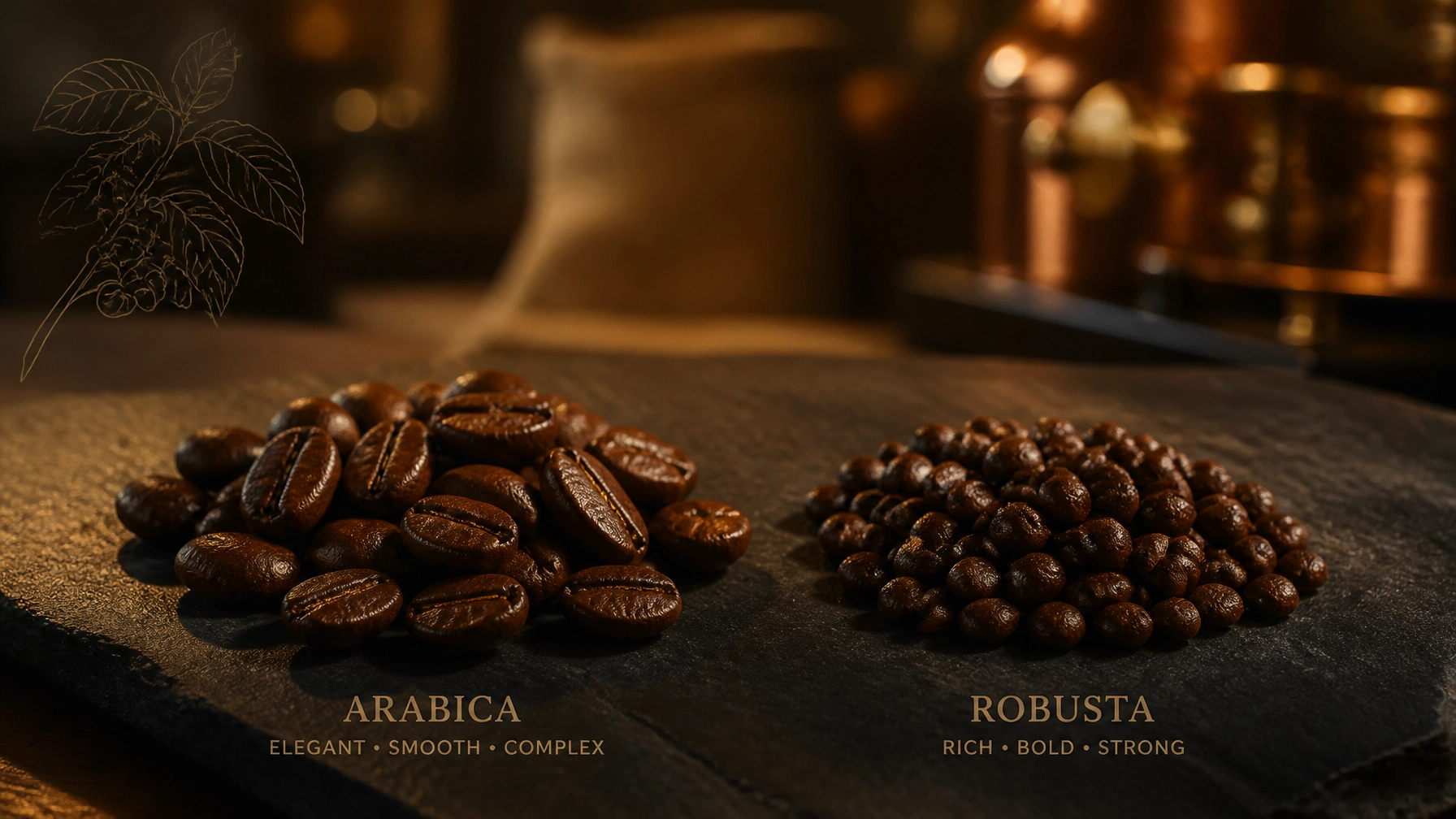
For the uninitiated, coffee is a monolith: a dark, caffeinated beverage used to jumpstart the morning. But for the discerning palate, coffee is a complex botanical spectrum. If you have ever wondered why a bag of grocery store beans tastes "burnt" or "flat" while a specialty roast from Maison Cantin feels like a nuanced ritual, the answer usually begins with the species of the bean.
In the global market, two species dominate: Coffea Arabica and Coffea Canephora (commonly known as Robusta). While they may look similar to the naked eye, they are worlds apart in chemistry, flavor, and quality. Understanding this difference is the first step in transitioning from a casual consumer to a true connoisseur of specialty coffee beans.
The Anatomy of the Bean: A Technical Breakdown
To appreciate why luxury Arabica coffee is the gold standard, we must look at the science. These two species differ at the chromosomal level, which dictates everything from how they grow to how they affect your central nervous system.
1. The Flavor Chemistry
Arabica is prized for its complexity. It contains roughly 60% more lipids (fats) and almost twice the sugar content of Robusta. These compounds are the precursors to flavor; during the roasting process, they break down to create the sweet, floral, and wine-like notes that define high-end coffee.
Robusta, by contrast, is high in Chlorogenic Acid (CGA) and caffeine. Both are natural pesticides that protect the plant, but they carry a heavy price in the cup: intense bitterness and a flavor profile often described as "rubbery" or "earthy."
2. Caffeine Content
There is a common misconception that more caffeine equals better coffee. While Robusta contains nearly double the caffeine of Arabica (2.2–2.7% vs. 1.2–1.5%), this concentration contributes to a harsh, metallic aftertaste.
Pro Tip: If you find yourself reaching for cream and sugar to mask the bitterness of your coffee, you are likely drinking a Robusta-heavy blend. High-quality Arabica is designed to be enjoyed black, revealing its natural sweetness without the need for additives.
Comparison at a Glance: Arabica vs. Robusta
| Feature | Arabica | Robusta |
|---|---|---|
| Flavor Profile | Sweet, fruity, floral, complex | Bitter, woody, nutty, rubbery |
| Acidity | Bright, wine-like, refined | Low, flat, heavy |
| Caffeine | ~1.5% (Lower) | ~2.7% (Higher) |
| Sugar Content | High | Low |
| Lipid Content | High | Low |
| Growing Elevation | 600m – 2,000m (High) | 200m – 800m (Low) |
| Price | Premium | Commodity |
Why Elevation Matters
The environment in which a coffee cherry grows is the ultimate architect of its flavor. Specialty-grade Arabica thrives at high altitudes (often above 3,000 feet). In these cooler climates, the coffee cherries mature slowly. This extended maturation period allows the sugars to concentrate and the acidity to develop into the "brightness" celebrated by enthusiasts.

Robusta is a "robust" plant, as the name implies. It can grow at low altitudes and in hotter climates where pests are prevalent. Because it is easier to farm and yields more fruit, it is the primary choice for mass-produced, "value" brands. However, ease of farming rarely translates to excellence in the cup.
The Maison Cantin Standard: 100% Specialty Arabica
At Maison Cantin, we do not compromise. We view coffee as a mindful ceremony, and that ceremony requires the finest raw materials. Our selection is exclusively whole bean specialty coffee, ensuring that you receive the full aromatic potential of the Arabica species.
- Amber Italian Reserve: A testament to the fact that dark roasts can still be sophisticated. By using premium Arabica, we achieve a chocolatey, bold profile without the acrid bitterness of Robusta-based "Italian" blends.
- Sapphire Bali Blue: Grown in the rich volcanic soil of Bali, this selection showcases the "wine-like" acidity and smooth finish that only high-elevation Arabica can provide.

My Honest Take: The "Crema" Myth
There is one area where Robusta is often defended: Crema. In the world of traditional espresso, some argue that a percentage of Robusta is necessary to produce a thick, long-lasting foam on top of the shot.
My perspective? It’s a shortcut. While Robusta does produce more crema due to its lower oil content, that crema is often flavorless or unpleasantly bitter. A well-dialed shot of 100% Arabica will still produce a beautiful, golden crema that actually tastes like the coffee underneath. Don't sacrifice the soul of your espresso for a thicker layer of foam.
Common Mistakes When Buying Coffee
- Buying "100% Coffee" labels: If a bag doesn't explicitly state "100% Arabica," it is almost certainly a blend containing Robusta fillers to lower the cost.
- Prioritizing Caffeine over Flavor: If you need a massive caffeine hit, drink two cups of Arabica. Do not settle for the "jittery," one-dimensional buzz of a low-grade Robusta.
- Ignoring the Roast Date: Even the best Arabica beans lose their magic if they sit on a shelf for six months. This is why we roast every order fresh.

Summary: The Choice is Yours
Choosing between Arabica and Robusta is a choice between experience and convenience. If you view coffee as fuel, Robusta will suffice. If you view coffee as a ritual: a moment of pause in a chaotic world: then only specialty-grade Arabica will do.
Elevate your morning. Stop consuming and start experiencing.
FAQ
Q: Is Arabica always better than Robusta?
A: In terms of culinary complexity and quality standards, yes. While "Fine Robusta" is a niche emerging market, 100% Arabica remains the standard for specialty coffee.
Q: Why is Arabica more expensive?
A: It is harder to grow, requires higher altitudes, and is more susceptible to pests. The lower yield and higher labor costs are reflected in the premium price: but so is the superior flavor.
Q: Can I get Arabica in pods?
A: Absolutely. We offer our Sapphire Bali Blue in pods, ensuring that even on your busiest mornings, you don't have to settle for inferior beans.
Q: How do I know if my coffee is specialty grade?
A: Look for transparency. Quality roasters will provide the origin, elevation, and roast date. You can learn more in our guide on how to choose high-quality beans.